The Engineering Reality of Modern Water Management
I have spent twenty-five years watching water destroy houses. Most homeowners view their gutters as a simple trim piece, but to a veteran specialist, they are the primary defense system for a foundation. We are seeing a trend in 2026 residential architecture toward extreme verticality and complex multi-gabled rooflines. This creates a massive problem for maintenance. If you cannot reach the miter or the leader without a forty-foot extension ladder, the system will fail. I have walked around homes where the fascia board was so rotten I could poke a screwdriver through it, all because a single elbow was clogged thirty feet in the air.
I remember a specific job on a steep shake roof property. The owner had invested heavily in copper patina finishes but neglected the actual functionality of the drainage. Because the roof was so high, no one had checked the upper expansion joint gutters in years. I found that the thermal expansion had actually sheared the hangers right out of the wood. The water was no longer hitting the downspout, it was cascading directly into the window headers below. This is the danger of high-reach neglect.
“Downspouts shall be sized based on the rainfall intensity of the region and the roof surface area.” International Plumbing Code, Section 1106
1. Carbon Fiber High-Velocity Vacuum Systems
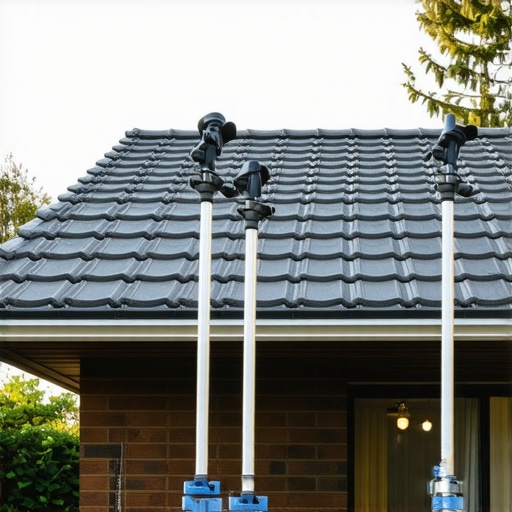
The first tool that actually handles these modern heights is the high-modulus carbon fiber vacuum pole. When we talk about 2026 rooflines, we are talking about heights that make traditional aluminum poles flex and whip. A carbon fiber system allows a technician to stand safely on the ground while extracting debris from a third-story gutter. This is not just about convenience, it is about physics. When a gutter is full of wet organic sludge, it weighs hundreds of pounds. Traditional pressure washing gutters techniques often just push that sludge further into the downspout relocation points, creating a subterranean clog. A vacuum system removes the mass entirely.
2. Articulated Hydro-Jetter Poles for Pressure Washing Gutters
Pressure is nothing without control. For homes with shake roof gutter protection, you cannot just blast water at 3000 PSI from a ladder. You need a telescopic tool with an articulated head that can reach over the reverse curve guards and clean the actual trough. These tools use high-flow nozzles to clear out the silt that builds up under the mesh. In northern climates, these same tools are essential for applying snow melt gutter solutions. If you do not clear the ice early, the weight load will warp the hangers and ruin the pitch. A gutter without a proper 1/4 inch per 10 feet slope is just a long, heavy mosquito breeder.
“Thermal expansion and contraction must be accounted for in gutter runs exceeding 40 feet to prevent miter failure and hanger stress.” SMACNA Architectural Sheet Metal Manual
3. Digital Inspection Scopes with Integrated Pitch Sensors
The third pro tool is the telescopic inspection scope. You cannot fix what you cannot see. These tools allow us to verify the integrity of the end cap and the soffit without leaving the ground. For commercial gutter installation, these scopes are vital for documenting damage for insurance claim assistance. When a storm hits, the insurance adjuster wants to see the specific failure point. Being able to provide high-definition footage of a cracked miter or a pulled hanger forty feet up is the difference between a denied claim and a full replacement.
Climate Impact: Snow, Ice, and Expansion
In regions where snow is a factor, the drainage system faces immense mechanical stress. When water freezes, it expands. If your gutters are mounted with old-fashioned spikes and ferrules, that ice will pull the gutter right off the fascia. This is why we insist on heavy-duty internal hangers spaced every 12 inches for snow-prone zones. We also utilize expansion joint gutters to ensure the metal can move as the temperature fluctuates without buckling the corners. Without these features, even the most expensive copper patina finishes will fail within a few seasons. Proper water management is about anticipating the destructive power of liquid and solid water alike. Whether you are dealing with a simple repair or a full-scale commercial installation, the goal is always the same: get the water away from the foundation as fast as possible.