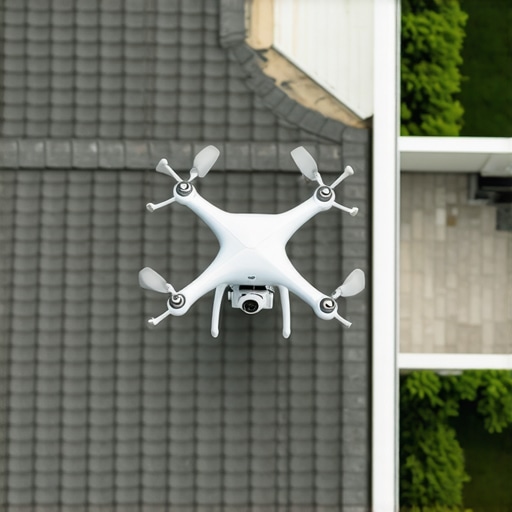
The High-Altitude Water Management Audit
I’ve spent the better part of three decades on ladders, and I’ll tell you right now: most homeowners are flying blind when it comes to their roofline. By the time you see a stain on your ceiling or a puddle in the basement, the battle against gravity is already lost. Water is patient, and it is persistent. In my 25 years of engineering drainage systems, I’ve seen more foundations ruined by a simple lack of visibility than by actual storm damage. That is where the 2026 shift toward drone-assisted inspections changes the entire math of home maintenance. We aren’t just looking for leaves anymore; we are performing a forensic analysis of flow velocity and structural integrity from a vantage point no human on a ladder can safely match.
The Narrative Matrix: The Hidden Garden on the Third Floor
Last October, I was called to a massive Tudor-style home that was suffering from mysterious siding rot. The owner had paid a king’s ransom for what they called ‘maintenance-free’ guards three years prior. From the ground, everything looked fine. But when I launched the drone and hovered over the third-story dormer, I didn’t find just a few leaves—I found a literal ecosystem. Because of a poorly executed scupper installation at a critical roof junction, organic sludge had built up behind the guard. A three-foot-tall sapling was growing out of the debris, its roots actually penetrating the fascia board. The guards had created a ‘lid’ that hid the problem until the weight of the water and soil began to pull the hangers straight out of the wood. A drone inspection a year earlier would have cost a fraction of the five-figure restoration bill that homeowner eventually faced. This is the reality of ‘set it and forget it’ mentalities in a forested environment.
1. Precision Gutter Sizing Calculations and Profile Customization
Most ‘pro’ installers just slap up standard 5-inch K-style gutters because it’s what’s on the truck. That’s a recipe for disaster in heavy canopy areas. Drone technology allows us to capture high-resolution orthomosaic maps of your entire roof surface. Why does this matter? It allows for perfect gutter sizing calculations. We can calculate the exact square footage of every roof plane and cross-reference it with local rainfall intensity data. If your pitch is too steep or your roof area is too large for standard troughs, the drone identifies the need for gutter profile customization—perhaps a 6-inch or 7-inch box gutter or a high-capacity half-round.
“Downspouts shall be sized based on the rainfall intensity of the region and the roof surface area.” – International Plumbing Code, Section 1106
When the water hits the drip edge integration point, it needs a landing zone that can handle the sheer volume without overshooting. If the drone sees that your current system is undersized for the hydraulic load, we can recommend recycled plastic gutters or heavy-gauge aluminum that fits the specific hydrological profile of your home.
2. Identifying Critical Failure Points: Drip Edges and Kickouts
The most dangerous water is the water you can’t see. Using thermal imaging attached to drones, we can now detect ‘cold spots’ behind your fascia and soffit. This usually indicates that the drip edge integration was botched. When water rounds the edge of the shingle, surface tension—the same force that lets bugs walk on ponds—pulls that water backward toward your house. If the drip edge isn’t tucked properly into the gutter, water wicks into the wood. [IMAGE_PLACEHOLDER] Drone footage allows us to see the kickout diverter installation (or lack thereof) where a roofline meets a vertical wall. Without a proper diverter, water is funneled directly into the siding, bypassing the gutter entirely. In a multi-story environment, multi-story gutter cleaning becomes a safety nightmare, but a drone can fly within inches of the elbow and miter joints to check for the tell-tale signs of sealant failure. This isn’t just about cleaning; it’s about verifying that the soffit ventilation during install wasn’t compromised by oversized troughs that block airflow, leading to mold in the attic.
3. Bridging the Gap: From Roof to Underground Drainage
A gutter system is only as good as its leader (downspout) and where that leader terminates. Many homeowners make the mistake of dumping thousands of gallons of water right at the corner of their foundation. A drone provides a topographical view of your landscape, showing us exactly where the water is pooling. We look for the French drain connection and ensure that the underground downspout drainage is actually sloped away from the structure. If the drone sees a ‘bog’ area fifty feet from the house, we know the underground pipe has collapsed or is clogged with roots.
“The gutter and downspout system must be designed to effectively move water away from the building foundation to a point of disposal.” – SMACNA Architectural Sheet Metal Manual
By seeing the system from above, we can plan the perfect French drain connection to a pop-up emitter, ensuring that the pitch/slope of the yard doesn’t fight against the underground downspout drainage. This holistic view prevents the common ‘cycle of failure’ where homeowners fix the gutters but ignore the splash block or the soil erosion that eventually undermines the very system they just paid to repair.
The Verdict: Why Technology Trumps Tradition
In 2026, the ‘old school’ way of just looking up from the driveway is dead. If you live in a forested area, the organic load on your roof is a constant threat. From the end cap to the miter, every inch of your drainage system is a potential point of failure. Drone inspections allow for a Water Management Audit that covers everything from kickout diverter installation to the chemical compatibility of recycled plastic gutters. Stop guessing and start engineering. Your foundation—and your wallet—will thank you.