The Swamp in Your Backyard: Why Water Management Isn’t Optional
In my 25 years of engineering water management systems, I’ve learned one universal truth: water is a patient predator. It doesn’t just fall; it searches for every microscopic weakness in your home’s envelope. When we talk about landscape integration services and drainage, we aren’t just talking about plastic pipes. We are talking about the structural integrity of your foundation. Most homeowners view a puddle near their porch as a nuisance, but to a specialist, that puddle is a warning shot. I remember a job in the suburbs where the homeowner’s basement had developed a crack so wide I could fit my clipboard through it. The culprit? An old corrugated downspout that had been crushed by a lawnmower three years prior. That single failure point allowed thousands of gallons of concentrated roof runoff to saturate the soil right at the footing, causing the earth to liquefy and the foundation to settle. This isn’t just about ‘leaks’; it’s about physics.
“Downspouts shall be sized based on the rainfall intensity of the region and the roof surface area.” – International Plumbing Code, Section 1106
1. The Rigid Transition: Moving Beyond Flimsy Corrugated Pipes
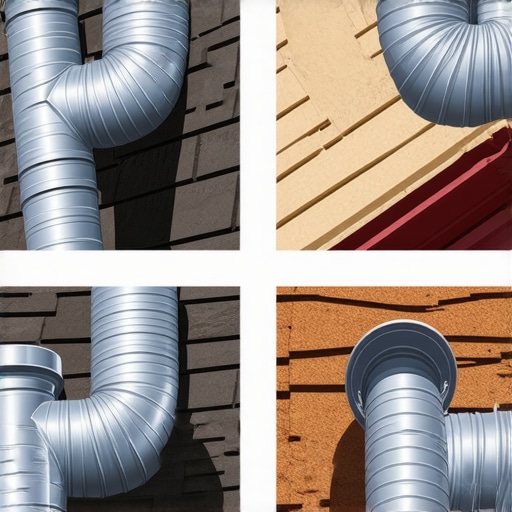
The biggest mistake in residential drainage is the reliance on thin-walled corrugated piping for underground runs. Those ribs inside the pipe are a death sentence for flow velocity. Silt, pine needles, and shingle grit settle in the valleys of the corrugations, creating a sludge that eventually hardens into a solid blockage. To stop 2026 leaks, you must execute a professional transition. We remove the old gutter demolition debris and install a rigid PVC adapter. By switching to a smooth-bore pipe, you eliminate the friction that causes debris to settle. This is essential for industrial gutter services where the volume of water is significantly higher. If you are dealing with a leader box gutters setup, the head pressure from a large collection box requires a pipe that won’t collapse under soil weight or hydraulic pressure.
2. EPDM Gutter Seals for Membrane and Industrial Systems
When dealing with membrane roof gutters or complex awning gutter integration, standard caulking is a joke. It dries out, cracks, and peels within two seasons. Professional EPDM gutter seals are the only way to ensure a watertight bond in high-movement areas. EPDM (Ethylene Propylene Diene Monomer) is a synthetic rubber that maintains its elasticity regardless of the temperature. When we integrate an awning gutter, we often see mechanical fasteners pulling through the metal. By using a reinforced EPDM seal, we create a gasket that moves with the expansion and contraction of the building. This is a critical fix for industrial gutter services where long runs of metal expand significantly under the sun. Without this flexibility, your miter joints and end cap seals will fail every single time the seasons change.
“Gutters and downspouts shall be constructed of materials that are resistant to corrosion and shall be securely supported.” – SMACNA Architectural Sheet Metal Manual
3. Solving the Wicking Effect with Wood Shake Gutter Flashing
If you have a high-end roof, wood shake gutter flashing is your primary defense against rot. Wood shakes are porous and prone to capillary action. During a heavy downpour, water doesn’t just fall into the gutter; surface tension causes it to ‘creep’ backward up the underside of the shake. If your shake roof gutter protection isn’t installed with a proper drip edge, that water hits your fascia and soffit, leading to silent rot. A 2026-ready fix involves installing an oversized flashing bridge that extends at least two inches into the gutter. This forces the water to break its surface tension and drop cleanly into the trough. We often see ‘handyman’ installs where the gutter is tucked behind the drip edge—this is a recipe for a destroyed wall assembly. The hanger must be positioned to allow the flashing to breathe while still directing the flow.
4. High-Flow Leader Box Integration and Landscape Discharge
Finally, we have to talk about volume. A standard 2×3 leader (downspout) can only handle about 600 square feet of roof area in a heavy storm. If you have a large valley or a leader box gutters system, you are likely overshooting your capacity. This leads to water cascading over the front of the gutter, eroding your landscape integration services work. The fix is a 3×4 oversized downspout or a custom leader box that acts as a surge tank. During a ‘gully washer,’ the leader box fills up, creating a siphon effect that pulls water out of the gutter faster than a standard hole ever could. Pair this with leaf blower gutter cleaning to ensure the system stays clear of organic sludge. When discharging this water, don’t just dump it at the splash block. You need a pop-up emitter at least 10 feet from the foundation to ensure that the water you’ve worked so hard to collect doesn’t just seep right back into your crawlspace. Remember, the goal of a master pitch/slope is to keep the water moving until it is safely away from the structure.