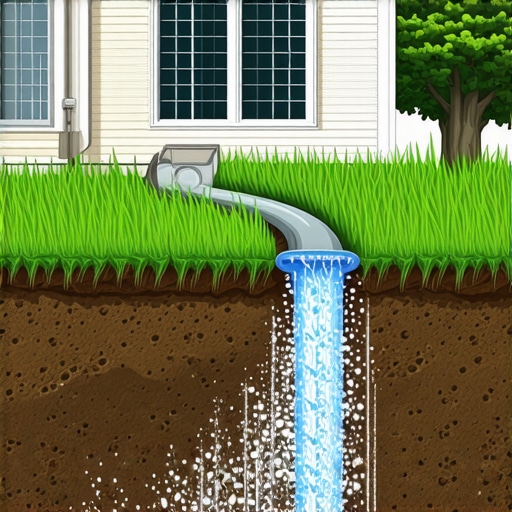
The Underground Disaster: Why Direct Downspout Connections Fail
I have spent over two decades in the trenches of the gutter industry, and if there is one thing that makes my blood boil, it is seeing a perfectly good home undermined by a poorly engineered drainage plan. I remember a call-out to a property in North Carolina where the homeowner was distraught because their expensive new mahogany deck was starting to rot and the basement smelled like a damp cave. I walked to the corner of the house where the main leader met the ground. The previous contractor had taken a 3×4 inch downspout and jammed it directly into a four-inch perforated pipe buried in a trench of gravel. It looked clean on the surface, but underneath, it was a catastrophe. Within two years, that French drain was no longer a drain; it was a horizontal column of wet silt and decomposed oak leaves. The water had nowhere to go, so it backed up the leader, overflowed at the fascia, and saturated the foundation until the soil expanded and pushed against the basement walls. This is the reality of the direct-tie-in myth. You think you are being clever by hiding the water, but without an air gap or a debris trap, you are just burying a ticking time bomb.
“Downspouts shall be sized based on the rainfall intensity of the region and the roof surface area.” – International Plumbing Code, Section 1106
The Physics of the Roof-to-Ground Transition
To understand why this backfires, we have to look at the hydrodynamics of a rain event. When rain hits your roof, it does not stay as pure water. It picks up everything in its path. We are talking about the granular runoff from the asphalt shingle gutter edge, pollen, bird droppings, and organic matter from overhanging trees. During a heavy downpour in a storm-prone climate like the South, the volume of water moving through a 6-inch seamless gutter system is immense. This water moves with significant velocity, carrying those solids with it. When that slurry hits the vertical leader, it accelerates. If that leader is connected directly to a French drain, which is designed to handle slow-moving groundwater through small perforations, you are forcing a high-volume, high-sediment flow into a low-volume, filtered environment. The physics simply do not work. The sediment settles in the bottom of the perforated pipe, eventually plugging the holes and the surrounding filter fabric. Once that fabric is blinded by silt, the French drain is effectively a solid pipe that is already full of mud.
The Critical Role of Gutter Debris Removal
Many homeowners believe that installing a French drain means they can ignore their gutters. The opposite is true. If you do not stay on top of gutter debris removal, your underground system will fail in a single season. Think about the oak tassels or pine needles that accumulate in the spring. They enter the trough, move through the mitered corners, and head straight down the leader. If they hit a subterranean pipe, they catch on any small burr or bend in the pipe. This creates a dam. Soon, you have standing water in your leaders, which leads to rust in metal systems or joint failure in others. In colder climates, this standing water is even more dangerous. Without proper gutter de-icing services or heat cables, that water freezes, expands, and splits the pipe underground. Now you have a leak five feet below the surface, right next to your foundation, which is exactly what you were trying to avoid in the first place.
Why Sealants and Materials Matter
A drainage system is only as strong as its weakest joint. I often see amateur gutter repair services using cheap hardware store caulk for a gutter sealant application. This is a mistake. You need high-grade tri-polymer sealants that can handle the constant expansion and contraction of the metal. If a joint at the end cap or the outlet fails, water will bypass the leader entirely and drip onto the soil near the house. Furthermore, the material choice affects the long-term health of your drains. While many people love the look of copper patina finishes, they must realize that copper is a heavy metal. As it oxidizes, the runoff contains trace minerals that can actually affect the local soil chemistry if not managed correctly. If you are doing greenhouse gutter collection for a garden, you need to be aware of what is leaching off your roof material before you pipe it into your plants.
“Proper drainage design must account for the accumulation of debris and provide means for cleaning and maintenance.” – SMACNA Architectural Sheet Metal Manual
The Solution: Air Gaps and Catch Basins
So, how do you do it right? You never tie a leader directly into a French drain without a transition point. I always recommend a catch basin with a grate or a specialized downspout filter. This creates an air gap. If the underground pipe clogs, the water can overflow out of the basin onto the surface rather than backing up into your fascia and soffit. This also allows for easy maintenance. You can pop the grate off and reach in to pull out the handful of shingle grit that would have otherwise ruined your French drain. For those interested in rainwater harvesting gutters, this transition point is where you would install a diverter. This ensures that only the cleanest water makes it to your barrels, while the first-flush of debris-laden water is redirected away from your sensitive underground infrastructure.
The Risks of High-Volume Storms
In regions like Florida or the Gulf Coast, the sheer volume of water during a tropical depression can overwhelm standard systems. This is why we move to 7-inch troughs and 4×5 inch leaders. If you try to force that much water into a buried 4-inch pipe, the friction alone will slow the flow enough to cause an overflow at the roofline. The water hits the underground pipe, meets resistance from the air already in the pipe, and creates a backsplash. This backsplash often forces water out of the seams of the downspout, leading to rot on the siding. We also have to consider bird spike gutter protection. While these spikes keep the pigeons from nesting in the trough, they can sometimes trap smaller debris that then breaks loose in large chunks during a storm. If those chunks hit your buried pipes, the system is done for.
Professional Safety and Long-Term Maintenance
I cannot stress professional ladder safety enough when you are inspecting these systems. Most homeowners fall because they try to overreach while checking a clogged leader head. If you cannot see into the top of the downspout from the ground, get a professional to look at it. A veteran specialist will check the pitch or slope of the gutters. If the gutter is not dropping a quarter-inch for every ten feet, the water will never have the velocity needed to clear the trough, leading to more sediment buildup in your drains. We use specialized levels to ensure the water is always moving toward the outlet. If the trough is level or back-pitched, the water sits, the mosquitoes breed, and the sealant eventually fails under the constant weight of the standing water.
Final Verdict on Underground Piping
Water is the most destructive force your home will ever face. It is patient, it is heavy, and it always finds the path of least resistance. When you connect your downspouts directly to a French drain, you are creating a path of high resistance once the inevitable clogs occur. Use solid pipes for your roof runoff, use perforated pipes only for groundwater, and always, always install a cleanout or a catch basin at the transition. Your foundation, your basement, and your wallet will thank you ten years down the road when your neighbors are all digging up their yards to replace failed pipes while yours are still running clear. Keep the grit out of the ground and keep the water moving away from the house. That is the only way to win the war against the rain.
Comments are closed.