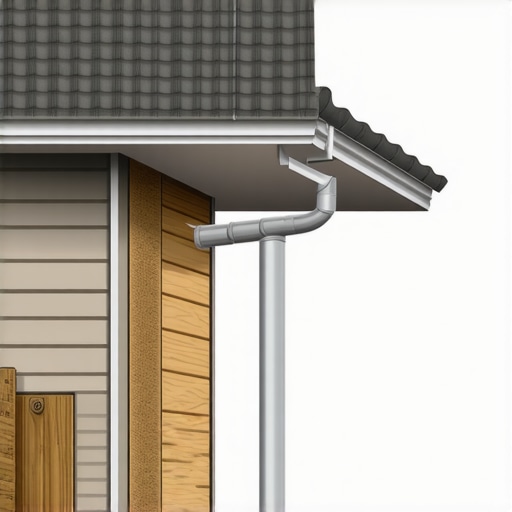
The Invisible Destroyer: Why Your Siding is Actually Rotting from the Inside Out
I have spent twenty-five years on a ladder, and if there is one thing I have learned, it is that water is a patient assassin. It does not just fall from the sky; it hunts for a way into your home’s skeleton. Last November, I was called out to a beautiful home in a humid climate where the owner was complaining about a soft spot in his cedar siding right where the garage roof met the second-story wall. When I pulled back one plank, I did not just find rot; I found a vertical swamp. For seven years, every rainfall had been channeled directly behind the siding because a simple kickout diverter was missing. The OSB sheathing was so saturated it crumbled like a wet biscuit in my hand. This is not a freak accident. It is a failure of water management logic.
“Downspouts shall be sized based on the rainfall intensity of the region and the roof surface area.” – International Plumbing Code, Section 1106
To understand why your siding is failing, we have to talk about hydro-physics. When rain hits your roof, it gains velocity as it slides down the shingles. When that water reaches a sidewall intersection, surface tension takes over. Instead of jumping off the roof edge into the gutter, the water hugs the wall. It finds the tiny gap between the siding and the roof flashing and, through capillary action, it gets sucked upward and behind your exterior finish. This is where kickout diverters become the unsung heroes of your home’s exterior. A kickout diverter is a specialized flashing component that turns that water ninety degrees, forcing it away from the wall and into the gutter system. Without it, you are essentially hosing down your wall studs every time it sprinkles.
The Physics of Flow: Drip Edge Integration and Surface Tension
Many contractors talk about drip edge integration like it is an optional upgrade. It is not. If your drip edge is not properly tucked under the first course of shingles and over the back of the gutter, water will bridge the gap via surface tension and run down your fascia board. This leads to what we call ‘fascia rot syndrome,’ where the wood holding your gutters becomes soft. Eventually, the hanger loses its grip, the pitch/slope of the gutter fails, and the whole system begins to sag. We see this often in areas with heavy storm volume where 5-inch gutters simply cannot handle the ‘gully washers.’ In these high-flow scenarios, upgrading to 6-inch or 7-inch gutters is a necessity to prevent overshoot. When water shoots over the front of the gutter, it pools at the foundation, leading to hydrostatic pressure that can crack your basement walls.
Underground Downspout Drainage and Foundation Protection
Once the water is safely in the leader (that is what we pros call the downspout), the job is only half done. Dumping five hundred gallons of water at the corner of your foundation is a recipe for a flooded basement. This is where underground downspout drainage systems come into play. By piping that water twenty feet away from the house into a dry well or a pop-up emitter, you ensure the soil around your foundation stays stable. In my experience, most ‘foundation problems’ are actually just gutter problems that were ignored for a decade. We also look at gravel stop integration for flat roof sections to ensure that water does not find its way into the soffit. Proper soffit ventilation during install is also critical; if you seal up the eaves without allowing the house to breathe, you create a greenhouse effect in your attic that rots the roof deck from underneath.
“Flashing shall be installed at wall and roof intersections, at gutters, and at changes in roof slope or direction.” – SMACNA Residential Sheet Metal Guidelines
The Reality of Maintenance: Gutter Screen Installation and Joint Sealant Repair
I hear it every week: ‘I want maintenance-free gutters.’ Let me be clear: there is no such thing. Even the best gutter screen installation requires an occasional check-up. In heavily forested areas, pine needles and oak tassels can weave themselves into a mat that blocks the mesh. If the water cannot get into the gutter, it will go over it. Regular joint sealant repair is also vital for sectional systems. Every miter and end cap is a potential leak point as the metal expands and contracts with the seasons. If you have an older home, you might even be dealing with asbestos gutter handling issues, which require professional gutter repair services to manage safely. We also assist homeowners with insurance claim assistance when storms rip the hangers right out of the wood. Remember, the goal is not just to move water; it is to master it. From the splash block at the bottom to the elbow at the top, every piece of the system must work in harmony to keep your home dry and your foundation solid.
Comments are closed.