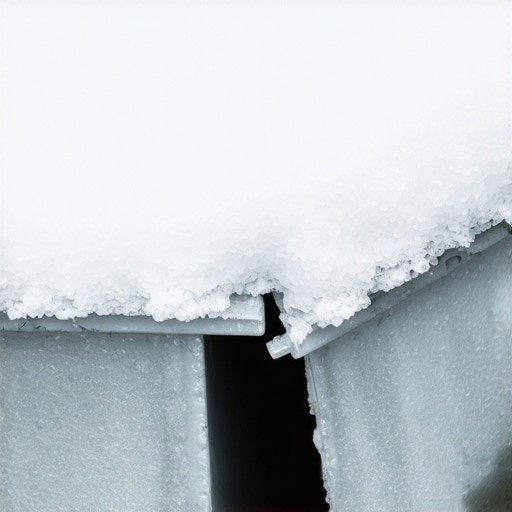
The Great Winter Failure: Why Your Gutter Seals Are Leaking
I recall a specific project on a sprawling estate in the high-elevation zones of the North. The previous contractor had used a standard, hardware-store silicone on a complex set of parapet drain systems. By mid-February, the sub-zero temperatures caused the aluminum gutters to contract so significantly that the silicone beads simply peeled away like old tape. This failure allowed meltwater to track behind the wood shake gutter flashing and rot out the structural headers. It was a $40,000 repair for a $10 tube of the wrong sealant. When we talk about a hard winter, we are talking about a war of attrition between physics and chemistry. Water enters a microscopic crack, freezes, expands by 9 percent, and tears your seal apart from the inside out.
“Downspouts shall be sized based on the rainfall intensity of the region and the roof surface area.” – International Plumbing Code, Section 1106
The Physics of Thermal Expansion in Gutter Systems
To understand why most gutter seals fail, you must look at the thermal coefficient of expansion. A standard 50-foot run of seamless aluminum gutter can expand or contract over half an inch depending on the temperature swing. If you are using a rigid sealant, it will crack. If you are using a sealant that lacks high solids content, it will shrink as the solvents evaporate. This is why I demand tri-polymer sealants for every job. These materials maintain elasticity down to negative 40 degrees Fahrenheit. When the miter joint moves, the sealant stretches. When the sun hits the fascia and the metal expands, the sealant compresses without losing its bond to the aluminum or the wood shake gutter flashing.
The Water Management Audit: Identifying the Vulnerabilities
Every professional installation starts with a comprehensive audit. We look at the pitch: 1/4 inch of drop for every 10 feet of run is the absolute minimum. Standing water is the enemy of any seal. In winter, standing water becomes an ice block that weighs down the hangers and puts immense shearing force on the end cap. If your pitch is off, the water sits, the seal stays submerged, and even the best polymers will eventually degrade. During this audit, we also evaluate three-story access solutions. Managing drainage at 30 feet in the air requires specialized stabilizers and fall protection, but it also requires a different approach to the leader. A three-story downspout carries a massive velocity of water. If that water hits a standard elbow at the bottom with too much force, it can create a back-pressure that blows out the seals at the upper joints.
High-Performance Sealant Chemistry and Pressure Testing
We don’t just