The Gravity of Water Management: Why Pitch is the Only Truth
In twenty-five years of ladder climbing, I have seen more foundations ruined by a simple level than by any storm. Water is gravity’s patient weapon. It does not bargain, it does not wait, and it certainly does not forgive a contractor who thinks ‘close enough’ works when it comes to the slope of a trough. When you hear that musty, earthy scent in your crawlspace or the rhythmic tink-tink-tink of water hitting a splash block from a height, you are witnessing the failure of an engineered system. A gutter is not a decoration; it is the primary defense for your home’s structural integrity. If the pitch is off, you are merely collecting water to rot your fascia boards.
I remember a call-back I took on a property where the homeowner was convinced their new windows were leaking. I walked around the northwest corner and saw the telltale sign: the soil was eroded into a miniature canyon right against the concrete. A single leader had been installed with a backward tilt because the original installer used spikes and ferrules that had pulled out under the weight of a heavy wet snow. That one-inch dip caused five years of hydraulic pressure against the foundation, eventually forcing a crack that cost more than the entire roof to fix. This is why hanger replacement services are not just maintenance; they are a structural necessity.
“Downspouts shall be sized based on the rainfall intensity of the region and the roof surface area.” – International Plumbing Code, Section 1106
The Physics of the Pitch: More Than Just a Slant
When we talk about the proper gutter installation pitch, we are aiming for a very specific measurement: one-quarter inch of downward slope for every ten feet of gutter run. In a northern climate where I operate, this math is complicated by the thermal cycle. Water freezes and expands with a force that can shear off standard fasteners. If a gutter is dead level, water sits. When water sits, it accumulates organic sludge. This sludge increases surface tension, slowing the flow velocity during the next rain. In winter, that standing pool turns into a solid ice block, pulling the gutter away from the soffit and opening a gap for water to bridge directly into your attic. This is why we insist on heavy-duty hanger replacement services, spacing them every twelve inches rather than the standard twenty-four to handle the snow load.
Commercial Challenges and Parapet Drain Systems
Moving into commercial gutter installation, the scale of water volume changes the math entirely. On a large flat roof, we often deal with parapet drain systems. A parapet is essentially a wall around the edge of the roof; if the primary drains clog and the scuppers are too high, the roof becomes a swimming pool. The weight of four inches of water on a commercial roof can cause a structural collapse. When repairing these systems, the gutter sealant application becomes the fail-point. We use high-grade tri-polymer sealants that remain flexible through sixty-degree temperature swings. Cheap silicone will peel away within two seasons, leading to leaks that rot out the structural steel beneath the deck.
The Science of Flow: Surface Tension and Guards
Many homeowners are sold on the dream of ‘maintenance-free’ living via surface tension screens. The physics are sound: water adheres to the curved metal and follows it into the gutter while debris falls off. However, if the pitch of the gutter is too steep, the water velocity exceeds the adhesion force and the water shoots right over the edge. If it is too shallow, the water pools and the screen becomes a shelf for wet leaves. This is why barn gutter repair often requires a complete rethink of the drainage plan. Barns have massive roof planes; during a heavy downpour, the volume of water can overwhelm a standard five-inch system. We often upgrade these to six or seven-inch seamless aluminum to handle the sheer cubic feet of liquid moving toward the leaders.
“Gutters and downspouts shall be maintained in good repair and free from obstructions.” – International Property Maintenance Code, Section 304.7
The Hidden Connection: Soffit and Attic Ventilation
A gutter professional knows that the drainage system starts inside the house. Soffit ventilation during install is a critical step that many ‘trunk-slammers’ skip. If the attic is not breathing, the roof deck stays warm, melting the bottom layer of snow which then freezes at the cold gutter edge. This creates the dreaded ice dam. By ensuring proper attic vent installation and clear soffit intake, we keep the roof temperature uniform. This prevents the cycle of melting and freezing that destroys miter joints and forces us to perform emergency gutter sealant application in the dead of winter. It is an integrated system: air moves up, water moves down, and the house stays dry.
Managing the Exit: Downspout Extension Services
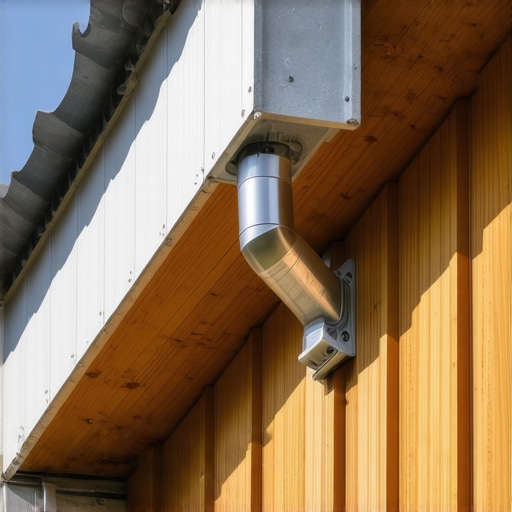
The job isn’t finished when the water leaves the gutter. The leader must deposit that water far enough away that it doesn’t just loop back to the foundation. Our downspout extension services focus on moving the discharge at least six to ten feet from the wall. We look at the topography; if the yard slopes back toward the house, we utilize pop-up emitters or French drains. Without this, you are just concentratedly flooding your own basement. Finally, we believe in eco-friendly gutter disposal. Old, pitted aluminum shouldn’t end up in a landfill; we sort and recycle all materials from our jobs, ensuring that the heavy metals stay out of the local water table.