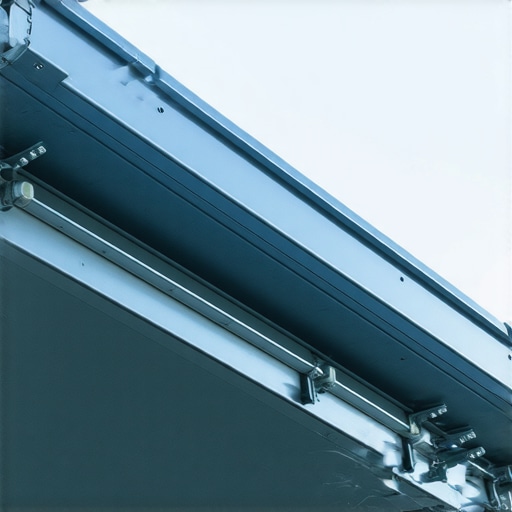
The Invisible Force Ripping Your Commercial Gutters Apart
I have spent over two and a half decades on ladders, and if there is one thing I have learned, it is that metal is alive. It breathes. It grows and it shrinks with every rise and fall of the thermometer. I remember a massive warehouse project in a region plagued by bitter winters and scorching summers. The previous contractor had installed a 180-foot continuous run of heavy-gauge aluminum without a single break. During a particularly brutal cold snap, I watched a 60-foot section of that gutter literally tear itself away from the fascia, snapping the heavy-duty hangers like they were toothpicks because the metal contracted nearly three inches and had nowhere to go. This is the reality of thermal expansion, and in the world of commercial water management, ignoring it is a recipe for catastrophic structural failure.
“Expansion joints shall be provided in metal gutters to permit the thermal expansion and contraction of the metal. The distance between expansion joints shall not exceed 50 feet for galvanized steel or 40 feet for copper or aluminum.” – SMACNA (Sheet Metal and Air Conditioning Contractors’ National Association) Architectural Sheet Metal Manual
The Physics of Thermal Movement
When we talk about commercial gutter installation, we are dealing with massive surface areas. A standard warehouse roof can shed thousands of gallons of water in a single downpour. But the real enemy is not just the volume of water, it is the temperature of the substrate. Aluminum has a high coefficient of linear thermal expansion. For every 100 feet of gutter, you can expect nearly an inch of movement for every 100-degree change in temperature. If you fix both ends of a long run with rigid K-style gutter services, that energy has to go somewhere. Usually, it results in the metal buckling, the miters cracking, or the fasteners backing out of the wood. This is why spike and ferrule repair is a fool’s errand on commercial scales. Those spikes act like a wedge, and as the gutter moves, they wallow out the hole in the fascia until the whole system begins to sag and pull away from the building.
The Anatomy of a Commercial Expansion Joint
A proper expansion joint is not just a gap. It is a precision-engineered component often involving a neoprene or rubber membrane that bridges two separate sections of the gutter. This allows the metal to slide back and forth while maintaining a watertight seal. In high-volume systems, we often integrate these with roof scupper drains to ensure that even if one section is at its maximum expansion, the flow velocity is not impeded. We must also consider the gutter apron aluminum that sits tucked under the shingles or roofing membrane. If the gutter moves but the apron is fixed too rigidly, you get a shear force that tears the metal, leading to water wicking behind the fascia and rotting out the soffit. Hydro-zooming into the mechanics of the flow, water during a heavy storm creates immense weight. A full 6-inch gutter weighs roughly 5 pounds per linear foot. Add the kinetic energy of water rushing toward a leader (downspout), and the stress on a buckled joint becomes the primary point of failure for the entire building envelope.
“Downspouts shall be sized based on the rainfall intensity of the region and the roof surface area. The design must accommodate the maximum projected hourly rainfall.” – International Plumbing Code, Section 1106
Integrating Modern Technology and Protection
Commercial buildings often face unique challenges with debris and environmental loads. This is where we look at surface tension screens for large-scale applications. Unlike standard residential mesh, commercial-grade screens must handle a much higher flow rate without causing the water to ‘overshoot’ the gutter during a gully washer. We also see a rise in integrated home automation for commercial property management, where moisture sensors at the expansion joints can alert a facility manager to a leak before it destroys the foundation. For smaller peripheral buildings, like a garage gutter installation or awning gutter integration, the principles remain the same: you must allow for movement. In northern climates, this is even more critical due to ice dams. When water freezes and expands, it exerts outward pressure. If your hangers are spaced too far apart or your expansion joints are frozen solid with debris, the ice will simply rip the miter joints apart.
The Drainage Hierarchy: Beyond the Eaves
Managing water on the roof is only half the battle. You have to get it away from the foundation. This requires professional landscape integration services to ensure that the massive volume of water exiting the leaders is channeled into French drains or underground storage. In some sophisticated setups, we even tie the gutter system into the attic vent installation to help manage the temperature of the roof deck, reducing the thermal shock the gutters experience during a summer rain after a hot day. Proper pitch is the final piece of the puzzle. We aim for at least 1/4 inch of slope for every 10 feet of run. Without this, you get standing water, which increases the weight load and accelerates the degradation of the sealant in your expansion joints. In the end, a commercial gutter system is not a static ornament; it is a dynamic, moving machine that requires expert engineering to survive the elements.
{“@context”: “https://schema.org”, “@type”: “HowTo”, “name”: “Maintaining Commercial Gutter Expansion Joints”, “step”: [{“@type”: “HowToStep”, “text”: “Inspect neoprene membranes for cracks or loss of elasticity.”}, {“@type”: “HowToStep”, “text”: “Ensure all sliding hangers are lubricated and free of debris to allow thermal movement.”}, {“@type”: “HowToStep”, “text”: “Check for wallowed-out fastener holes and replace with oversized hardware if necessary.”}, {“@type”: “HowToStep”, “text”: “Clear any organic sludge from roof scupper drains to prevent water weight build-up.”}]}