The $22,000 Drip: A Lesson in Drainage Failure
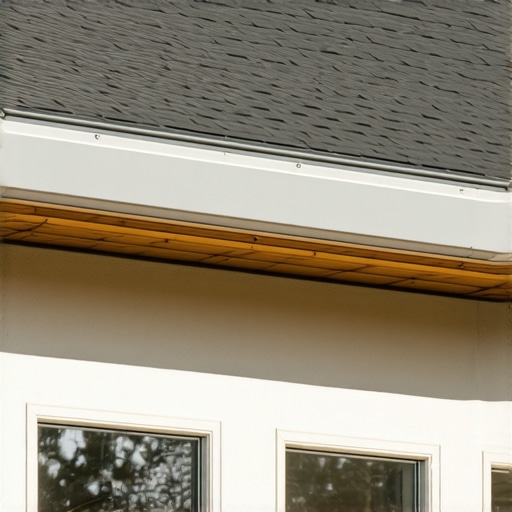
I recently walked a property where the homeowner was convinced they had a roofing leak. The ceiling in the master bedroom was sagging, and the smell of damp drywall was unmistakable. I didn’t go to the roof first. I went to the corner of the house where a chimney met a lower roofline. There it was: a missing kickout diverter. For seven years, water had been sprinting down the roof valley, bypassing the gutter entirely, and diving straight behind the siding. It had rotted the structural sheathing, the rim joist, and invited a colony of carpenter ants to the party. This wasn’t a roofing failure; it was a water management failure. People think of gutters as an afterthought, a piece of trim. They aren’t. They are the frontline of your home’s defense against gravity and fluid dynamics.
“Downspouts shall be sized based on the rainfall intensity of the region and the roof surface area.” – International Plumbing Code, Section 1106
The Physics of the Gully Washer: Why Seamless Wins
When you are dealing with a heavy storm in the South, you aren’t just dealing with rain; you are dealing with volume and velocity. Traditional sectional gutters, the kind you buy in 10-foot sticks at a big-box store, are doomed from the start. Every seam is a future failure point. Water is a solvent. It finds the smallest gap in the sealant, and through the constant expansion and contraction of the seasons, it turns a pinhole into a waterfall. Seamless aluminum gutters are extruded on-site using a specialized machine to the exact length of your fascia. No seams means no leaks between the end caps. When we talk about gutter installation services, we are talking about creating a continuous channel that handles the ‘overshoot’ during a high-velocity downpour. In regions prone to heavy rain, a 5-inch gutter is often a mistake. We move to 6-inch or even 7-inch oversized systems paired with larger leaders to ensure the water doesn’t bridge the gap and start rotting your soffit.
Comparing the Contenders: Steel, Plastic, and Bamboo
I hear about bamboo gutter alternatives from time to time in green-building circles. While I appreciate the sustainability, bamboo is an organic material. It checks out the moment it faces constant saturation and UV exposure. It splits, it traps organic sludge, and it creates a buffet for pests. Then you have steel gutter services. Galvanized steel is strong, sure, but it’s heavy and it eventually rusts from the inside out once the coating is scratched. Recycled plastic gutters are another trap. Plastic has a high coefficient of thermal expansion. It bows, it cracks in the cold, and it fades. Aluminum is the ‘Goldilocks’ material. It doesn’t rust, it’s lightweight enough to not strain the fascia board, and when installed with heavy-duty internal hangers instead of those ancient spikes and ferrules, it stays put. Spikes eventually pull out as the wood of the fascia swells and shrinks, leaving your gutters sagging and the pitch destroyed.
The Importance of the Pitch and the Leader Box
A gutter that holds water is just a long, skinny mosquito pond. I am obsessive about the pitch. You need at least 1/4 inch of slope for every 10 feet of run. If you get this wrong, the water stagnates, and the weight of that standing water starts to warp the aluminum. For architectural homes with complex rooflines, we often use leader box gutters. These collector heads act as a funnel, gathering water from multiple high-flow areas and directing it into a single large downspout. It prevents the system from backing up during a flash flood. Combined with a proper kickout diverter installation at every wall-to-roof intersection, you ensure that water is always being pushed away from the building envelope and into the flood prevention gutters designed to carry it to the yard’s perimeter.
“Gutters and downspouts shall be securely fastened to the building to withstand the expected wind and snow loads of the region.” – SMACNA Architectural Sheet Metal Manual
Modern Diagnostics: Drone Gutter Inspection
Gone are the days when I had to risk my neck on a 40-foot extension ladder just to see if a miter was leaking. We now use drone gutter inspection to get a bird’s eye view of the entire drainage system. It allows us to see where the organic debris is piling up and where the water is ‘pooling’ due to a shifted hanger. This tech is a game-changer for large estates where the roofline is too steep for traditional viewing. It also helps us identify if an attic vent installation is needed. Poor attic ventilation leads to heat buildup, which causes ice dams in the winter and speeds up the degradation of the sealant on your end caps in the summer. A cool attic and a clear gutter are the two best friends a homeowner can have.
Guards, Shields, and the Myth of Maintenance-Free
I have a bone to pick with the ‘never clean your gutters again’ crowd. Every system needs maintenance. However, micro-mesh gutter guards are the closest we have come to a solution that actually works. Unlike the old plastic covers that just let the water shoot over the top, micro-mesh uses surface tension to pull water through the screen while keeping out even the smallest pine needles. If you live under a heavy canopy of oaks or maples, these are essential. They stop the ‘organic soup’ from forming in your leaders, which is the primary cause of foundation-eroding overflows. When you couple seamless aluminum with high-quality guards and a splash block at the exit, you are building a system that will last 30 years or more, provided you don’t ignore it. Dry feet and a dry foundation don’t happen by accident; they happen by engineering.