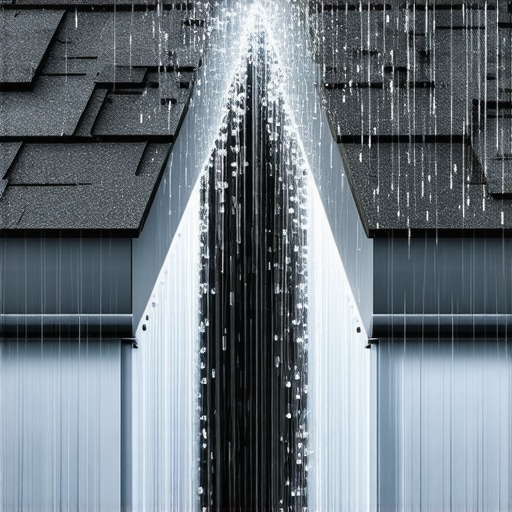
When you have been in the exterior drainage business for over 25 years, you start to hear the same story every time a heavy rain hits. Homeowners call me up, sounding frantic because their expensive landscaping is being turned into a trench. They tell me the same thing: “I have gutters, but the water is just jumping right over them at the corners.” This is what we pros call the Waterfall Effect. It is not just an eyesore; it is a direct threat to your home. That water is hitting the ground with enough velocity to scour out the soil, eventually finding its way into your crawlspace or cracking your foundation. I remember a job on a steep-pitched Tudor home where the valley was so long and deep that during a summer storm, the water volume was essentially a fire hose. It had blasted a hole four inches deep into the flower bed and was actually vibrating the fascia board. The homeowner had tried three different contractors, and all of them just added more hangers. But hangers do not fix physics.
The Physics of the Valley: Why Water Overshoots
To understand how to stop the overflow, you have to understand the fluid dynamics of a roof valley. A valley is where two roof planes meet, creating a natural funnel. During a heavy downpour, the square footage of both those planes is concentrating all that water into a single line. As that water travels down the valley, it gains momentum. By the time it reaches the eave, it is not just falling; it is launching. Standard five-inch gutters are designed for vertical rainfall, not a horizontal jet of water. When that high-velocity stream hits the gutter, it experiences what we call a hydraulic jump. If the gutter is too shallow or the miter is not reinforced, the water simply bridges the gap and shoots over the outer rim. This is why gutter profile customization is not a luxury; it is a necessity for complex rooflines. You need a deeper trough or a wider flange to capture that kinetic energy before it escapes the system.
“Downspouts shall be sized based on the rainfall intensity of the region and the roof surface area.” – International Plumbing Code, Section 1106
In regions where we see intense storm cells, the volume of water can easily exceed the capacity of a standard 2×3 leader. If the downspout cannot clear the water fast enough, the gutter backs up. Once the water level in the gutter rises, it meets the incoming valley stream, and the resulting turbulence causes an immediate overflow. This is often where I recommend gutter overflow prevention strategies that include high-flow outlets and oversized 3×4 leaders. If your drainage system is choked at the exit, it does not matter how big your gutters are.
Engineering the Solution: From Miter to Ground
Fixing a waterfall requires a multi-stage approach. First, we look at the miter, which is the corner where two gutters meet. A standard miter is a weak point. For deep valleys, I install custom splash guards or diversion baffles. These are essentially vertical shields that stand an inch or two above the gutter rim, forcing that