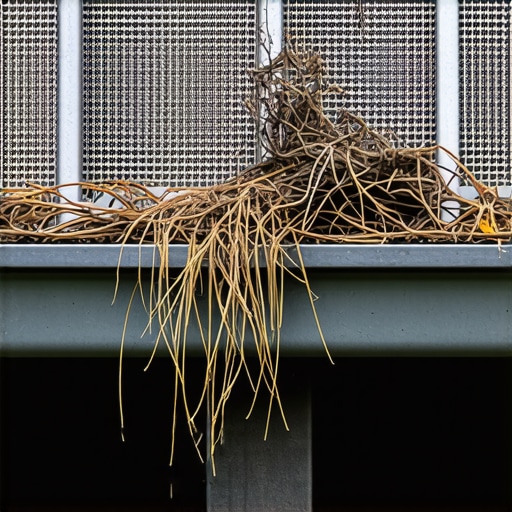
The Marketing Myth of ‘Never Clean Your Gutters Again’
You see the ads every Saturday morning. They promise you a life free from ladders and the sludge of late autumn. As a specialist who has spent over twenty-five years engineering water management systems, I can tell you that the term ‘maintenance-free’ is a marketing fabrication, not a physical reality. Gravity and organic decay do not take days off. If you have trees, you will eventually have debris. The real question is whether that debris sits on top of your gutter, inside your gutter, or is effectively managed by a system designed for your specific climate. Most homeowners are sold a bill of goods that ignores the basic physics of surface tension and flow velocity.
I remember a project three years ago for a client who had installed high-end micro-mesh guards. They were frustrated because during every heavy rain, a curtain of water would overshoot the gutter and splash directly against the foundation. When I got up there, I found that the fine mesh had been completely sealed by a layer of pine resin and pollen. The water couldn’t penetrate the mesh because the surface tension of the liquid was higher than the gravitational pull through the clogged holes. It was essentially a flat metal shelf. This is the danger of ‘set it and forget it’ mentalities. You stop looking at your gutters, and while you think you are safe, your fascia board is quietly rotting behind a beautiful piece of useless aluminum.
“Downspouts shall be sized based on the rainfall intensity of the region and the roof surface area.” – International Plumbing Code, Section 1106
The Physics of Water Management and Surface Tension
To understand why most guards fail, you have to understand the Coanda effect. This is the tendency of a fluid jet to stay attached to a convex surface. Many ‘helmet’ style gutter guards rely on this. The idea is that water follows the curve into the gutter while leaves fly off the edge. In a laboratory, it works perfectly. In the real world, where we deal with oak catkins, grit from asphalt shingles, and bird droppings, that curved surface becomes sticky. Once the surface is coated in a thin film of environmental grime, the water no longer follows the curve. Instead, it breaks away and overshoots the system entirely. This leads to the very gutter overflow prevention issues you were trying to solve in the first place.
When we perform on-site gutter rolling, we are creating a seamless trough that is custom-fit to the exact dimensions of your home. A seamless install reduces the number of points where a clog can begin. But adding a guard on top of that requires a deep understanding of your local flora. If you live under a heavy canopy of needles, a perforated screen is a nightmare because those needles will ‘stitch’ themselves into the holes. For those environments, a solid cover or a very specific type of raised-pattern mesh is required. We also look at the pitch of the roof. A steep pitch increases the velocity of the water. If the water is moving too fast, it will skip over almost any guard like a stone on a pond.
The Integrated System: Beyond the Gutter
A gutter is only as good as where it sends the water. This is where landscape integration services come into play. It is common to see a perfectly functioning gutter system dumping thousands of gallons of water right at the corner of a slab. This saturates the soil, leads to hydrostatic pressure, and eventually cracks your foundation. We often recommend a French drain connection to move that volume away from the structure. By tying the leaders directly into a subterranean pipe system that terminates in a pop-up emitter or a dry well, you protect the structural integrity of the home. We also use conductor head services for houses with large roof valleys where water concentrates. These heads act as a funnel and a vent, allowing the water to drop rapidly without creating a vacuum that slows down the flow.
“Gutters and downspouts shall be securely fastened to the structure and shall be designed to withstand the expected wind and snow loads of the region.” – SMACNA Architectural Sheet Metal Manual
The Importance of Component Integrity
Many ‘big box’ installers use cheap spikes and ferrules to hang gutters. Over time, the weight of water and debris pulls these spikes out of the fascia. We use heavy-duty internal hangers spaced every twelve to eighteen inches, especially in areas prone to ice or heavy tropical downpours. We also focus on end cap replacement using high-grade sealants. A leaking end cap might seem minor, but that drip-drip-drip during a storm is what rots out the corner of your soffit. When we perform pressure testing gutter seals, we are looking for those microscopic failures that lead to long-term wood decay. If your system is old and failing, we also provide eco-friendly gutter disposal, ensuring that the old aluminum is recycled rather than ending up in a landfill.
For smaller structures, such as shed gutter systems, the logic remains the same. You need a clear path for water to travel from the roof to a safe discharge point. Even a small garden shed can move enough water to wash away your landscaping if not properly managed. We also offer financing for gutter installs because we know that a full system replacement is an investment in the longevity of the property. It is better to finance a professional system today than to pay for a foundation repair or a mold remediation project five years down the road. Proper water management is about the long game. It’s about ensuring that every miter is tight, every elbow is clear, and every splash block is positioned to defend your home from the destructive power of a rainstorm.