The Silent Erosion of the Modern Homestead
I remember standing on a job site in the rain three years ago, looking at a property that had every smart gadget imaginable: smart lights, smart locks, even a smart sprinkler system. Yet, as I stood there, I watched a 40-foot run of guttering on the second story sag and groan. The owner had no idea that a massive accumulation of organic sludge had turned his gutter into a heavy, stagnant canal. That is the irony of the modern home: we monitor our doorbells but ignore the very systems that protect our foundations. If you want to prevent your foundation from sinking or your fascia from rotting, you need to bring your water management into the 21st century. Retrofitting smart monitoring is not about gadgets; it is about engineering a proactive defense against the destructive power of hydrostatic pressure.
“Downspouts shall be sized based on the rainfall intensity of the region and the roof surface area.” – International Plumbing Code, Section 1106
The Physics of Failure and the Smart Solution
Water is heavy. At roughly 8.3 pounds per gallon, a clogged 5-inch gutter can quickly hold hundreds of pounds of dead weight. This weight puts immense stress on fascia gutter mounting systems. Most installers use cheap spikes and ferrules that eventually pull out as the wood softens from moisture. When we talk about spring gutter startup, we are usually talking about clearing debris, but a smart retrofit allows you to monitor that weight and flow in real-time. By installing ultrasonic sensors at the high points of your runs, you can measure the distance between the sensor and the water level. If that distance decreases during a dry spell, you have a debris buildup. If it stays high during a storm, you have a drainage bottleneck. We often see this in garage gutter installation where the shorter runs are neglected, leading to water cascading over the edge and eroding the driveway apron.
Integrating the Gutter Apron and Sensors
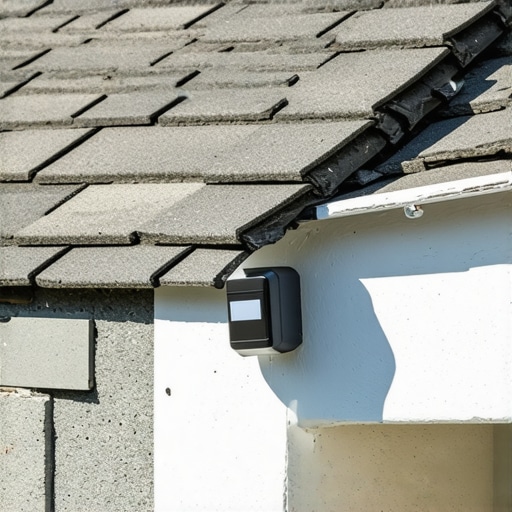
Before you even touch a sensor, you must ensure your gutter apron aluminum is correctly installed. The apron is the bridge that prevents water from using surface tension to crawl behind the gutter and rot your soffit. Once your physical envelope is secure, you can begin the tech integration. Smart monitoring systems typically involve a series of moisture-sensing probes or flow-rate meters installed inside the leader or downspout. These sensors communicate via a central hub, often requiring three-story access solutions such as articulating booms or specialized ladder stabilizer kits to reach the highest miter joints and end cap locations. For those with a copper gutter installation, sensor mounting requires non-corrosive housing to prevent galvanic reactions between the copper and the sensor hardware.
“The primary purpose of a gutter system is to collect water from the roof and direct it away from the building’s foundation through properly sized leaders.” – SMACNA Residential Sheet Metal Guidelines
Advanced Drainage: From Sensors to the Soil
The smartest gutter in the world is useless if the water dumps right at the corner of your house. This is where downspout extension services become critical. A smart retrofit should include monitoring at the French drain connection. By placing a flow sensor at the entry point of your underground drainage, you can verify that the water is actually leaving the property. If your gutter sensors show a high flow rate but your French drain sensor shows a trickle, you know you have a subterranean collapse or a root intrusion. For homeowners focused on sustainability, integrating greenhouse gutter collection with smart valves allows the system to automatically divert clean rainwater into storage tanks while flushing the initial ‘dirty’ roof runoff into the landscape via rock splash blocks. This level of control turns a passive metal channel into an active hydrological tool.
The Maintenance Loop: Spring Startup and Tech Calibration
Every spring, your system needs a hard reset. This spring gutter startup involves checking the pitch of every run. A standard 1/4 inch per 10 feet of slope is necessary to ensure velocity. During this time, you must also clean your sensor lenses. In regions with heavy canopy, sensors can be blinded by pollen or dust. We recommend a system that includes a ‘flush’ alert: a notification that tells you when the elbow or splash block area is seeing restricted movement. If you are dealing with a complex layout, especially one involving a French drain connection, ensure your smart hub is programmed to recognize the difference between a heavy storm and a slow-moving clog. Ultimately, the goal is to stop reacting to wet basements and start responding to data. Your home is an investment; do not let a lack of visibility lead to a foundation failure that could have been predicted by a simple ultrasonic pulse.