The Illusion of the Electric Solution
I have spent nearly three decades staring at rooflines, and if there is one thing that boils my blood, it is the false sense of security sold in a cardboard box at a big-box retailer. Homeowners plagued by ice dams often turn to heat cables as a holy grail. They drape these zig-zagging wires across their shingles and inside their gutters, thinking they have outsmarted winter. They haven’t. In reality, most heat cable installations are little more than expensive Band-Aids that often exacerbate the very structural rot they were meant to prevent. When you understand the fluid dynamics of melt-water and the thermal limitations of these systems, you start to see why they fail so spectacularly when the mercury truly drops. Your gutters are not just metal channels; they are the primary defense for your foundation, and treating them with low-wattage heat tape is like bringing a squirt gun to a forest fire.
The Narrative of the Frozen Miter
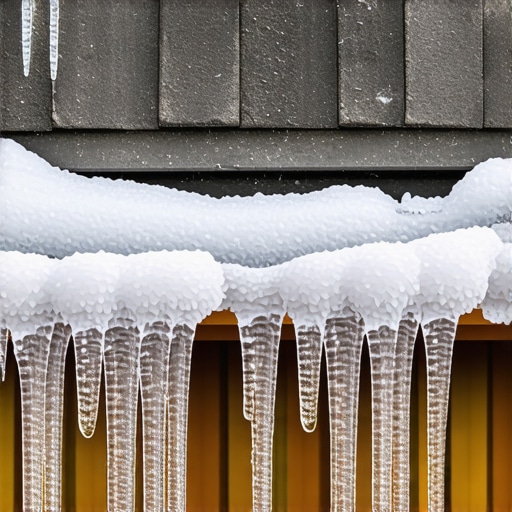
I recall a call-out during the deep freeze of 2021. The homeowner was frantic because his gutters were physically groaning under the weight of a three-thousand-pound ice shelf. He had spent a fortune on high-end heat cables the previous autumn. When I climbed the ladder, the problem was blindingly obvious. The cables had melted small, narrow tunnels through the snow, but because the cold was so pervasive, that melt-water simply refroze the moment it hit the unheated miter and the downspout elbow. The ice had backed up so far it had worked its way under the wood shake gutter flashing, saturating the roof deck and eventually dripping into his living room ceiling. The cables were warm to the touch, but they were powerless against the sheer volume of ice. This is the reality of ‘heat tape’—it creates paths for water that often lead to more dangerous accumulations where you least want them.
“Gutter hangers shall be spaced at a maximum of 36 inches on center. In areas subject to heavy snow loads, spacing shall be reduced to 18 inches or 12 inches to prevent structural failure of the fascia and gutter assembly.” – SMACNA Architectural Sheet Metal Manual
The Physics of Failure: Why Cables Cant Keep Up
To understand why these systems fail, we have to look at the physics of snow melt gutter solutions versus the reality of a northern winter. Most heat cables are self-regulating, meaning they put out more heat as it gets colder. However, they lack the wattage to move massive amounts of water. When snow on the roof melts due to heat loss from the attic—the real culprit of ice dams—it flows down to the cold eave. The heat cable melts a small ‘vein’ in the ice. This water then travels down the leader (downspout) until it hits a section that isn’t heated or is blocked by frozen debris. Because the water is just above freezing, it loses its latent heat almost instantly. The result? A massive ice plug in the downspout that effectively turns your gutter into a heavy, frozen anchor. If you are using recycled plastic gutters or are relying on a DIY vinyl gutter repair kit, that weight will snap the brackets like toothpicks. Vinyl becomes incredibly brittle in sub-zero temperatures; it cannot flex under the load of a frozen gutter, leading to catastrophic cracks and leaks that ruin your fascia boards.
The Engineering of Proper Drainage
If you want to solve the problem, you stop looking for electrical shortcuts and start looking at gutter sizing calculations. Most houses are woefully underserved by 5-inch K-style gutters and 2×3 downspouts. When we engineer a system for snow-prone regions, we often move to 6-inch or even custom box gutter installation. A larger trough allows for more air movement and a higher volume of water flow, which stays in motion longer before freezing. Surface tension plays a huge role here. In a small gutter, water clings to the sides and freezes faster. In a larger system, the flow velocity remains high enough to reach the exit point. Furthermore, we must look at the sump pump linkage. If your downspouts are discharging into a frozen lawn, the water backs up anyway. Proper landscape integration services ensure that the water doesn’t just leave the roof, but leaves the property entirely through buried lines that are sloped correctly—at least one-eighth of an inch per foot—to prevent internal freezing.
“Storm drainage systems shall be designed and installed so as to prevent the discharge of water onto sidewalks or into the crawlspace or basement of a building.” – International Plumbing Code, Section 1101.2
The Truth About Guards and Covers in Winter
Many people ask me about reverse curve guards or mesh covers in the context of ice. Here is the grumpy truth: most of them make ice dams worse. A reverse curve guard relies on water tension to pull liquid into the gutter while shedding leaves. In winter, that metal hood becomes a frozen slide. Melt-water from the roof hits the frozen hood and immediately turns into an icicle, skipping the gutter entirely and creating a dangerous ice patch on your walkway. If you have trees, gutter cleaning is a non-negotiable requirement twice a year. No guard is truly maintenance-free in a climate with snow. Debris trapped against a guard acts as a wick, pulling water into the soffit and causing rot that you won’t see until the gutter literally falls off the house. We focus on heavy-duty hangers screwed directly into the rafters, not just the fascia, to ensure the system stays put even if it does ice over.
What Actually Works: A Holistic Approach
Real snow melt gutter solutions require a three-pronged attack. First, you must address attic insulation to keep the roof deck cold. Second, you need a robust, oversized gutter system—seamless aluminum or copper, never sectional vinyl—with hangers spaced no more than 12 inches apart. Third, if you must use heat, it should be a professional-grade, high-wattage system integrated into the entire drainage path, including the downspouts and the underground discharge lines. Anything less is just a recipe for a wet basement and a lighter wallet. Proper pitch is the final piece of the puzzle. I have seen countless systems where the gutter was perfectly level because the installer thought it ‘looked better’ against the roofline. A level gutter is a standing-water gutter, and standing water is the first thing to freeze. We demand a slope that ensures every drop moves toward the end cap and down the leader immediately. That is how you protect a foundation and keep a home dry for thirty years.