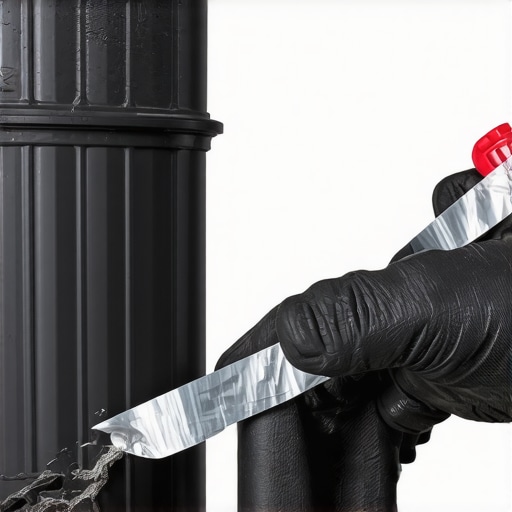
The Silent Foundation Killer: Why a Cracked Leader is a Crisis
In twenty-five years of engineering water management systems, I have learned that rain is not a gentle blessing: it is a relentless, corrosive force that wants to dismantle your home. When you see a crack in a plastic corrugated downspout, you are not just looking at a minor leak. You are looking at the beginning of a foundation failure. Water is lazy; it follows the path of least resistance. If that path leads through a hairline fracture in a cheap polyethylene pipe, it will saturate the soil directly against your foundation wall, creating hydrostatic pressure that can eventually crack solid concrete. Most homeowners ignore the quiet drip of a leader pipe, but that drip is the sound of your equity washing away.
The Hydrangea Grave: A Lesson in Drainage Neglect
I remember a call I took in a suburb of Chicago three years ago. The homeowner had a beautiful row of hydrangeas right next to the house. He couldn’t figure out why the one in the corner was drowning while the others were parched. I looked up and saw a plastic corrugated extension that had been stepped on during a multi-story gutter cleaning session the previous autumn. A three-inch split was dumping sixty gallons of water per hour during a typical storm directly into the root ball. But the plant wasn’t the real victim. When I went into the crawlspace, the smell of damp earth and microbial growth was overwhelming. That single cracked pipe had allowed water to bridge the gap behind the fascia and travel down the interior of the wall. This is why we don’t just ‘fix’ things; we engineer solutions to prevent catastrophe.
“Downspouts shall be sized based on the rainfall intensity of the region and the roof surface area.” – International Plumbing Code, Section 1106
The Physics of the Corrugated Failure
Why do these plastic pipes fail? If you live in a northern climate, the enemy is the freeze-thaw cycle. Plastic corrugated tubing is often used for downspout extension services because it is cheap and flexible, but it is structurally inferior to box style seamless gutters or rigid PVC. During a winter storm, water enters the ridges of the corrugated pipe. As it freezes, it expands. Because the plastic is thin, the expansion forces the polymer chains apart, creating micro-fractures. Once the sun hits it, the plastic becomes brittle due to UV degradation. In a heavy downpour, the flow velocity increases. Water moving at high speed creates turbulence when it hits those internal ridges. This turbulence creates localized pressure zones that turn a micro-fracture into a full-blown split. If your pitch is off, even by a fraction of an inch, standing water will sit in those ridges, accelerating the rot of any nearby fascia or soffit.
The Hierarchy of Repair: When to Tape and When to Toss
Before you reach for the tape, you must understand the drainage hierarchy. If the crack is within the first three feet of the connection to the elbow, you might be fighting a losing battle. However, for a mid-run repair on an extension leading to a rain barrel integration or a pop-up emitter, high-quality waterproof tape can buy you time. You cannot use standard duct tape. It has a fabric backing that wicks moisture, causing the adhesive to delaminate within weeks. You need a true butyl-backed waterproof flashing tape or a specialized rubberized repair tape designed for hydrostatic environments.
Step-by-Step: The Professional Way to Seal a Leader Pipe
First, you must achieve surgical cleanliness. If there is organic sludge or algae on the plastic, no adhesive will bond. Use a stiff brush and a mild degreaser to scrub the area around the crack. Dry it completely. Any moisture trapped under the tape will cause it to bubble when the sun heats the pipe. Second, consider the structural integrity. If the corrugated pipe is crushed, you must reshape it. I often insert a short piece of 3-inch rigid PVC inside the corrugated section to provide a solid backing for the tape. Third, apply the tape using the shingle roof gutter starter principle: start from the bottom and work your way up. This ensures that the upper layer of tape overlaps the lower layer, allowing water to flow over the seam rather than into it. If you wrap it from top to bottom, the descending water will eventually peel the edge of the tape back.
Beyond the Tape: Integrated Water Management
A repair is only as good as the system around it. If your gutters are overflowing because you lack a proper gutter guard installation, the volume of water hitting that repaired downspout will exceed its capacity. This is where kickout diverter installation becomes critical. A kickout diverter ensures that water at the roof-to-wall intersection is forced into the gutter rather than behind the siding. Furthermore, check your soffit ventilation during install of any new exterior components. Poor ventilation leads to heat buildup in the attic, which contributes to the very ice dams that split your downspouts in the first place. For larger properties or commercial buildings, industrial gutter services might be necessary to transition from flimsy plastic to heavy-gauge aluminum or steel.
“The collector head and downspout system shall be designed to handle the hydraulic load without overtopping the gutter flange.” – SMACNA Architectural Sheet Metal Manual
The Long-Term Solution: Moving Toward Permanent Drainage
While tape works for a season, it is a stopgap. If you are tired of the cycle of repair, consider upgrading to a more robust system. Box style seamless gutters paired with rigid underground drainage pipes offer a level of security that corrugated plastic never will. Ensure your splash block is positioned to move water at least five feet away from the foundation. If you are using a rain barrel, ensure the overflow valve is functional and directed away from the house. Water management is a game of inches and angles. A 1/4 inch per 10 feet pitch is the absolute minimum to keep water moving. Anything less, and you are just inviting mosquitoes and rust to take up residence in your hangers and end caps. Don’t let a simple crack turn into a five-figure foundation repair. Tape it right, then plan for a permanent upgrade.