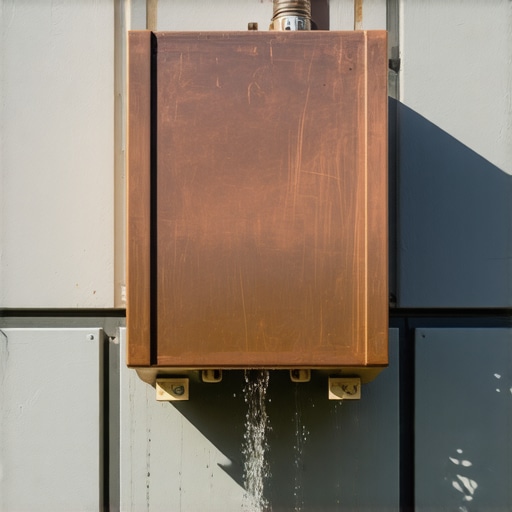
I have spent twenty five years on a ladder, and if there is one thing I have learned, it is that water is the most patient, destructive tenant your home will ever have. It does not pay rent, and it spends every waking second trying to find a way into your foundation or under your roof shingles. Most homeowners think of their gutters as a simple tin tray that catches rain, but that is a dangerous oversimplification. When we talk about flood prevention gutters, we are talking about a complex hydraulic system. One of the most misunderstood and underrated components of that system is the leader box, often called a conductor head. You might have seen them on historic buildings or high end custom homes and thought they were just for show. You would be wrong. They are a critical piece of water management engineering that can save your home from a catastrophic failure.
The Night the Foundation Gave Way: A Cautionary Tale
I remember a call I took in Charleston after a particularly brutal summer storm cycle. The homeowner had a beautiful historic property, but the northwest corner of the foundation had developed a crack so wide you could slide a deck of cards into it. I walked the perimeter and found the culprit: a massive roof valley that funneled thousands of gallons of water into a single, undersized five inch gutter. Every time it rained hard, the water would hit that small mitered corner with such velocity that it would overshoot the gutter entirely, splashing directly against the base of the house. Over five years, that water had scoured the soil away from the footer, leading to a structural settlement that cost forty thousand dollars to pin. If they had invested in a properly sized leader box and downspout relocation early on, they would have spent a fraction of that. The leader box acts as a catch basin, taking that high velocity surge and taming it before it enters the vertical leader. It provides a safety overflow mechanism that prevents the gutter from backing up and rotting out the fascia and soffit.
The Physics of Air Entrainment and Gutter Flow
To understand why a leader box is necessary, you have to understand the physics of water moving through a pipe. When a heavy downpour fills a standard downspout, it creates a phenomenon known as air entrainment. As the water rushes down, it traps air bubbles. In a closed system, this air has nowhere to go but down, which creates a vacuum effect and turbulence that actually slows the drainage rate. This is where the leader box earns its keep. By being open at the top, the leader box allows air to escape as water enters the vertical pipe. This breaks the vacuum and allows the water to fall at a much higher velocity without backing up. It is the difference between trying to pour water out of a soda bottle (where it glugs and splashes) and pouring it through a funnel.
“Downspouts shall be sized based on the rainfall intensity of the region and the roof surface area.” – International Plumbing Code, Section 1106
When we calculate the needs for a box gutter installation, we look at the square footage of the roof and the local peak rainfall rates. In areas prone to heavy storms, the standard two by three inch leader is often insufficient. Upgrading to a three by four inch or even a four by five inch leader, paired with a high capacity conductor head, is the only way to ensure flood prevention gutters actually do their job. We also have to consider the pitch of the gutter. A slope of one quarter inch per ten feet is the bare minimum, but in high volume areas, we often increase that pitch to ensure the water does not sit and stagnate, which leads to rust and mosquito breeding grounds.
High Wind Anchors and Structural Integrity
In storm prone regions, the way you attach the gutter to the house is just as important as the gutter itself. I hate spikes and ferrules. They are the hallmark of a lazy contractor. Over time, the wood of the fascia expands and contracts, and those spikes pull right out. When the gutter fills with water or ice, it becomes incredibly heavy. A standard sixty foot run of six inch gutter filled with water can weigh over three hundred pounds. If you are using cheap hangers, that weight will pull the gutter away from the house, allowing water to bridge the gap and rot your rafter tails. This is why I insist on high-wind gutter anchors. These are heavy duty brackets that are screwed directly through the fascia and into the rafter tails. They provide a level of security that can withstand hurricane force winds and the weight of a flash flood. When we combine these with a lifetime gutter guarantees, we are giving the homeowner peace of mind that their system will not end up in the yard after the next big blow.
The Modern Upgrade: Smart Gutter Monitoring and Drones
We are no longer in the dark ages of home maintenance. Today, we use drone gutter inspection to get a birds eye view of the system without the risk of climbing a forty foot extension ladder. Drones allow us to see exactly where the debris is piling up and if the pitch has shifted due to house settling. Furthermore, for homeowners who want the ultimate in protection, we are now installing gutter flow sensors. These smart gutter monitoring systems can alert your smartphone if the flow of water through a leader box drops below a certain threshold during a rain event. This is an early warning system for clogs. If the sensor tells you the front downspout is only moving at fifty percent capacity while the back is at one hundred percent, you know you have a blockage before the water starts spilling over and damaging your landscaping.
“The cross-sectional area of a gutter shall not be less than the cross-sectional area of the downspout it serves.” – SMACNA Architectural Sheet Metal Manual
This SMACNA standard is often ignored by budget installers. They will put a massive six inch gutter on a house but neck it down into a tiny two inch downspout. It is a bottleneck that causes the entire system to fail. A leader box helps mitigate this by providing a reservoir that can handle the surge while the downspout works at maximum capacity.
Environmental Responsibility and Project Financing
When we tear off an old, failing system, we don’t just chuck it in a landfill. We practice eco-friendly gutter disposal, which means sorting the aluminum, copper, and steel for recycling. Aluminum is infinitely recyclable, and it is a crime to see it wasted. We also recognize that a full system overhaul, including leader boxes, high capacity downspouts, and structural repairs, can be a significant investment. That is why many reputable contractors now offer financing for gutter installs. This allows you to protect your foundation today and pay for the system over time, rather than waiting until you have a five figure foundation repair bill on your hands. Protecting your home is not just about the metal you see; it is about the engineering you don’t see. From the end cap to the splash block, every piece must work in harmony to move water away from your life’s biggest investment. Do not settle for a system that just hangs there. Demand a system that is engineered to perform.