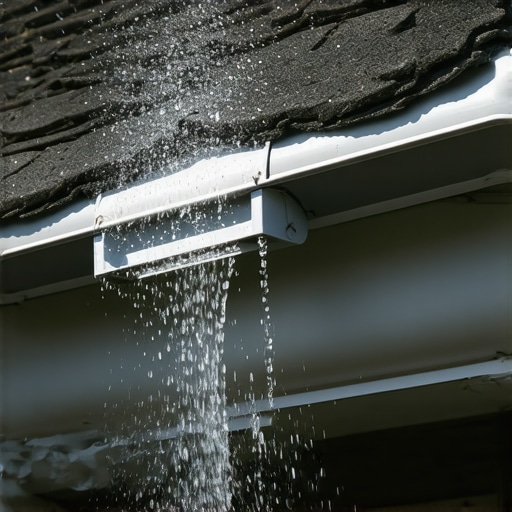
The Phantom Drips That Ruin Foundations
For twenty-five years, I have listened to homeowners complain about mysterious damp smells in their basements, only to find their gutters look perfectly fine from the ground. Rainwater is a patient, destructive force. It doesn’t need a gaping hole to wreck your home; a microscopic failure in a seam sealer is all it takes. During a heavy downpour, surface tension allows water to cling to the underside of your gutter run, creeping behind the metal, rotting out your wooden fascia board, and eventually pooling at your foundation footing. If you have ever wondered why your basement walls feel damp despite having apparently clean gutters, you are likely dealing with hidden seal failures.
I recall walking around a historic brick home in Savannah during a humid summer afternoon. The homeowner had spent thousands on interior waterproofing, yet the crawlspace smelled like a swamp. I set up my ladder, inspected the beautiful, weathered copper gutter installation, and found absolutely nothing visible to the naked eye. The mitered corners looked pristine. But when I blocked the downspouts and ran a low-pressure static water test, a steady, silent weep emerged from the back seam. It had been trickling directly down the brickwork, bypassing the splash blocks, and sinking two inches into the foundation clay for nearly seven years. A simple pressure test found the culprit in under five minutes.
The Physics of the Leak: Why Visual Inspections Fail
Most gutter contractors walk around your house, squint at the seams, and declare them sound. That is lazy work. When a gutter is dry, a failing joint looks identical to a sealed one. Silicone and butyl-based sealants degrade from ultraviolet radiation and thermal expansion. Because aluminum and copper expand and contract at different rates than the wooden fascia they are anchored to, the sealant bond eventually shears. This creates a microscopic fissure.
“Seams in gutters must be fully sealed with high-performance elastomeric sealants applied to dry, clean surfaces to prevent capillary action from drawing moisture behind the exterior cladding.” – SMACNA Architectural Sheet Metal Manual, Section 3.4
When rain falls, water fills the gutter channel. If the outlet is restricted, even slightly, water backs up. Static head pressure increases. This pressure forces water through those microscopic fissures. Once the water escapes the seam, it relies on capillary action to flow backward toward your soffit. This is why we use hydrostatic pressure testing. By temporarily blocking the downspouts (or leaders) and filling the run to its maximum capacity, we simulate the exact hydraulic stress of a sudden cloudburst. Any compromised seam, end cap, or miter will immediately reveal itself under the weight of the water column.
How to Pressure Test Your Gutter Seals Step-by-Step
You do not have to wait for a major storm to diagnose your system. A controlled pressure test is highly effective, especially when paired with modern diagnostic tools. Here is how we execute this in the field to locate hidden structural threats.
Step 1: Isolate the Run
We begin by cleaning all organic debris from the channel. If you have a gutter screen installation, we temporarily lift the panels over the seams. Next, we use inflatable rubber test plugs (the same ones plumbers use for drain line pressure testing) to seal the downspout outlets. This isolates the horizontal run, turning it into a temporary holding vessel.
Step 2: Controlled Filling and Flow Simulation
We fill the gutter run with water using a standard garden hose. We do not just dump water in; we introduce it slowly to observe how the level rises and to monitor the pitch. A properly installed gutter should slope at least 1/16 inch per foot toward the downspout. If we see water pooling at the far end, we know we have a structural slope issue along with potential seal failures.
Step 3: High-Tech Verification
Once the water reaches the brim, we look for immediate drops in the water line. For deep or hard-to-see areas, such as behind elaborate crown molding or under an awning gutter integration, we employ camera scoping for gutters. A waterproof snake camera run along the underside of the gutter flange reveals exactly where the moisture is weeping through the seam, even if it has not yet dripped onto the ground.
“All roof drainage systems shall be tested by filling the system with water to the highest point of the installation and verifying that no leaks occur under static pressure.” – International Plumbing Code, Section 1109.2
Upgrading and Protecting Your Water Management System
Once a leak is detected, patching it with cheap hardware store caulk is a temporary band-aid that will fail by next winter. For lasting protection, especially if you are investing in high-end systems, you need a comprehensive approach to exterior water management.
If your system is old and riddled with seam failures, it might be time to replace it. Homeowners looking to add long-term value often choose gorgeous copper gutter installation or custom color-matched gutters that complement their architectural style. To make these projects more accessible, many reputable companies now offer competitive financing for gutter installs, allowing you to protect your foundation before the next wet season arrives.
For those interested in modern technology, integrating your water management with smart home systems is the ultimate defense. We now install smart gutter monitoring systems that use moisture and level sensors to alert you via your integrated home automation hub when water levels rise unexpectedly, indicating a clog or a backup. This technology works beautifully when paired with rain barrel integration, allowing you to monitor water conservation levels while protecting your home.
The Importance of Seasonal Preparation
A pressure test is especially valuable during gutter winterization. If water penetrates a weak seal in late autumn, it will freeze and expand during the winter months. This ice expansion tears seams wide open, pulling brackets out of the fascia board. Ensuring your seams are perfectly sealed before the first freeze is the only way to avoid catastrophic failure under heavy ice loads. By taking action early, utilizing professional diagnostics, and investing in quality materials, you can guarantee your home remains dry from foundation to roofline.