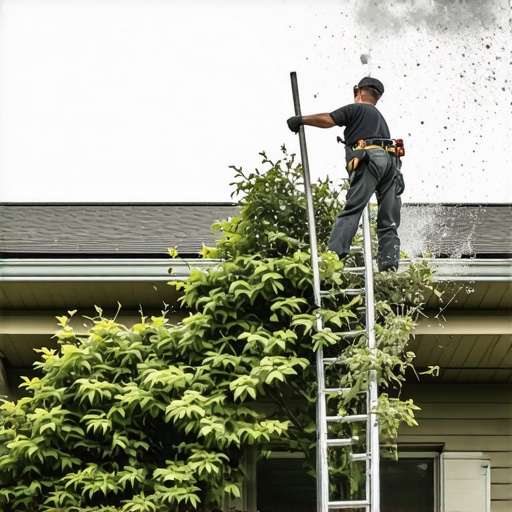
Understanding the Critical Role of Proper Drainage in Property Preservation
Effective drainage management is a cornerstone of sustainable property maintenance, especially in regions prone to heavy rainfall or seasonal deluges. As a seasoned drainage and gutter specialist, I recognize that neglecting these systems can lead to severe water damage, foundation issues, and landscape erosion. This article delves into advanced strategies and expert insights to optimize your drainage systems, ensuring long-term property integrity.
Advanced Techniques for Gutter System Optimization
How can professional gutter installation and maintenance enhance your property’s water management?
Professional installation ensures gutters are correctly aligned and equipped with efficient downspouts, reducing overflow risks. Regular cleaning, including debris removal and inspection, prevents blockages that compromise water flow. For instance, utilizing high-capacity gutters with seamless design minimizes joints where leaks may occur, a practice supported by recent industry standards outlined in the Engineering Toolbox.
Integrating Greywater Recycling and Drainage Solutions
Implementing greywater recycling systems can significantly alleviate drainage burdens while promoting eco-friendly water reuse. Coupled with strategic swale placement and French drains, these solutions create a resilient network that channels excess water away from vulnerable zones. By analyzing your landscape’s topography, you can design a drainage layout that maximizes efficiency and minimizes erosion.
Addressing Common Drainage Challenges with Expert Precision
One prevalent question among homeowners is: “What are the most effective ways to prevent basement flooding during heavy storms?” The answer lies in multi-layered defense: installing sump pumps with battery backups, sealing foundation cracks, and ensuring gutters are free-flowing. These measures, supported by authoritative sources such as the USGS Water Science Center, bolster your property’s defenses against water ingress.
How can ongoing professional drainage assessments preempt costly repairs?
Routine inspections by drainage experts facilitate early detection of deterioration, erosion, or blockages. These proactive assessments recommend targeted repairs or upgrades—such as replacing aging gutters or installing new drainage channels—before problems escalate. Regular professional evaluations are a cornerstone of durable, reliable water management systems.
If you seek to elevate your property’s water resilience, exploring comprehensive drainage solutions and maintenance strategies is essential. For further expert guidance, visit our detailed resource on trusted gutter cleaning tips. Engage with industry professionals or contribute your knowledge to advancing property protection practices.
Innovative Drainage Technologies: Modern Solutions for Complex Challenges
In today’s evolving landscape of property management, traditional drainage methods often fall short in addressing complex topographies and climate extremes. Advanced drainage technologies, such as permeable pavements, subsurface detention systems, and smart drainage sensors, are revolutionizing how homeowners and professionals approach water management. These innovations not only enhance efficiency but also contribute to sustainable development, reducing environmental impact. Implementing these systems requires a nuanced understanding of your landscape’s unique conditions and the latest industry standards, such as those outlined by the American Society of Civil Engineers (ASCE).
How can integrating smart drainage systems transform your property’s water resilience?
Smart drainage solutions incorporate IoT (Internet of Things) devices that monitor water flow, detect blockages, and provide real-time data for proactive maintenance. These systems can be programmed to trigger alerts or automatically activate pumps during heavy rainfall, significantly reducing the risk of water ingress and flooding. For example, integrating smart sensors with existing gutter and drainage infrastructure allows for continuous oversight, enabling early intervention before issues escalate. This approach aligns with the principles of sustainable water management and can be tailored to specific property needs, ensuring optimal performance and longevity.
Addressing the Myth: Is DIY Drainage Maintenance Sufficient for Long-Term Protection?
Many homeowners believe that regular DIY gutter cleaning and minor repairs are enough to maintain effective drainage. However, expert insights reveal that professional assessments are vital for identifying underlying issues such as soil erosion, improper grading, or subtle foundation cracks that DIY inspections might miss. As detailed in the trusted gutter repair tips, proactive maintenance by trained specialists can prevent costly water damage and structural deterioration. Regular professional evaluations, including advanced camera inspections and topographical analysis, ensure your drainage system operates at peak efficiency over the long term.
What are the key factors that influence the success of a comprehensive drainage upgrade?
Effective drainage upgrades hinge on understanding your property’s specific topography, climate patterns, and existing infrastructure. Site-specific factors like soil permeability, slope gradient, and water table levels shape the design and choice of drainage solutions. Collaborating with experienced drainage engineers ensures that systems are tailored to these variables, incorporating elements like French drains, swales, and retention basins as needed. Additionally, integrating eco-friendly components such as rain gardens and vegetated swales can further enhance water infiltration and reduce runoff, aligning with sustainable practices promoted by authoritative sources like the EPA. For expert guidance on designing resilient drainage systems, visit our comprehensive resource on drainage system optimization.
If you’re seeking tailored advice on elevating your property’s water management, consider engaging with professional drainage specialists who can implement high-tech solutions and conduct thorough assessments. For additional insights, explore our trusted gutter and drainage maintenance tips and ensure your property remains protected against water-related risks.
Harnessing the Power of Data-Driven Drainage Management for Complex Landscapes
In the realm of advanced property maintenance, integrating data analytics with traditional drainage solutions offers a transformative approach. By deploying IoT-enabled sensors and Geographic Information System (GIS) technologies, property managers can obtain granular insights into water flow patterns, soil permeability, and saturation levels. This real-time information facilitates dynamic adjustments to drainage infrastructure, optimizing performance during extreme weather events.
For example, smart sensors embedded within French drains or beneath permeable pavements can detect blockages or inefficiencies, triggering automated responses such as activating pumps or alerting maintenance personnel. According to a comprehensive study by the American Society of Civil Engineers (ASCE), these integrated systems significantly reduce the risk of flooding and structural damage in complex terrains.
Designing Resilient Drainage Networks in Urban Environments: Strategies and Challenges
Urban landscapes pose unique challenges due to limited space, high impervious surface ratios, and variable topography. To address these, innovative solutions such as underground detention tanks, modular green infrastructure, and multi-layered infiltration systems are gaining traction. These designs aim to mimic natural hydrological cycles, promoting groundwater recharge while mitigating urban runoff.
One effective approach involves creating interconnected networks of vegetated swales and rain gardens that serve as bio-retention systems, reducing peak flow rates and filtering pollutants. Implementing such systems requires meticulous planning, including hydrological modeling and soil testing. A recent report by the EPA Green Infrastructure Program emphasizes the importance of site-specific designs that harmonize with existing urban infrastructure.
What are the most sophisticated techniques for integrating underground detention systems with above-ground green infrastructure in compact urban settings?
Advanced techniques involve modular underground tanks coupled with permeable paving and bioretention zones. These systems utilize modular components that can be customized to fit constrained spaces, providing flexibility and scalability. Incorporating smart controls within these networks allows for adaptive management based on real-time rainfall data, optimizing water retention and release cycles.
Furthermore, employing porous concrete and innovative filtration media enhances infiltration rates and pollutant removal efficiency. Such integrated systems require interdisciplinary expertise—combining civil engineering, environmental science, and urban planning—to ensure long-term resilience and regulatory compliance. For authoritative guidance, consult the latest standards outlined by the American Society of Civil Engineers.
Future-Proofing Drainage Systems: Embracing Sustainability and Climate Adaptation
The increasing frequency of extreme weather events necessitates a paradigm shift toward sustainable, climate-resilient drainage infrastructure. Incorporating features like rainwater harvesting, vegetated rooftops, and permeable pavements reduces reliance on traditional drainage and decreases stormwater runoff. Additionally, adaptive systems designed to evolve with changing climate patterns can incorporate modular upgrades and scalable components.
Research indicates that integrating ecological functions—such as restoring natural waterways or creating floodplains—significantly enhances a community’s capacity to absorb and manage floodwaters. For instance, the EPA’s Water Research Program advocates for nature-based solutions that align infrastructure development with ecological restoration, ensuring sustainable resilience for decades to come.
If you are committed to elevating your property’s water management strategy, engaging with innovative technologies and expert consultants is paramount. Explore our comprehensive resources and consider professional assessments to craft bespoke, future-ready drainage solutions that safeguard your assets and environment alike.
Harnessing Geospatial Analytics for Precision Drainage Planning
Employing cutting-edge geospatial analytics, including LiDAR and GIS mapping, enables drainage specialists to visualize subsurface features, topographical nuances, and water flow pathways with unparalleled accuracy. This technology allows for the creation of bespoke drainage architectures that align with the nuanced needs of complex landscapes, minimizing disruptions and optimizing water diversion efficiency. According to a detailed study by the American Society of Civil Engineers (ASCE), integrating geospatial data into drainage design significantly reduces project risks and enhances system longevity.
Innovative Bioretention and Ecological Infrastructure Integration
Advanced ecological engineering involves designing integrated bioretention systems such as constructed wetlands, vegetated swales, and green roofs that serve dual functions—stormwater management and habitat creation. These systems employ native plant species and soil amendments that promote infiltration, pollutant removal, and biodiversity. Implementing these features within urban or suburban developments not only mitigates flood risks but also enhances ecological resilience. The EPA’s Green Infrastructure Program provides comprehensive guidelines on deploying such nature-based solutions effectively.
Expert-Level Q&A: How do climate-adaptive drainage systems incorporate resilience to extreme weather?
Climate-adaptive systems incorporate modular, scalable infrastructure capable of evolving with climate patterns. This includes the use of adjustable weirs, permeable pavements with variable infiltration rates, and dynamic control systems driven by real-time weather data. These configurations allow for rapid response during intense rainfall events, preventing urban flooding and infrastructure damage. A recent publication by the American Society of Civil Engineers emphasizes the importance of integrating climate projections into the engineering design process for sustainable resilience.
What innovative materials are transforming the durability and efficiency of modern drainage systems?
Emerging materials such as high-performance permeable concrete, geosynthetic drainage composites, and biochar-infused soils are revolutionizing the durability and performance of drainage infrastructure. These materials enhance infiltration, reduce clogging, and improve pollutant filtration. For example, biochar’s adsorptive properties help remove contaminants, contributing to cleaner runoff and longer system lifespan. Consulting authoritative sources like the Engineering Toolbox provides insights into the application of these advanced materials.
To stay at the forefront of property water management, professionals should continuously explore innovative materials and smart design principles. Engage with industry-leading experts and participate in ongoing research to develop resilient, sustainable drainage frameworks tailored to evolving environmental challenges.
Integration of Automated Monitoring and Machine Learning in Drainage Systems
The next frontier in drainage innovation involves embedding IoT sensors and leveraging machine learning algorithms to predict system failures, optimize maintenance schedules, and adapt water flow controls dynamically. Sensors can detect early signs of clogging, saturation, or structural stress, sending real-time alerts to maintenance teams. Machine learning models analyze historical and real-time data to forecast potential issues, allowing preemptive interventions. This approach transforms traditional reactive maintenance into a proactive, data-driven strategy, significantly reducing operational costs and enhancing system reliability. A groundbreaking study published by the ASCE underscores the transformative impact of these technologies on urban water infrastructure resilience.
Designing Resilient, Multi-Functional Water Management Networks for Urban Complexities
Urban environments demand multi-layered, adaptive drainage networks that can handle increasing impervious surfaces, variable rainfall intensity, and space constraints. Cutting-edge solutions include underground modular detention tanks combined with above-ground bio-infiltration zones, strategically placed to maximize water retention and pollutant removal. Incorporating smart controls and real-time monitoring ensures these systems respond adaptively to changing conditions. The EPA’s guidelines on green infrastructure highlight the importance of integrating multifunctional features that serve aesthetic, ecological, and hydrological functions simultaneously.
Engage with these innovative strategies to future-proof your property’s drainage infrastructure, ensuring resilience amid climate volatility and urban growth. For expert counsel and tailored solutions, consult leading industry specialists who leverage the latest research and technological advancements to deliver sustainable, high-performance water management systems.
Expert Insights & Advanced Considerations
Innovative Technologies Drive Efficiency
Integrating IoT sensors and GIS mapping enables precise water flow management, reducing flood risks and optimizing drainage performance in complex terrains.
Climate Resilience Through Adaptive Design
Designing modular, scalable drainage systems that incorporate real-time weather data ensures long-term resilience against extreme weather events caused by climate change.
Ecological Infrastructure as a Force Multiplier
Implementing green infrastructure such as rain gardens and vegetated swales not only manages stormwater but also enhances biodiversity and urban aesthetics, creating a holistic approach to property resilience.
Materials Innovation for Durability
Emerging materials like permeable concrete and biochar-infused soils improve infiltration rates and pollutant removal, extending system lifespan and environmental benefits.
Data-Driven Maintenance Strategies
Employing machine learning algorithms on sensor data enables predictive maintenance, reducing operational costs and preventing system failures before they occur.
Curated Expert Resources
- American Society of Civil Engineers (ASCE): Offers comprehensive standards and research on infrastructure resilience, critical for advanced drainage planning.
- EPA Green Infrastructure Program: Provides guidelines and case studies on sustainable urban drainage solutions and ecological integration.
- Engineering Toolbox: A repository of technical data and innovative materials information for designing durable drainage systems.
- Water Research Foundation: Conducts cutting-edge research on water management technologies and resilient infrastructure practices.
- Geospatial Analytics Platforms (e.g., ArcGIS): Essential tools for high-precision topographical and subsurface mapping to inform drainage design.
Final Expert Perspective
Mastering advanced drainage management demands a synthesis of innovative technologies, sustainable design principles, and predictive analytics, ensuring property resilience amid climate challenges. Engaging with authoritative resources like the ASCE and the EPA Green Infrastructure Program empowers professionals to stay at the forefront of this evolving field. For those committed to excellence, continuous learning and strategic implementation of these insights will transform drainage systems into resilient, sustainable assets. To deepen your expertise and contribute to this vital domain, explore these resources and consider consulting with specialists who leverage the latest innovations in property water resilience.