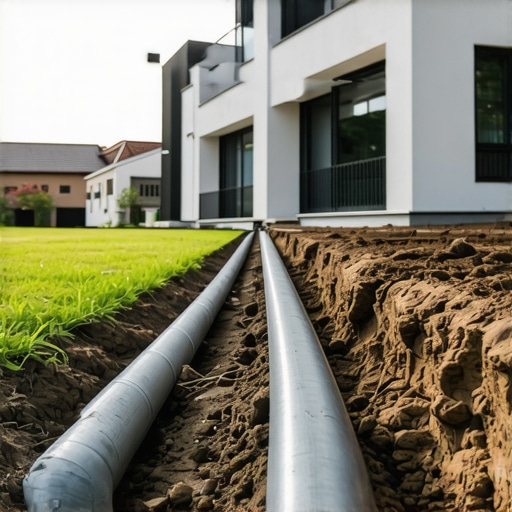
Unveiling the Significance of Expert Drainage System Solutions in Modern Property Management
In the realm of property protection, effective drainage systems are not merely components—they are the backbone of resilient infrastructure. As urbanization accelerates and climate variability introduces unpredictable water challenges, leveraging expert drainage solutions becomes paramount. These systems do more than direct rainwater; they safeguard structural integrity, prevent soil erosion, and uphold property value. Recognizing the nuanced complexities of drainage design, seasoned professionals integrate advanced techniques and materials, ensuring long-term efficacy in flood mitigation and water management.
How Do Sophisticated Drainage Strategies Enhance Property Resilience?
Implementing expert drainage solutions involves a multifaceted approach, combining hydrological analysis with innovative engineering. For instance, the deployment of permeable pavements, swale systems, and underground retention tanks reduces surface runoff and alleviates pressure on municipal drainage networks. These tailored solutions are designed considering local soil properties, rainfall patterns, and property layout, which is critical for maximizing efficiency. Moreover, integrating smart sensors and real-time monitoring allows proactive adjustments, exemplifying the intersection of technology and drainage mastery.
What Are the Cutting-Edge Technologies Shaping Drainage System Design?
The evolution of drainage technology encompasses several groundbreaking advancements. For example, modular bio-retention systems utilize engineered soils and vegetation to naturally filter pollutants while managing stormwater. Additionally, GIS-based modeling enables precise planning and simulation of water flow paths, reducing costly trial-and-error installations. The adoption of sustainable materials like recycled aggregates further enhances eco-friendliness without compromising performance. These innovations exemplify how expert practitioners stay ahead of water management challenges, ensuring robust and adaptable drainage frameworks.
What are the critical considerations for integrating drainage solutions in complex urban environments?
Urban settings pose unique challenges such as limited space, existing infrastructure, and high impervious surface ratios. To address these, professionals employ vertical and underground drainage systems, complemented by green infrastructure. Collaboration with civil engineers, environmental scientists, and urban planners ensures solutions are compliant, sustainable, and minimally disruptive. The key lies in harmonizing innovative techniques with existing urban fabric, emphasizing flexibility and scalability to future-proof the property against increasing rainfall intensities.
For further insights into advanced drainage strategies, explore expert gutter installation and drainage solutions. Your property’s resilience depends on informed, strategic choices made today.
Interested in sharing your own field-tested drainage solutions or seeking expert advice? Join our community of industry professionals dedicated to elevating property safety standards.
Innovating Beyond Basics: How Custom Drainage Solutions Elevate Property Protection
While standard drainage systems address routine water management, innovative approaches are redefining resilience for complex properties. Experts now design tailored solutions that integrate multiple components—such as subterranean infiltration chambers, constructed wetlands, and advanced permeable paving—to create a holistic water management strategy. These systems not only mitigate flooding but also enhance ecological value, improve soil health, and reduce maintenance costs over time. For property owners seeking long-term sustainability, consulting with specialists who understand regional hydrological nuances is essential. Explore expert gutter installation and drainage solutions to craft a resilient infrastructure that adapts to future challenges.
What Are the Risks of Overlooking Site-Specific Drainage Needs?
Neglecting the unique characteristics of your property—such as soil type, topography, and existing infrastructure—can lead to ineffective drainage and costly damage. For example, clay soils may require enhanced infiltration systems, while sloped terrains benefit from strategically placed swales and retention basins. Ignoring these factors risks water pooling, soil erosion, foundation damage, and landscape degradation. Conducting comprehensive site assessments and hydrological modeling, as outlined by authoritative sources like the US Geological Survey, ensures that drainage solutions are precisely calibrated. An expert evaluation helps in designing systems that are both efficient and compliant with local regulations.
How Can Integration of Smart Technologies Transform Drainage Management?
Smart water management technologies, such as IoT-enabled sensors, real-time monitoring, and automated valves, are revolutionizing drainage maintenance. These tools provide instant data on water flow, saturation levels, and system performance, enabling proactive adjustments before problems escalate. For instance, smart sensors can trigger emergency drainage activation during intense storm events, reducing the risk of flooding. Moreover, integrating data analytics helps optimize system operation, extend lifespan, and inform future upgrades. Adopting such technologies requires collaboration with specialists skilled in both hydrology and digital solutions, ensuring your property remains resilient amidst evolving climate patterns. To explore how these innovations can be implemented, visit expert drainage gutter cleaning strategies for comprehensive insights.
Share your experiences or questions about integrating smart drainage solutions in the comments—your insights could help others in the community optimize their property protection strategies!
Harnessing the Power of IoT and Data Analytics to Revolutionize Urban Drainage Management
In the rapidly evolving landscape of urban infrastructure, integrating smart technologies into drainage systems is no longer a futuristic concept—it’s a necessity for sustainable city management. By deploying IoT-enabled sensors, real-time data analytics, and automated controls, urban planners and engineers can transform traditional drainage networks into intelligent systems that adapt dynamically to changing conditions.
Smart sensors placed at critical junctions monitor parameters such as flow rate, water level, and soil saturation. This data feeds into centralized control systems powered by advanced analytics, enabling predictive maintenance and preemptive responses to potential flooding scenarios. For example, during an unexpected heavy rainfall, automated valves can modulate flow paths, divert excess water, and activate additional drainage channels, effectively mitigating flood risks before they materialize.
The integration of these technologies also supports comprehensive urban water management strategies. By analyzing historical and real-time data, city officials can identify vulnerabilities, optimize infrastructure investments, and develop adaptive models that improve resilience over time. Such systems align with the broader framework of smart city initiatives, leveraging interconnected networks to enhance quality of life and environmental sustainability.
What Advanced Data Integration Techniques Enable Precise Hydrological Predictions?
Utilizing machine learning algorithms and Geographic Information Systems (GIS), engineers can create high-fidelity models of urban water flow. These models incorporate variables such as land use, rainfall patterns, soil permeability, and existing infrastructure, producing detailed simulations that inform decision-making. For instance, integrating LIDAR-based topographical data with real-time weather forecasts allows for hyper-localized predictions of flood-prone zones, guiding targeted interventions.
Authoritative sources like the US Geological Survey emphasize the importance of such integrated data approaches for effective water resource management. These methodologies enable stakeholders to anticipate system behavior under various scenarios, facilitating proactive planning and resource allocation.
Implementing Smart Drainage Solutions: Challenges and Best Practices
While the benefits of smart drainage systems are substantial, their implementation involves navigating complex challenges. These include ensuring cybersecurity, managing interoperability among diverse technologies, and addressing the high initial costs. A phased approach—starting with pilot projects, rigorous testing, and stakeholder engagement—can mitigate risks and demonstrate tangible benefits.
Furthermore, designing for scalability and future technological integration is crucial. Collaborating with multidisciplinary teams—including hydrologists, urban planners, and cybersecurity experts—ensures systems are robust, compliant, and adaptable to evolving urban demands. As highlighted by industry leaders, such as those documented in the Smart Cities World platform, continuous innovation and stakeholder education are vital for sustained success.
Interested in exploring how cutting-edge smart technology can elevate your property’s water resilience? Connect with industry experts and access tailored solutions that integrate seamlessly with existing infrastructure—your proactive step towards smarter, safer urban environments.
Unlocking the Potential of Adaptive Drainage Networks in Complex Urban Landscapes
As urban environments evolve, so does the necessity for dynamic and sophisticated drainage solutions that can accommodate fluctuating water volumes and diverse topographical challenges. Modern engineering now emphasizes the integration of adaptive systems such as modular underground chambers and flexible piping networks, which can be reconfigured post-installation to respond to changing rainfall patterns and infrastructure needs. These innovations allow for a more resilient urban water management framework, minimizing flood risks and preserving the integrity of underground utilities.
How Do Emerging Materials Enhance the Longevity and Sustainability of Drainage Systems?
The selection of advanced materials plays a crucial role in extending the lifespan and environmental compatibility of drainage infrastructure. Polymer composites and bio-based concrete formulations offer superior corrosion resistance, reduced permeability, and lower carbon footprints. Additionally, incorporating recycled aggregates and permeable concrete can significantly boost eco-efficiency, aligning drainage projects with sustainable development goals. These materials not only improve performance but also reduce maintenance costs and environmental impact over the long term.
What are the latest developments in eco-friendly drainage solutions for urban applications?
Recent breakthroughs include the deployment of green infrastructure elements such as bioretention swales, vegetated rooftops, and permeable pavements. These systems leverage natural processes for water filtration and infiltration, effectively reducing urban runoff and improving water quality. Furthermore, integrating these features with smart monitoring allows for real-time assessment of system health and performance, fostering proactive maintenance and adaptive management strategies. For comprehensive insights, consult the detailed research available at the EPA Green Infrastructure Program.
” alt=”Sustainable urban drainage with green infrastructure” title=”Sustainable urban drainage with green infrastructure”/>
Expert Insights & Advanced Considerations
Innovative Materials and Sustainable Design
Utilizing cutting-edge materials such as bio-composites and recycled aggregates significantly enhances the durability and eco-friendliness of drainage infrastructure, aligning with global sustainability goals.
Integration of Smart Technologies
Embedding IoT-enabled sensors and automated controls into drainage networks allows real-time monitoring and predictive maintenance, minimizing failure risks and optimizing water management efficiency.
Adaptive and Modular Infrastructure
Designing scalable, reconfigurable systems like underground chambers and flexible piping ensures urban drainage resilience amid evolving climate patterns and expanding city landscapes.
Holistic Urban Water Management
Adopting a comprehensive approach that combines green infrastructure, advanced modeling, and stakeholder collaboration leads to more effective flood mitigation and sustainable urban development.
Curated Expert Resources
- US Geological Survey (USGS): Provides authoritative hydrological data and modeling tools essential for precise water flow analysis.
- EPA Green Infrastructure Program: Offers innovative strategies and case studies on eco-friendly urban drainage solutions.
- Smart Cities World: Features insights on integrating IoT and data analytics into urban water management systems.
Final Expert Perspective
In-depth understanding of advanced drainage strategies reveals that integrating innovative materials, smart technology, and adaptive infrastructure is crucial for resilient property management. As water challenges grow in complexity, leveraging authoritative resources and adopting a forward-thinking approach ensures sustainable, long-term protection. For industry professionals and property owners alike, engaging with these insights and resources fosters smarter water management and reinforces infrastructure resilience. To deepen your expertise, explore expert gutter installation and drainage solutions and share your insights to advance our collective knowledge.