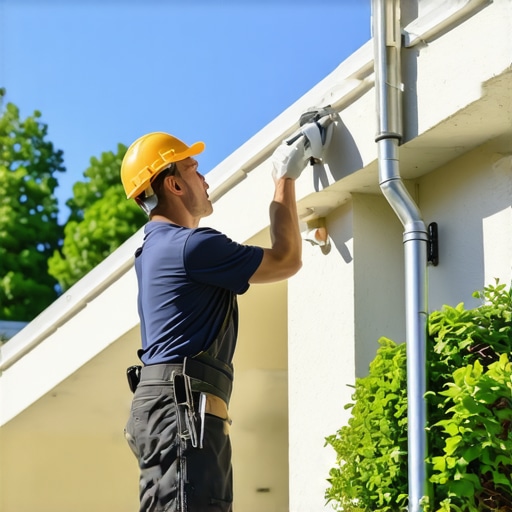
Elevating Home Defense: The Critical Role of Drainage and Gutter Systems
In the realm of sustained residential safety, the importance of a meticulously maintained drainage and gutter system cannot be overstated. These components serve as the frontline defense against water infiltration, foundation erosion, and structural deterioration. As an expert in home protection, I emphasize that proactive maintenance and strategic repairs are essential for long-term resilience. Properly functioning gutters and drainage pathways mitigate the risk of water damage, safeguarding your property’s integrity and value.
Deciphering the Complexities of Drainage System Efficacy
Understanding the nuanced mechanics of effective drainage involves more than just clearing debris. It requires an in-depth analysis of flow dynamics, soil absorption rates, and the integration of advanced solutions such as permeable pavements or underground pipe systems. Field-tested techniques include installing French drains or dry wells to enhance water diversion. For homeowners, partnering with specialists ensures that these sophisticated interventions are tailored precisely to local climate conditions and property contours, thereby optimizing drainage performance.
Innovative Gutter Repair Solutions for Lasting Protection
Advanced gutter repair strategies extend beyond patching leaks—they involve seamless integration of durable materials like vinyl, aluminum, or copper, coupled with precision installation. Techniques such as soldering joints or applying high-grade sealants prevent future failures. Regular inspections, especially after storm events, are vital. Furthermore, adopting modern solutions like gutter guards reduces debris accumulation, decreasing maintenance frequency and preventing blockages that compromise drainage efficiency. Reliable repairs, rooted in expert knowledge, significantly prolong the lifespan of your gutter system.
What are the most effective methods for diagnosing hidden gutter leaks that evade visual inspection?
Detecting concealed gutter leaks requires a combination of professional assessment tools such as infrared thermography or pressure testing. These methods identify anomalies in insulation and moisture levels, revealing leaks behind walls or within gutter joints. For homeowners, scheduling routine inspections with qualified contractors ensures early detection of issues before they escalate into costly damages. Consulting authoritative sources like the American Society of Home Inspectors can provide additional insights into advanced diagnostic techniques.
To deepen your understanding of sophisticated drainage solutions, explore comprehensive guides on top drainage system strategies. Engage with trusted professionals to share your experiences or seek tailored advice for unique property challenges. Remember, a resilient drainage and gutter system is a cornerstone of long-lasting home protection, reflecting expert-level planning and maintenance.
Uncover Hidden Drainage Challenges Before They Escalate
Many homeowners underestimate the complexity of their drainage systems, often overlooking subtle signs of inefficiency. For example, pooling water near the foundation or unexplained basement dampness can indicate underlying issues. Employing advanced diagnostic tools like acoustic leak detection or hydraulic modeling can reveal hidden problems that standard visual inspections might miss. Partnering with specialists who utilize technologies such as ground-penetrating radar or moisture mapping ensures proactive intervention, ultimately preventing costly repairs. For comprehensive insights, visit trusted gutter repair tips.
Enhancing Gutter System Resilience with Cutting-Edge Materials
As an expert, I recommend integrating advanced materials like composite alloys or specialized polymers that withstand harsh weather conditions better than traditional options. These materials offer superior corrosion resistance and flexibility, reducing the frequency of repairs. Additionally, seamless gutter systems, fabricated on-site, minimize joint weaknesses that often lead to leaks. When combined with innovative gutter guards, these upgrades significantly decrease debris buildup, ensuring continuous flow and reducing maintenance needs. To learn more about installing durable gutters, explore expert drainage solutions.
How can homeowners leverage smart technology to optimize gutter and drainage performance?
Smart sensors embedded within gutters and drainage pipes can monitor flow rates, detect blockages, and alert homeowners via mobile apps. These real-time data points enable timely maintenance, preventing water damage before problems become severe. Furthermore, integrating weather forecasting tools with drainage management systems allows for preemptive actions during storms or heavy rainfall. According to a study by the National Association of Home Builders, smart home technology enhances maintenance efficiency and extends the lifespan of critical infrastructure. Implementing such solutions requires initial investment but offers long-term savings and peace of mind. For more innovative ideas, see rainwater management strategies.
Interested in upgrading your drainage and gutter system with the latest technology? Share your ideas or ask questions below, and don’t forget to check out more expert tips on top drainage solutions for 2025.
Embracing the Future of Drainage Management with Smart Innovations
As technology rapidly advances, integrating smart systems into your drainage and gutter infrastructure offers unprecedented control and insight. Smart sensors embedded within gutters can monitor flow rates, detect blockages, and provide real-time alerts via connected mobile apps. This proactive approach not only prevents water damage but also extends the lifespan of your entire drainage setup. When combined with weather forecasting data, these intelligent systems enable homeowners to prepare for heavy rainfall events, optimizing maintenance schedules and response strategies. The integration of IoT (Internet of Things) devices in home infrastructure is no longer a futuristic concept but a practical solution that enhances resilience and reduces long-term costs.
Why High-Performance Materials Are Game-Changers in Gutter Durability
The evolution of gutter materials is a testament to ongoing innovation aimed at combating weather-induced wear and tear. Modern composite alloys and specialized polymers outperform traditional galvanized steel and aluminum by offering superior corrosion resistance, flexibility, and strength. Seamless gutter systems, fabricated on-site, eliminate joints that are prone to leaks, significantly improving durability. When these advanced materials are paired with innovative gutter guards made from micro-mesh or nano-coatings, debris accumulation diminishes, leading to fewer blockages and reduced maintenance demands. This strategic material selection ensures your gutter system remains resilient against the harshest environmental conditions, safeguarding your property for decades.
How does climate variability influence the choice of gutter and drainage materials?
Climate variability significantly impacts the longevity and effectiveness of drainage systems. In regions prone to freeze-thaw cycles, materials must withstand expansion and contraction without cracking or warping. Conversely, in coastal areas, corrosion resistance becomes paramount due to high salt exposure. According to a comprehensive study by the Journal of Building Engineering (2021), selecting materials tailored to local climate conditions enhances overall system resilience and reduces lifecycle costs. Consulting local climate data and engineering standards ensures that your drainage and gutter systems perform optimally under specific environmental stresses, ultimately preserving your property’s structural integrity.
Transforming Maintenance with Predictive Analytics and AI
Moving beyond traditional reactive repairs, predictive analytics powered by AI technologies are revolutionizing home maintenance paradigms. By analyzing data collected from sensors and historical maintenance records, AI models can forecast potential failure points within gutter and drainage systems. This foresight allows homeowners and professionals to schedule preemptive interventions, avoiding costly repairs and catastrophic failures. For example, machine learning algorithms can identify patterns indicating imminent joint failure or clogging, prompting timely cleaning or part replacement. Embracing these advanced tools fosters a proactive maintenance culture, ensuring your drainage infrastructure remains robust amidst evolving environmental challenges.
Interested in elevating your drainage strategy with state-of-the-art technology? Engage with experts or explore the latest AI-driven solutions to future-proof your home. For more insights, visit AI-driven home maintenance innovations.
Harnessing Hydrodynamic Optimization for Superior Drainage Efficiency
To achieve peak performance in your drainage infrastructure, integrating hydrodynamic modeling allows engineers and homeowners to simulate water flow under varying conditions. This approach facilitates the design of custom gutter layouts and underground piping systems that minimize turbulence and stagnation zones, thereby reducing sediment buildup and clogging risks. Utilizing software such as SWMM (Storm Water Management Model) enables precise analysis of runoff patterns, ensuring your system handles peak storm events without failure. Embracing these sophisticated tools elevates your property’s resilience against water-related damages.
Implementing Adaptive Gutter Systems with Smart Material Technologies
Emerging innovations in smart materials, including shape-memory alloys and self-healing polymers, are revolutionizing gutter durability. These materials respond dynamically to environmental stresses, repairing micro-cracks and warping caused by temperature fluctuations or corrosion. For instance, self-healing coatings infused with microcapsules release sealing agents when damage occurs, extending gutter lifespan significantly. Integrating sensors that monitor material integrity in real-time further enhances maintenance predictability. Such adaptive systems exemplify how cutting-edge material science can be harnessed to maintain optimal drainage performance over decades.
How Can Computational Fluid Dynamics Improve Gutter Design? (PAA)
Computational fluid dynamics (CFD) simulations enable detailed visualization of water flow within complex gutter geometries, revealing potential stagnation points and high-velocity zones that influence debris accumulation and wear. By analyzing these parameters, designers can optimize gutter profiles, slope gradients, and outlet placements, leading to more efficient water diversion. CFD also assists in evaluating the impact of environmental factors like wind-driven rain and ice formation, ensuring your system remains effective in challenging conditions. Partnering with experts in CFD enables a proactive approach to sophisticated gutter engineering, minimizing maintenance and extending lifespan.
For authoritative insights, consult the American Society of Civil Engineers (ASCE) publication on hydraulic modeling standards, which provides comprehensive guidelines for implementing CFD in drainage projects.
Elevating Maintenance Protocols with AI-Driven Inspection Tools
Artificial intelligence-powered inspection drones equipped with multispectral cameras and ultrasonic sensors facilitate non-invasive, rapid assessments of gutter and drainage system integrity. These advanced tools can detect early signs of corrosion, joint failure, or blockages often invisible to the naked eye. Machine learning algorithms analyze the collected data to predict potential failure points, enabling preemptive repairs that prevent water damage. Integrating AI into routine maintenance not only increases efficiency but also drastically reduces downtime and repair costs. Embrace these technologies to transform your home’s water management into a proactive, data-driven operation.
What Are the Future Trends in Drainage Innovation That Homeowners Should Watch?
The trajectory of drainage system advancement points towards fully integrated, IoT-enabled solutions capable of autonomous operation. Emerging trends include self-cleaning gutters with embedded ultrasonic wave generators to dislodge debris, and real-time weather-adaptive systems that reconfigure flow paths based on forecasted rainfall intensity. Additionally, bio-inspired materials mimicking natural water filtration processes are under development, promising eco-friendly and maintenance-free solutions. Staying ahead of these innovations ensures your property remains resilient against the increasing environmental challenges posed by climate change. For detailed projections, review reports from the International Association of Hydrological Sciences (IAHS).
Engage with industry professionals to explore how these cutting-edge developments can be tailored to your specific property needs and elevate your home’s defense against water damage. Visit future drainage innovations for more insights.
Advancing Your Drainage Expertise for Lasting Home Protection
Precision Matters in Gutter Material Selection
Choosing the right materials like advanced composites or corrosion-resistant metals can dramatically extend the lifespan of your gutter system, especially under harsh environmental conditions. Expert-installed seamless gutters reduce leak points, ensuring reliable water diversion for decades.
Incorporating Smart Monitoring Solutions
Smart sensors and IoT devices integrated into your drainage network enable real-time monitoring of flow rates and blockages. These technologies facilitate proactive maintenance, avoiding costly water damage and preserving structural integrity.
Leveraging Hydrodynamic and CFD Modeling
Utilize computational fluid dynamics and hydrodynamic modeling to optimize gutter and underground pipe designs. These tools predict water flow patterns, identify potential stagnation zones, and inform modifications that enhance efficiency and durability.
Embracing Predictive Analytics for Maintenance
AI-powered predictive analytics analyze sensor data to forecast system failures before they occur. This approach shifts maintenance from reactive to proactive, ensuring your drainage system performs reliably under changing climate conditions.
Trusted Resources to Deepen Your Knowledge
- American Society of Civil Engineers (ASCE): Offers comprehensive guidelines and standards on hydraulic modeling and infrastructure design.
- National Institute of Standards and Technology (NIST): Provides research on smart materials and sensor integration for water management systems.
- International Association of Hydrological Sciences (IAHS): Publishes forward-looking reports on emerging drainage technologies and innovations.
- Elite Gutter Works Blog: Regularly updates with expert insights, case studies, and practical tips on advanced drainage solutions.
Final Perspective from the Home Protection Authority
In the realm of home drainage, leveraging expert insights and cutting-edge technology elevates your property’s resilience against water-related risks. From selecting durable materials to integrating smart monitoring systems and applying sophisticated modeling tools, every step enhances longevity and peace of mind. As a professional in the field, I encourage you to explore these advanced strategies and resources to stay ahead of evolving environmental challenges. Engage with industry experts, share your experiences, and continually refine your approach to home safety—because informed decisions today secure your home’s future.
This post really highlights the importance of proactive and innovative drainage solutions for maintaining home integrity. I especially appreciate the focus on advanced materials and smart technology—these are game changers in reducing long-term maintenance costs. Personally, I added a sensor system to my gutters last year, and it’s been incredibly helpful in identifying potential blockages before they cause damage. It’s interesting to see how AI and hydrodynamic modeling are becoming more accessible to homeowners, making sophisticated analysis more practical than ever.
One challenge I’ve faced is integrating these technologies with existing infrastructure without massive renovations. Has anyone found effective ways to upgrade their systems incrementally? Also, what other eco-friendly or low-maintenance strategies have you tried that complement technology-based solutions? Would love to hear your experiences or recommendations on making drainage systems smarter without breaking the bank.
This article really resonated with my recent experience upgrading my home’s drainage system. I’ve always been concerned about hidden leaks and inefficiencies that aren’t visible to the naked eye, so I invested in infrared thermography inspections and pressure testing, which revealed some small yet critical issues behind the scenes. The integration of smart sensors and AI analytics can seriously change the maintenance game, especially for older homes like mine that were built before these technologies became widespread.
However, I wonder about the best approach for homeowners who want to upgrade incrementally without doing major renovations all at once. Has anyone found cost-effective ways to start small—perhaps starting with smart sensor systems on critical areas—and expand later? Also, I’m curious about eco-friendly materials or DIY strategies that can complement these advanced tech solutions. Overall, this push toward smarter, more resilient drainage systems is exciting and definitely worth exploring for anyone looking to safeguard their property from water damage.
This post underscores how essential proper drainage and gutter systems are for resilient homes. I recently installed a French drain in my backyard after noticing minor pooling near the foundation, and it’s made a noticeable difference. I appreciate how integrating smart technology like sensors can provide real-time data, helping homeowners address potential issues before they escalate. It seems like such proactive measures are becoming more accessible and affordable. That said, I wonder about the balance between technological upgrades and traditional maintenance techniques—are there certain practices that are still best suited for manual inspection? Also, I’d love to hear from others who’ve tried eco-friendly or low-maintenance solutions that complement these high-tech systems. Overall, these innovations seem like a smart investment in home protection, especially in areas prone to heavy rainfall or extreme weather.