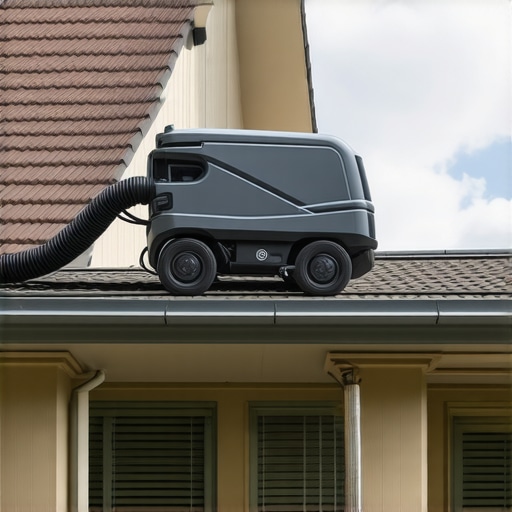
The Deceptive Peace of a Clogged System
For twenty-five years, I have lived my life on a ladder, staring into the dark, rotting underbelly of homes that people claim to love. Water is not a gentle guest; it is a relentless erosion machine that wants nothing more than to liquefy your foundation and turn your fascia boards into mush. By 2026, the industry has finally caught up to a truth I’ve been preaching since the nineties: manual gutter cleaning is a half-measure that often does more harm than good. When you scoop by hand, you are merely moving the bulk. You aren’t addressing the microscopic silt, the bio-film, or the deep-seated plugs in the leader. This is where vacuum gutter extraction changes the math of home maintenance.
The Bio-Reactor Under the Mesh: A Cautionary Tale
I recall a job three years ago at a sprawling estate deep in a wooded glen. The homeowner had invested nearly six thousand dollars in high-end micro-mesh gutter guards. From the ground, they looked pristine. He thought he was safe. I went up there with a high-velocity extraction unit and found that while the mesh kept out the oak leaves, it had allowed fine pollen and shingle grit to pass through. This created a two-inch layer of anaerobic sludge—a literal bio-reactor—trapped between the mesh and the shingle roof gutter starter. The weight was so immense it was bowing the hangers. Manual cleaning couldn’t touch it without tearing the guards off. We had to use negative pressure to pull that ‘compost tea’ out through the mesh, or the whole fascia would have rotted out by winter. This is the reality of modern debris; it’s not just leaves anymore, it’s environmental particulates that require industrial suction.
“Downspouts shall be sized based on the rainfall intensity of the region and the roof surface area.” – International Plumbing Code, Section 1106
The Physics of Flow: Why Your Manual Scoop Fails
Let’s talk about flow velocity and the Reynolds Number. In a standard valley gutter installation, water converges from two roof planes at high speed. When that water hits a pocket of debris you missed with your hands, it creates turbulence. That turbulence causes water to back up, overcoming the gutter apron aluminum and siphoning behind the soffit. When you clean gutters manually, you inevitably push small amounts of grit into the elbow. Over time, these small deposits act like a dam. Vacuum extraction, however, creates a high-velocity air stream that pulls debris upward and out, ensuring the leader is clear all the way to the splash block or the downspout extension services line. You aren’t just clearing the run; you are pressure-testing the system’s ability to breathe.
Commercial Realities and Parapet Systems
In commercial gutter installation, the stakes are higher. We deal with parapet drain systems and complex gravel stop integration. On a flat roof, if a drain or a scupper is restricted by even twenty percent, you aren’t just looking at a leak; you’re looking at thousands of pounds of static water weight that can compromise the structural integrity of the deck. Manual cleaning on a parapet often results in debris falling into the internal drains, which is a nightmare to snake out. Vacuuming these systems ensures that the asphalt shingle gutter edge or the metal gravel stop remains clear of the fine silt that usually precedes a total drainage failure.
“Gutter systems must be pitched to shed water toward downspouts at a minimum slope of 1/16 inch per foot to prevent standing water and silt accumulation.” – SMACNA Architectural Sheet Metal Manual
The Hydro-Zoom: Surface Tension and the Winter Threat
In the North, gutter winterization is the difference between a dry spring and a destroyed interior. When water can’t exit a miter because of a manual cleaning remnant, it stays. It freezes. It expands. That expansion pulls the end cap away from the run. Vacuuming removes the hydro-scopic silt that holds moisture. Without that silt, the gutter dries faster, preventing the ice-bridge that leads to damming. Furthermore, the shingle roof gutter starter stays dry, preventing the capillary action that draws water upward under the shingles. If your tech isn’t using a vacuum, they are leaving the very material that causes the most damage during a freeze-thaw cycle.
Why 2026 is the Year of the Suction
Modern homes use more complex roof geometries than ever before. We see steep pitches and tight corners where a human hand simply cannot reach. High-reach carbon fiber vacuum poles allow us to clean those hard-to-reach elbows and leaders without risking the soffit integrity with heavy ladders. We can now clear a parapet drain system from the safety of the roof deck or the ground, ensuring every cubic inch of the system is restored to its original engineering spec. Don’t settle for a guy with a bucket and a grumpy attitude—even if I am that guy sometimes. Demand the extraction. Your foundation, your fascia, and your peace of mind depend on a system that actually flows.