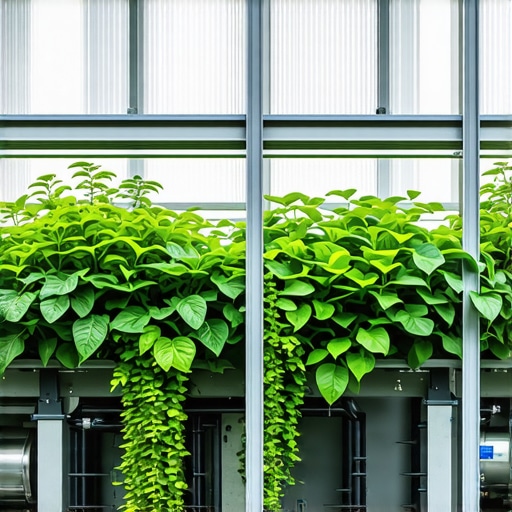
The High-Stakes Physics of Greenhouse Water Management
Most folks think a gutter is just a piece of U-shaped metal designed to keep their shoes dry when they walk through a doorway. After twenty-five years of chasing leaks and repairing rotted fascia, I can tell you that a gutter—especially on a greenhouse—is the most critical piece of structural engineering on your property. If you get the drainage wrong on a greenhouse, you aren’t just looking at a few damp plants; you’re looking at foundation scour, hydrostatic pressure build-up against your footings, and the eventual collapse of your growing environment. In 2026, the technology has shifted, but the physics of water remains the same: it wants to go where it shouldn’t, and it wants to take your structure with it.
I remember a call I took three years ago in the height of the spring rains. A local nursery owner had invested sixty thousand dollars in a high-tech glass-topped greenhouse, but they’d used cheap, snap-together vinyl gutters from a big-box store. I walked the perimeter and saw a literal moat had formed. The water was moving so fast off that slick glass roof that it was completely overshooting the five-inch gutters. This wasn’t just a spill; it was a high-velocity hydraulic bridge. Within two months, the soil beneath the north-east corner had liquidated, and the entire glass frame had shifted an inch and a half. That’s a five-figure fix for a two-figure mistake. This is why we don’t just ‘hang’ gutters; we calculate flow.
“The size of the gutter shall be determined by the maximum rate of rainfall and the roof area projected on a horizontal plane.” – International Plumbing Code, Section 1106.1
Hack 1: The Box Gutter Conversion with High-Wind Anchors
Traditional K-style gutters are great for residential homes, but for a high-production greenhouse, you need a box gutter installation. Why? Because the vertical wall of a box gutter can handle the turbulent ‘splash-back’ that occurs when water hits a metal surface at high speed. In 2026, we are seeing more extreme weather events, which means your standard hangers won’t cut it. You need high-wind gutter anchors. These aren’t your standard spikes. We’re talking about heavy-duty internal brackets that wrap around the gutter profile and are fastened directly into the structural frame of the greenhouse. This prevents the gutter from ‘rolling’ or twisting under the weight of a sudden two-inch downpour.
When we talk about the weight, people forget that a gallon of water weighs about 8.3 pounds. If you have a fifty-foot run of gutter that’s choked up, you’re hanging hundreds of pounds off your fascia. I’ve seen cheap plastic gutters sag and eventually tear the soffit right off because the installer spaced the hangers every three feet instead of every twelve inches. For a greenhouse, I always recommend recycled plastic gutters specifically engineered for UV resistance, but they must be supported by heavy-duty hardware that accounts for the lack of friction on the roof surface.
Hack 2: Integrated Gutter Flow Sensors and Smart Leaders
The biggest advancement for 2026 is the integration of gutter flow sensors. Most greenhouse owners collect rainwater—it’s the ‘green’ thing to do—but they have no idea if their leader (that’s the downspout for you laypeople) is actually delivering water or if it’s backed up with organic sludge. By installing ultrasonic sensors at the end cap and at the entry point of the collection barrel, you can monitor flow velocity in real-time. If the sensor detects a drop in velocity despite heavy rainfall, you know you have a blockage. This prevents the dreaded ‘over-topping’ where water back-flows under the greenhouse glazing.
“Roof drainage systems shall be designed to withstand the maximum calculated load of water, including the weight of the water if the system becomes clogged.” – SMACNA Architectural Sheet Metal Manual
If you find that your collection system is constantly under-performing, don’t just assume it’s the rain. Check your end cap replacement quality. I’ve seen many ‘DIY’ greenhouse gutters where the end caps are just glued on with cheap silicone. Over time, the expansion and contraction of the gutter material (especially if it’s recycled plastic gutters) will pop that seal. You lose your prime, you lose your collection efficiency, and you end up with a puddle exactly where you don’t want it. Use a high-grade mechanical-lock end cap with a double-bead of professional sealant.
Hack 3: The Hybrid Defense – Vacuum Extraction and Micro-Screens
You’ll hear every salesman in the country tell you their ‘gutter guards’ are maintenance-free. That is a flat-out lie. On a greenhouse, you often have gutter animal removal issues—frogs, lizards, and insects love the humidity. If you install a cheap gutter screen installation, the smaller debris just weaves itself into the mesh, creating a perfect mat for moss to grow. This is why I advocate for a hybrid defense system. Use a high-gauge stainless steel micro-mesh to keep out the big stuff, but pair it with a vacuum gutter extraction port at the end of each run. This allows you to hook up a high-powered wet-vac once a season and suck out the ‘bio-sludge’ that inevitably passes through the screens. It’s the only way to ensure your miter corners don’t become a breeding ground for rot.
Don’t forget the pitch/slope. On a standard house, we look for a quarter-inch drop for every ten feet. On a greenhouse where we are harvesting every drop, I like to see that bumped up slightly. This keeps the water moving fast enough to self-scour the gutter floor. If the water sits, the minerals in the rainwater will settle, creating a sandpaper-like surface that slows down future flow and invites algae growth. If you aren’t sure about your current system’s efficiency, getting a free gutter quotes processing service can help, but make sure the gutter cost estimation includes a full hydrological analysis, not just a linear foot price.
Conclusion: Protecting Your Growing Investment
Water is a patient thief. It doesn’t need to break your greenhouse today; it just needs to drip, sit, and soak until your foundation is soft and your structural members are compromised. By upgrading to recycled plastic gutters with smart sensors and ensuring your high-wind gutter anchors are properly spaced, you are doing more than just ‘saving water.’ You are protecting the structural integrity of your 2026 garden. If you’re seeing end cap leaks or water shooting over the fascia, don’t wait for the next storm. Fix the physics, and the water will follow.