The Anatomy of a Hydraulic Failure
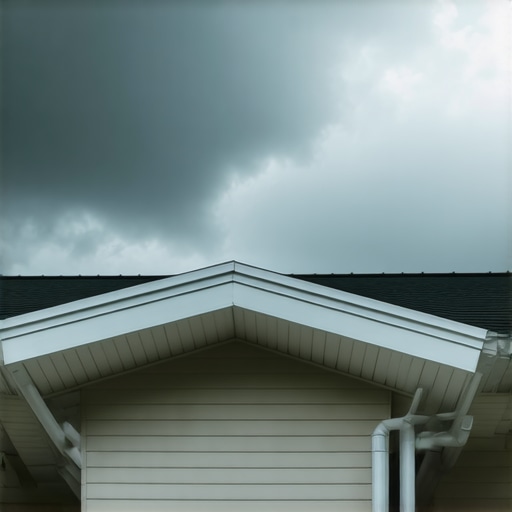
I remember standing on a job site in a coastal neighborhood just after a nameless tropical depression rolled through in the summer of ’22. The homeowner was baffled. They had brand-new gutters, yet their crawlspace was a literal swimming pool and the expensive mahogany front door wouldn’t close because the frame had shifted. I looked up and saw the culprit immediately: the installer had used standard spikes and ferrules on a 50-foot run with zero consideration for the sheer volume of a ‘gully washer.’ The weight of the water, combined with the wind vibration, had backed those spikes out just a quarter-inch—enough for the water to bridge the gap and sheet directly down the fascia, rotting the wood and dumping thousands of gallons into the foundation. This wasn’t a product failure; it was a physics failure. Rain isn’t just ‘wet’; it is a heavy, moving mass that exerts tremendous force. If your gutter system isn’t engineered to handle the hydraulic load of a 4-inch-per-hour downpour, you don’t have a drainage system—you have a decorative waterfall that is slowly destroying your home’s structural integrity.
“Downspouts shall be sized based on the rainfall intensity of the region and the roof surface area.” – International Plumbing Code, Section 1106
1. The Heavy-Duty Skeleton: Hidden Hanger Systems and Expansion Joints
In the world of hurricane-rated exteriors, the mounting hardware is the most common point of failure. Most builders use the cheapest hangers they can find, spacing them every 24 or even 32 inches. In a storm-prone zone, that is a recipe for a catastrophic collapse. To achieve a 2026 standard for storm-proofing, you must transition to hidden hanger systems. These are heavy-gauge aluminum brackets that clip into the front lip of the gutter and screw directly through the back into the rafter tails using long, threaded fasteners. For hurricane zones, we don’t just ‘space’ them; we ‘flood’ the run with them, installing a hanger every 12 inches. This prevents the ‘oil-canning’ effect where the gutter twists under high wind loads. Furthermore, long runs of seamless aluminum are subject to significant thermal movement. Without expansion joint gutters, the metal will buckle and warp as the temperature fluctuates between a humid 95-degree afternoon and a 70-degree rain. An expansion joint uses a flexible neoprene membrane to allow the metal to breathe without breaking the seal. This prevents the miters—those critical corner joints—from cracking open and leaking at the exact moment they are under the most pressure.
2. High-Velocity Discharge: Oversized Leaders and French Drain Connections
Most homes are outfitted with 2×3 inch leaders (downspouts). In a hurricane scenario, these act like a narrow straw trying to drain a bathtub. The water backs up in the gutter, the weight increases exponentially, and the system fails. We recommend a mandatory upgrade to 3×4 inch oversized leaders. This increases the cross-sectional area by over 50%, allowing the system to clear water much faster. But where does that water go? If it exits onto a splash block next to the house, you’ve gained nothing. The 2026 standard for home protection involves a direct French drain connection. We use a transition boot to connect the aluminum leader to a 4-inch PVC underground line. This line carries the water at least 15 to 20 feet away from the foundation to a pop-up emitter or a dry well. This is non-negotiable for gutter overflow prevention. When you ‘Hydro-Zoom’ into the mechanics, you realize that surface tension causes water to cling to the bottom of the leader; by using a smooth-walled PVC connection, you maintain the flow velocity and prevent the sludge buildup that often plagues corrugated black pipe systems.
“Continuous gutters shall be supported by hangers or brackets of a shape and size to provide firm support.” – SMACNA, Architectural Sheet Metal Manual
3. Surface Tension Mastery: Self-Cleaning Tech and Snap-in Screens
In high-wind environments, heavy ‘helmet’ style gutter guards can actually be a liability. They can catch the wind like a sail, and in extreme rain, the water’s velocity is so high that it skips right over the rounded edge (overshoot). For 2026 storm-proofing, we look toward self-cleaning gutter tech and high-flow snap-in gutter screens. These screens use a stainless steel micro-mesh that allows water to drop straight through while the wind actually helps blow debris off the top. This is particularly vital for slate roof gutter care. Slate roofs are heavy and shed water much faster than asphalt shingles; you need a screen that can handle that ‘sheet flow’ without splashing back onto the fascia. If you are in a northern fringe zone that sees both hurricanes and late-season freezes, integrating gutter de-icing services or self-regulating heat cables into these screened systems ensures that the soffit remains dry and the ice doesn’t create a secondary dam that the hurricane-force winds can leverage to rip the system off.
The Final Verdict on Maintenance
Even the best engineered system requires a toolkit. Professionals now use telescopic gutter tools to inspect the pitch—which must be a minimum of 1/4 inch per 10 feet toward the leader—to ensure no standing water is inviting mosquitoes or rust. Whether you are seeking gutter installation services or performing a DIY upgrade, remember: the goal isn’t just to catch the rain. The goal is to manage the hydraulic energy of a storm and move it safely away from your largest investment. Anything less is just waiting for the next big one to prove you wrong.