The Silent Foundation Killer: A 25-Year Specialist’s Warning
I walked around a house in the suburbs last spring where the northwest corner of the foundation had sunk nearly three inches into the Georgia clay. The homeowner was baffled, looking for cracks in the drywall and blaming the soil. But I didn’t look at the dirt; I looked at the roof. A single disconnected leader—what most folks call a downspout—had been dumping a concentrated torrent of water directly against the footer for five years. That’s thousands of gallons of water per storm, pressurized by the height of the eaves, drilling a hole into the earth and liquefying the support structure of the home. This isn’t just a maintenance oversight; it’s an engineering catastrophe that could have been caught by a simple overflow alarm or a drone gutter inspection. Most homeowners treat gutters as an afterthought, a bit of trim that catches rain. To me, they are the primary defense system of your building’s envelope. When they fail, the damage is silent, subterranean, and incredibly expensive.
“The capacity of a gutter shall be sufficient to contain the runoff from the roof area for the design rainfall intensity, ensuring that water does not breach the fascia or enter the building structure.” – SMACNA (Sheet Metal and Air Conditioning Contractors’ National Association) Architectural Sheet Metal Manual
The Physics of the Overflow: Why Your 5-Inch Gutters are Failing
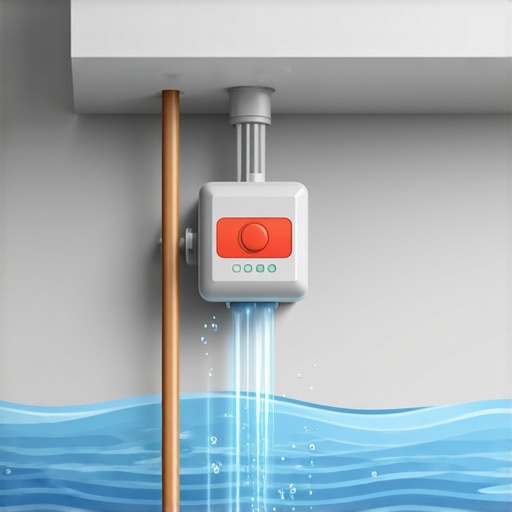
By 2026, we are seeing a marked increase in ‘micro-burst’ weather patterns where rainfall intensity exceeds historical averages. When you have a high-volume downpour, the pitch of your gutter—ideally 1/4 inch of drop for every 10 feet of run—is no longer the only factor. You have to consider flow velocity. Water is heavy; it has mass and momentum. In a ‘gully washer,’ the water moves so fast it can actually shoot right over the front lip of a standard 5-inch gutter, a phenomenon called ‘overshoot.’ If your fascia is not protected by gutter apron flashing, that water doesn’t just hit the ground. It uses surface tension to curl back under the shingles, soaking the soffit and rotting the wood from the inside out. This is where 2026 tech like gutter overflow alarms comes into play. These sensors detect when the water level rises near the end cap—indicating a clog or a volume mismatch—and alert your phone before that water starts its destructive journey into your basement. It’s the difference between a $50 sensor and a $30,000 foundation piering job.
The Drainage Hierarchy: Moving Water Beyond the Foundation
A gutter system is only as good as its discharge. I see ‘professionals’ install beautiful 6-inch seamless aluminum runs only to have them dump into a splash block two feet from the house. That is a failure of logic. In my 25 years, I’ve learned that the ‘Drainage Hierarchy’ must be followed: first, capture via the gutter; second, vertical transport via the leader; and third, horizontal displacement at least 10 feet from the foundation. This often requires elbow fittings replacement to transition into underground pipes or French drains. When we talk about gutter cost estimation, the smart money isn’t just in the metal on the roof; it’s in the elbow transitions and the extension systems. If you’re dealing with old systems, you must also be wary of lead paint gutter abatement, as many older hanger systems were coated in materials that are now environmental hazards. Always ensure your contractor provides eco-friendly gutter disposal to keep those toxins out of the local water table.
“Storm drainage systems shall be designed to convey the flow of water from the roof to an approved point of disposal, preventing the accumulation of water against the foundation walls.” – International Plumbing Code, Section 1106
The Truth About Guards: Choosing Your Armor
The market is flooded with ‘maintenance-free’ promises. Let’s be clear: there is no such thing as a zero-maintenance gutter. However, you can match your armor to your enemy. If you are surrounded by pine trees, those tiny needles will slide right through most snap-in gutter screens. For those needles, you need a micro-mesh. If you have heavy broad-leafed oaks, brush gutter guards can actually work as a sacrificial barrier, though they require more frequent cleaning than a solid helmet system. The key is preventing the ‘sludge’—that decomposed organic matter that builds up and blocks the miter at the corner. Once that corner is blocked, the weight of the standing water increases. A foot of water in a standard gutter run weighs about 8 pounds per linear foot. If your hanger spacing is the standard 36 inches, that weight will eventually pull the fascia board away from the rafters. I advocate for 12-inch spacing in high-saturation zones. It’s overkill until the day it isn’t.
The 2026 Standard: Inspections and Safety
We are moving away from the era of the ‘guy on a ladder’ being the only way to check your roof. While professional ladder safety is still a cornerstone of the trade, drone gutter inspection is the new standard for early detection. A drone can spot a loose bird spike gutter protection strip or a failing end cap in minutes without the risk of a fall. It also allows us to see the ‘water line’—the stained mark left by standing water—which tells me the pitch is off even when it’s a sunny day. If you’re doing a DIY check, look for ‘tiger striping’ on the front of the gutter; those black streaks are a sign that water is regularly overflowing and carrying pollutants over the edge. Don’t ignore it. That stripe is the visual alarm that your basement is at risk. Fix the pitch, clear the leader, and ensure your splash block isn’t actually angling water back toward your window wells. Your foundation depends on it.