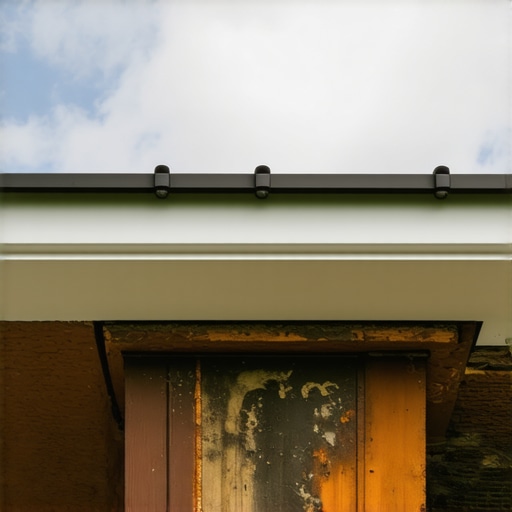
The Invisible Enemy: Why Fascia Rot is a Stealth Killer
When most homeowners think about seamless gutter installation, they focus on the metal channels, the color, and how the downspouts look against the siding. But as a specialist with a quarter-century in the trenches, I can tell you that the most critical component isn’t the gutter itself—it’s the transition from the roof to that gutter. Water is a patient, destructive force. It doesn’t just fall; it clings, it wicks, and it hunts for gaps. In my twenty-five years, I have seen more 2026-era fascia boards destroyed by a $5 piece of missing flashing than by any hurricane or blizzard. If the water isn’t forced into the trough, it will find its way behind it, and once it hits your wood, the clock starts ticking.
The $40,000 Barn Disaster: A Lesson in Flashing
I recall a call out to a massive dairy barn conversion three years ago. The owner had invested heavily in barn gutter repair and new weather-ready gutter materials, but within two seasons, the primary structural headers were soft enough to poke a screwdriver through. Why? The previous installer had skipped the gutter apron entirely, assuming the drip edge was sufficient. On a roof with that much surface area, the flow velocity during a summer storm creates a phenomenon where water ‘rolls’ back under the shingle edge due to surface tension. Without a proper apron to bridge that gap, every gallon of water was essentially being injected directly into the fascia and soffit. It was a textbook case of an expensive system failing because of a two-inch oversight.
“Gutter systems shall be designed to collect and dispose of water from the roof area without overflow or leakage that could damage the building structure.” – SMACNA (Sheet Metal and Air Conditioning Contractors’ National Association)
The Physics of the Gutter Apron and Surface Tension
To understand why your fascia is rotting, you have to understand Hydro-Zooming. During a heavy downpour, water doesn’t just leap off the shingles into the center of the gutter. Instead, it follows the curve of the roof. If there is even a millimeter of gap between the roof’s edge and the gutter’s back wall, capillary action pulls that moisture upward and backward. This is the ‘wicking’ effect. The gutter apron is a L-shaped piece of flashing that tucks under the first course of shingles and hangs down over the back edge of the gutter. It creates a physical, unbreakable slide for the water. Without it, your seamless gutter installation is essentially a decorative bucket hung next to a waterfall.
Mistake #1: The Under-the-Shingle Tuck Failure
The most common mistake I see in modern gutter installation is improper tucking. Many installers, in a rush to finish, will jam the apron under the shingles but fail to secure it to the roof deck. Over time, heat causes the shingles to bond to the apron, and as the house settles, the apron pulls away. This creates a hidden trough where organic debris—pollen, pine needles, and grit—collects. This wet sludge sits directly against the fascia, keeping it perpetually damp. In climates with heavy snow, this becomes an ice dam factory. When water freezes, it expands, pushing the apron further out and allowing even more water to bypass the system. For church steeple gutters or high-pitch structures, this mistake is even more catastrophic because the sheer velocity of the water bypasses the gutter entirely if the apron isn’t perfectly flush.
Mistake #2: The Over-Reliance on Sealants over Mechanical Flashing
I hate seeing a miter or an end cap slathered in three inches of silicone. Sealants are a secondary defense, not a primary one. Many ‘cheap’ contractors try to bridge the gap between the roof and the gutter using caulk or spray foam. This is a death sentence for your exterior. Wood moves, metal expands, and the sun’s UV rays eat sealants for breakfast. By the time the sealant cracks—usually within 18 months—the homeowner has stopped looking up. The water begins to seep behind the hanger and into the leader connection, rotting the wood from the inside out. Real weather-ready gutter materials like heavy-gauge aluminum or copper require mechanical overlaps and coping cap alignment to ensure that gravity, not glue, is doing the work.
“Flashings shall be installed at wall and roof intersections, at gutters and around roof openings to prevent moisture entry into the wall cavity or roof assembly.” – International Plumbing Code, Section 1106
Mistake #3: Neglecting Coping Cap Alignment on Complex Roofs
When dealing with architectural masterpieces or even just complex residential designs, coping cap alignment is often ignored. If the cap isn’t aligned to direct water into the apron, you get ‘overshoot.’ On a church steeple gutter project I consulted on, the water was hitting the pitch of the roof so hard it was bouncing over the 5-inch gutter. We had to upgrade to 7-inch seamless troughs and re-engineer the apron with a custom ‘kick-out’ to break the water’s momentum. If your installer doesn’t mention the ‘slope’ or ‘pitch’ (ideally 1/4 inch per 10 feet) and how it interacts with the apron, they aren’t an engineer; they’re just a handyman with a ladder.
The Total Water Management Strategy: Beyond the Fascia
A lifetime gutter guarantee is worthless if your foundation is sinking. Your water management system must be holistic. This includes landscape integration services where we look at where the leader (downspout) deposits the water. I always recommend rock splash blocks or buried 4-inch PVC lines to move water at least ten feet from the soffit. In many high-end installs, we are now implementing sump pump linkage, where the home’s internal water management and external drainage are tied into a single, cohesive exit point. This prevents the ‘swampy yard’ syndrome and ensures that the water you’ve so carefully moved off your roof doesn’t just circle back into your crawlspace. Remember, the goal isn’t just to move water off the roof; it is to dominate its path until it is safely off your property.
Summary of Proper Gutter Apron Installation
To ensure your 2026 fascia boards remain pristine, the apron must be installed with a minimum 2-inch overlap, tucked securely under the starter strip, and extend at least 1 inch into the gutter trough. We use heavy-duty hangers every 12 to 16 inches—none of those old spikes and ferrules that pull out after the first heavy frost. By combining seamless gutter installation with precision flashing and rock splash blocks, you create a fortress that keeps your home’s skeleton dry for decades. Don’t settle for a system that looks good from the curb but rots your house from the roof down.