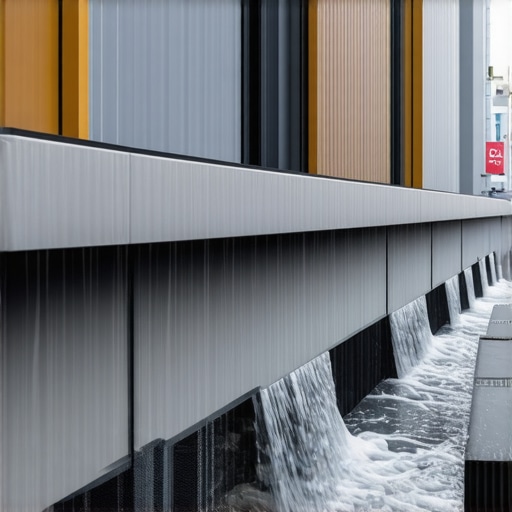
The 2026 Storm Reality: Why Your Parapet is a Liability
I stood on a commercial roof last October where the parapet wall was actually leaning outward by three degrees. The culprit? A blocked overflow scupper that turned the roof into a four-ton bathtub every time it drizzled. This wasn’t a freak accident; it was a fundamental failure of water management engineering. As we head into the 2026 storm season, where atmospheric rivers are becoming the new normal, the old ways of handling flat roof drainage are dead. If you are still relying on a single, undersized leader to move thousands of gallons of water, you aren’t just risking a leak—you are risking a structural collapse. Water has a specific gravity that doesn’t care about your budget. It weighs 62.4 pounds per cubic foot. When your drainage system fails, that weight accumulates against your parapet walls and seeps into your masonry.
“Secondary (emergency) roof drains or scuppers shall be provided where the roof perimeter construction extends above the roof in such a manner that water will be entrapped if the primary drains allow buildup for any reason.” – International Plumbing Code, Section 1101.7
Fix #1: High-Flow Scupper Expansion and Aluminum Gutter Installation
The first point of failure in most parapet systems is the scupper opening. Most are built for 1990s rainfall, not the ‘gully washers’ we see today. If your scupper is a 4×4-inch hole, it’s going to choke the moment a few stray leaves or roof gravel move toward it. We are now upgrading clients to 8-inch or even 10-inch wide scuppers lined with heavy-gauge aluminum gutter installation components. This isn’t just about the hole in the wall; it’s about the flow velocity. When water enters a scupper, it creates a vortex. If the leader (downspout) isn’t sized to handle that volume, the water backs up, creating a ‘head’ of pressure. For 2026, I recommend transitioning your scuppers into 6-inch seamless aluminum gutters on the exterior. We use 0.032-inch thick aluminum—anything thinner is just soda can material that will buckle under the weight of a heavy ice load or high-velocity discharge.
The Physics of Surface Tension and Gutter Apron Flashing
Why do so many parapet repairs fail within two years? Because contractors ignore the gutter apron flashing. Water has this annoying property called surface tension. It loves to wrap around the edge of a metal drip edge and crawl backward, right into your fascia board. This is how you end up needing fascia board repair on a building that’s supposed to be ‘maintenance-free.’ When we install a new system, we ensure the flashing extends deep under the roofing membrane and projects out over the gutter. This break in surface tension forces the water to drop into the center of the trough rather than wicking into the wood. I’ve seen soffit panels rotted through because someone saved fifty cents on flashing. It’s a disgrace. During soffit ventilation during install, we also check for moisture traps. If your soffit can’t breathe, the back of your fascia will rot even if the front looks perfect.
Fix #2: Coping Cap Alignment and High-Wind Gutter Anchors
The top of your parapet wall is its most vulnerable point. If your coping cap alignment is off, even by a fraction of an inch, water will shed toward the exterior facade rather than back toward the roof drains. This leads to those ugly calcium streaks on your brickwork and eventually, mortar failure.
“Coping should be sloped toward the roof surface to minimize water runoff on the exterior face of the building.” – SMACNA Architectural Sheet Metal Manual
In high-wind zones, standard hanger spacing of 32 inches is a recipe for disaster. For the 2026 standards, we are utilizing high-wind gutter anchors placed every 12 to 16 inches. These aren’t your standard hardware store clips. These are heavy-duty screw-in brackets that bite deep into the structural framing. If a storm hits with 80 mph gusts, a standard gutter becomes a sail and can rip the end cap and miter joints apart. By cinching the system down with redundant anchors, we ensure the pitch—which should be a minimum of 1/4 inch per 10 feet—remains consistent even under heavy vibration.
Fix #3: Gutter Heating Systems and Overflow Prevention
In northern climates, parapet drains are notorious for ice damming. The roof stays warm, the snow melts, and then it hits the cold scupper and freezes solid. Now you have a frozen plug and a roof full of water. Gutter heating systems are no longer an ‘extra’; they are a requirement for parapet longevity. We run self-regulating heat cable through the scupper, down the leader, and all the way to the splash block or underground discharge. This prevents the ‘ice-glacier’ effect that can pull a gutter right off the wall. Furthermore, gutter overflow prevention involves the installation of ‘collector boxes’ or ‘conductor heads.’ These act as a funnel and a vent, allowing air to mix with the water, which significantly increases the drainage speed. It’s the difference between pouring water out of a bottle with the cap on versus off.
Final Thoughts on Maintenance and Eco-Friendly Gutter Disposal
When we tear out an old, failing system, we don’t just chuck it in a landfill. Eco-friendly gutter disposal means we sort the scrap. Old aluminum and copper are 100% recyclable, and keeping that out of the waste stream is just good business. But the best ‘eco-friendly’ move you can make is building a system that lasts 30 years instead of 5. Don’t wait until you see the ‘drip-drip-drip’ inside your drywall. Start the free gutter quotes processing now to evaluate your parapet’s health. A dry foundation is a happy foundation, and a properly engineered drainage system is the only thing standing between your home and the destructive power of the next big storm. Check your elbow joints, verify your slope, and for heaven’s sake, stop using spikes and ferrules. They pull out, they leak, and they are the hallmark of a hack job.
This article really highlights how critical it is to modernize our roof drainage systems, especially as climate patterns shift toward more intense storms. I’ve seen firsthand how neglected or outdated drainage setups can lead to severe structural issues that are costly to repair. The emphasis on upgrading to larger, seamless aluminum gutters and ensuring proper flashing is something I wish more building managers would prioritize. What’s your take on integrating smart sensors with these systems for real-time monitoring? I believe that could further prevent catastrophic failures by alerting owners before a problem becomes severe. It’s clear that proactive maintenance, especially involving high-wind anchors and heating systems in colder climates, will make a significant difference in resilience. Have any of you tried retrofitting existing parapets with these new standards, and what challenges did you face during installation? Would love to hear strategies for a smooth upgrade process.