The Hard Truth About Water Management in the Age of Extreme Weather
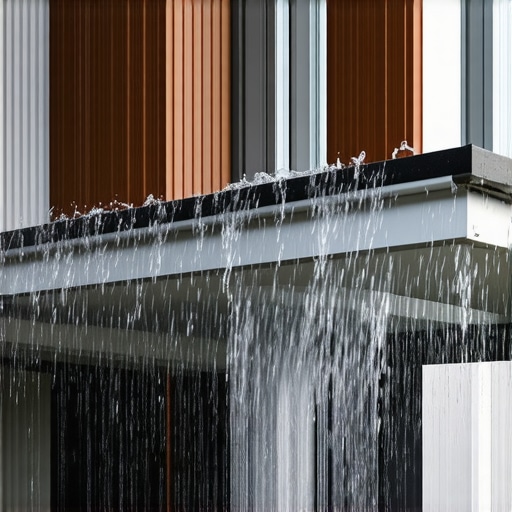
If you are standing in your driveway during a 2026-style atmospheric river event, watching a sheet of water bypass your roofline and hammer into your foundation, you aren’t just looking at a minor leak. You are witnessing a systemic failure of engineering. After 25 years in the trenches of the gutter industry, I can tell you that the standard ‘splash and dash’ gutter installation of the last decade is no longer sufficient. We are seeing rainfall intensities that render the old 5-inch K-style system obsolete in minutes. The question isn’t just about whether K-style gutters work; it’s about whether your specific water management system is pitched, hung, and shielded to survive the weight and velocity of modern storms.
The Narrative Matrix: A Lesson in Structural Gravity
I remember a call-back in the early spring of ’22, right after a record-breaking late-season ice storm. I walked up to a colonial-style home where a 55-foot run of seamless aluminum K-style was hanging by a single screw at the far miter. The homeowner had opted for a ‘budget’ contractor who spaced the hangers 36 inches apart—fine for a light drizzle, but a death sentence in a freeze. When the ice dam formed, the sheer weight of the frozen slurry didn’t just bend the metal; it performed a slow-motion somersault, ripping the fascia board right off the rafters and exposing the soffit to rot. That single ‘saving’ of a few dollars on hardware resulted in a $12,000 exterior restoration. This is why we obsess over the math of water.
“Gutter and downspout systems shall be designed for a minimum of a 10-year, 5-minute rainfall intensity to ensure adequate drainage and prevent structural overflow.” – SMACNA Architectural Sheet Metal Manual
Hydro-Zooming: Why Surface Tension and Velocity Matter
When we talk about gutter installation today, we have to talk about physics. Most homeowners think water just falls into a bucket. It doesn’t. During a ‘gully washer,’ water gains massive velocity as it slides down a steep roof pitch. If your gutter isn’t positioned correctly with the right gutter apron aluminum, that water will use capillary action to wick backward, soaking your fascia and moldering your attic. This is the ‘bridge’ effect. To prevent this, your installation must account for the slope—specifically a 1/4 inch of drop for every 10 feet of run. Any less, and you have standing water that breeds mosquitoes and rust; any more, and the water moves too fast for the leader (downspout) to swallow it.
The K-Style vs. Half-Round Debate
While half-round gutter installation offers a classic aesthetic and smoother water flow due to the lack of internal corners, the K-style remains the king of volume. Its flat bottom and ogee-shaped front allow it to carry more water than a comparable half-round. However, the 2026 storm patterns demand we look at 6-inch or even 7-inch commercial-grade K-styles even for residential homes. If you have a commercial flat roof gutter system, the stakes are even higher. You aren’t just dealing with gutters; you are managing roof scupper drains that must clear thousands of gallons per hour to prevent the roof deck from collapsing under the weight of a ‘pond.’
The Truth About Guards: Helmet-Style vs. Surface Tension Screens
The marketing for ‘maintenance-free’ gutters is a lie. I’ve seen helmet-style guards fail spectacularly during high-flow events. The physics of surface tension—where water is supposed to ‘wrap’ around the nose of the guard and drop into the trough—only works up to a certain speed. When the rain hits hard, the water simply ‘skis’ over the helmet and onto your landscaping. In contrast, surface tension screens or high-grade micro-mesh tend to break the water’s velocity more effectively, though they require more frequent clearing of organic sludge. If you have heavy tree cover, you need to match the guard to the debris. Broad leaves? A helmet might work. Pine needles or oak tassels? You need mesh, or you’re just building a bird’s nest on your roof.
“Downspouts shall be sized based on the rainfall intensity of the region and the roof surface area to ensure the system does not back up into the building envelope.” – International Plumbing Code, Section 1106
Winter Resilience: Gutter De-Icing Services
In the North, the enemy isn’t just rain; it’s the weight of the thaw-freeze cycle. This is where gutter de-icing services become mandatory rather than optional. Without heat cables, ice dams will bridge the gap between your roof and the gutter, forcing water under your shingles and into your insulation. I’ve seen entire attic vent installation projects ruined because the homeowner didn’t account for the thermal transfer at the eaves. A properly engineered system uses heat tape to keep the path to the leader open, ensuring that even in a blizzard, the melt has a place to go.
Financing and Long-Term Value
I know the sticker shock of a professional, heavy-duty drainage system can be real. That is why financing for gutter installs has become a standard part of the industry. You aren’t just buying aluminum; you are buying a 30-year insurance policy for your foundation. When you consider the cost of a cracked basement wall or a mold-remediation project in the crawlspace, the investment in high-capacity gutters and proper splash block or underground drainage discharge is the most cost-effective move a homeowner can make. Don’t settle for ‘spikes and ferrules’ that will pull out in three seasons. Demand heavy-duty hangers, high-flow outlets, and a specialist who understands that water is the most destructive force on earth. Your house is a machine for keeping you dry; don’t let a cheap gutter be the one gear that fails.
This post really highlights the importance of going beyond superficial gutter solutions in the face of increasingly extreme weather patterns. I’ve seen firsthand how poorly installed gutters with inadequate hardware can turn into costly repairs after a storm. The emphasis on proper pitch, hanger spacing, and use of durable materials can’t be overstated, especially as storms become more intense. I’m particularly interested in the discussion about surface tension screens versus helmet-style guards. From my experience managing a property with mature trees, I found that micro-mesh screens tend to handle debris and high flow better, although they do require more regular cleaning. Has anyone found an effective maintenance routine that keeps these high-capacity systems functioning optimally without too much hassle? It seems like investing in these systems is essential for long-term home protection, especially in areas prone to winter ice dams. Would love to hear others’ tips or experiences with extreme-weather-resistant gutter setups.