The Invisible Destroyer: Why Your Roof Drainage Is Failing Your Foundation
I remember standing in a soggy backyard in the Pacific Northwest, looking at a custom-built home that was less than ten years old. The owner pointed to a crack in the basement wall wide enough to slide a credit card through. The culprit wasn’t a natural disaster or poor concrete work; it was a single, clogged collector box on the second floor. For three winters, that conductor head had overflowed, sending a concentrated pillar of water directly into the soil at the corner of the house. The resulting hydrostatic pressure did what water always does: it found a way in, and then it pushed. This is why we don’t just hang metal; we engineer drainage. As we look toward the increasingly volatile weather patterns of 2026, understanding the role of conductor heads and advanced aluminum gutter installation is the only way to protect your largest investment.
“Storm drainage systems shall be provided to permit the flow of water from every roof.” – International Plumbing Code, Section 1101.2
1. Breaking the Vacuum: The Physics of Conductor Heads
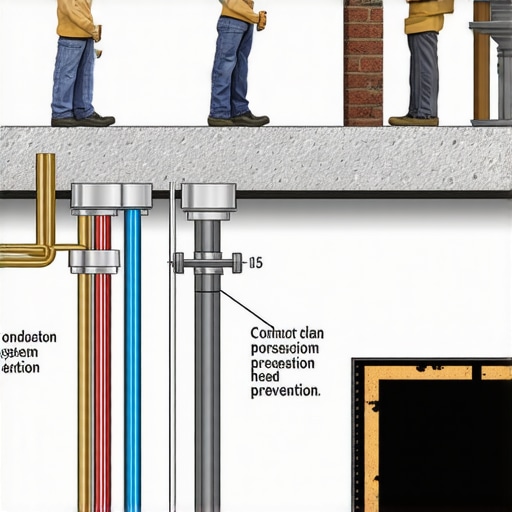
Most homeowners view a conductor head, also known as a leader head, as a decorative architectural flourish. In reality, it is a critical hydraulic component. When water enters a standard downspout during a heavy downpour, it often creates a vacuum or a siphon effect. This can actually slow down the drainage of water from the roof as the air trapped in the pipe resists the flow. A conductor head acts as a vent, allowing air to escape and breaking the surface tension of the water. This ensures a smooth, rapid transition from the horizontal gutter to the vertical leader. Without this air gap, water can back up into the gutter, leading to overflow that saturates the fascia and eventually drips down to the foundation. When we perform a pergola gutter addition or a complex roof install, we calculate the flow velocity to ensure the conductor head is sized correctly for the roof’s pitch and surface area.
2. High-Wind Gutter Anchors and Structural Integrity
In high-wind environments, standard spikes and ferrules are a recipe for disaster. They pull out as the wood of the fascia expands and contracts, leaving the gutter sagging. We utilize high-wind gutter anchors that are engineered to withstand the torque generated by 100-mph gusts. These anchors are part of a comprehensive fascia gutter mounting strategy that distributes the weight of the water and the metal across multiple structural points. During a storm, a 50-foot run of aluminum gutter can weigh hundreds of pounds when full of water. If your hangers are spaced too far apart, the metal will warp, the pitch will be lost, and water will pool. Pooling water is the precursor to rust and a breeding ground for pests, but more importantly, it means the water isn’t moving away from your foundation. Our three-story access solutions allow us to install these heavy-duty systems on the highest peaks where wind forces are most extreme.
“Conductor heads are used primarily for architectural purposes, but they also serve to collect water from multiple sources and break the vacuum in the downspout.” – SMACNA Architectural Sheet Metal Manual
3. Membrane Roof Gutters and Thermal Management
Flat and low-slope roofs often utilize a TPO or EPDM membrane. Integrating these into a gutter system requires precision. Membrane roof gutters must be flashed correctly to prevent water from wicking back under the roofing material. In colder climates, these areas are prone to ice buildup. This is where app-controlled gutter heaters become essential. Modern self-cleaning gutter tech is no longer just about keeping leaves out; it is about managing the temperature of the trough. By using smart sensors, we can ensure that ice never forms a dam in the conductor head. When ice dams form, water backs up under the membrane, causing rot in the roof deck and eventually dripping through the soffit. The weight of an ice-clogged gutter can also tear the fascia board right off the house. By maintaining a clear path for meltwater, we ensure the foundation remains dry even during a mid-winter thaw.
4. Erosion Control Downspouts and Soil Stabilization
Getting the water off the roof is only half the battle. If that water is dumped directly at the base of the house, you are essentially digging a hole for your foundation to fall into. Erosion control downspouts are designed to manage the exit velocity of the water. We often pair these with splash blocks or underground drainage pipes that lead to pop-up emitters. In areas with clay-heavy soil, the expansion and contraction caused by localized flooding near the foundation can cause the concrete to shift and crack. By using oversized 3×4 leaders and conductor heads to manage the volume, we ensure that the water is moved at a controlled rate to a safe discharge zone. We also look at helmet-style guards to prevent small debris from clogging these exit points, ensuring the system works during the 2026 storm season without constant manual intervention.
5. The Hierarchy of Drainage in Modern Architecture
Whether it is a standard residential home or a specialized pergola gutter addition, the hierarchy of drainage remains the same: collect, direct, and discharge. We see many “DIY” aluminum gutter installation projects where the pitch is flat. If you don’t have at least a 1/4 inch of slope for every 10 feet of run, you don’t have a drainage system; you have a long, thin pond. Water that sits in a gutter eventually finds the smallest gap in the miter or the end cap. It then begins the slow process of rotting your soffit and fascia. Once the wood is soft, the hangers lose their grip, and the whole system fails. By professionalizing the install with heavy-duty components and specialized three-story access equipment, we ensure that every miter is sealed and every hanger is biting into solid wood. This obsessive attention to detail is what separates a veteran install from a temporary fix. Protect your foundation by respecting the power of water and the physics required to control it.
This post really emphasizes how critical proper roof drainage systems are for protecting a home’s foundation. I used to underestimate the importance of conductor heads until I experienced water backups causing damage in my own property. It’s fascinating how these minor components, like the air vent function of a conductor head, can prevent major problems down the line. The section on high-wind gutter anchors resonated with me because our area frequently experiences gusts over 80 mph, and I’ve noticed gutters pulling away after storms. Have others in similar high-wind zones found specific anchor systems that work best? I also wonder how many homeowners realize that a flat pitch or overcrowded hangers might compromise their system’s effectiveness, especially during those heavy rains that are becoming more common with climate change. It’s clear that investing in professional-grade components and strategic installation can extend the life of your gutters and safeguard your foundation. Protecting such a crucial part of your home system seems like a no-brainer—are there particular brands or products you recommend for DIYers who want to upgrade their current system?