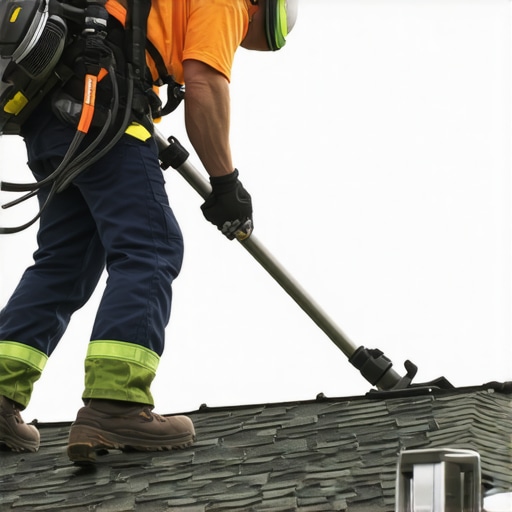
The Specialist Perspective: Why Water is Your House’s Natural Enemy
I have spent twenty-five years staring at the fascia and the soffit of homes across this country, and I can tell you one thing for certain: water is a patient destroyer. It does not just fall; it clings, it creeps, and it erodes. Most homeowners treat their drainage as an afterthought until the day they see a stain on the ceiling or feel the crunch of rotted wood under a miter. For decades, the industry standard for cleaning was a guy on a ladder with a bucket and a trowel. That era is dead. As we look toward 2026, vacuum gutter extraction has moved from a luxury to a technical necessity for anyone serious about home maintenance. When you look at the physics of how water moves through a system, traditional cleaning methods are not just inefficient; they are often damaging to the very components designed to protect your foundation.
The Narrative: The Case of the Corroded Patina
I recall a job three years ago on a beautiful historic property that featured custom copper patina finishes. The owner had been paying a local handyman to clean the gutters every autumn. This handyman used a metal scraper to dig out the muck. Every time that scraper hit the copper, it removed the protective oxidation layer. By the time I was called for a gutter leak repair, the bottom of the lead-coated copper was riddled with pinholes. The manual cleaning had effectively sanded away the life of the metal. If they had used vacuum extraction, nothing but air and suction would have touched those gutters. We had to perform a full system overhaul, replacing the custom work with high-wind gutter anchors and modern hidden hanger systems because the original structure had been compromised by physical trauma and poor maintenance habits.
“Downspouts shall be sized based on the rainfall intensity of the region and the roof surface area.” – International Plumbing Code, Section 1106
1. Eliminating Physical Stress on Hanger Systems
The first reason vacuum extraction is the superior choice involves the mechanical integrity of the gutter itself. Most modern systems utilize hidden hanger systems that are screwed directly through the back of the gutter into the fascia board. While these are strong, they are designed to support vertical weight, not the lateral torque of a human leaning a ladder against the outer lip or a worker pulling and tugging at stubborn clogs. When a technician uses a vacuum system, they are often working from the ground or from a stable platform using carbon fiber poles. This means there is zero pressure applied to the powder-coated gutter finishes. By avoiding the weight of a ladder and the physical force of manual scraping, you prevent the hangers from loosening. Once a hanger backs out even a fraction of an inch, the pitch of the gutter is compromised. A pitch deviation of just one-eighth of an inch can lead to standing water, which becomes a breeding ground for mosquitoes and accelerates the breakdown of miter seals.
The Physics of Hydro-Flow and Debris Density
To understand why vacuuming is more effective, you have to look at the density of the sludge. During a spring gutter startup, the debris inside a gutter isn’t just dry leaves. It is a dense, anaerobic slurry of decomposed organic matter, roof granules, and pine needles. This mixture has a high surface tension, causing it to stick to the aluminum or copper walls. When you try to blow this out with air, you often just compress the clog into the elbow or the leader. Vacuum extraction uses high-volume CFM (Cubic Feet per Minute) to break that surface tension and lift the entire mass out of the channel. This ensures that the entrance to the downspout is completely clear, allowing for maximum flow velocity during a heavy downpour. Without this thorough cleaning, water bridges the gap between the gutter and the fascia, leading to rot behind the scenes where you cannot see it.
2. Safety in Lead Paint Gutter Abatement and Environmental Control
As we move into 2026, environmental regulations regarding lead paint gutter abatement are becoming stricter. Many older homes still have layers of lead-based paint on the soffit or the old wooden gutter remnants. Manual scraping or pressure washing sends these lead chips and dust into the soil around the foundation or into the air. Vacuum extraction is a closed-loop system. It sucks the debris directly into a filtration tank, ensuring that hazardous materials are contained and can be disposed of properly. This is equally important when dealing with the rise of recycled plastic gutters. While these materials are durable, they can be sensitive to the harsh chemicals sometimes used in traditional cleaning. A pure vacuum approach removes the need for detergents or abrasive tools, preserving the structural integrity of the recycled polymers and the powder-coated finishes that are currently among the bold color gutter trends.
“The design of gutter and downspout systems shall provide for the management of water without overflow that could cause damage to the building’s structure or foundation.” – SMACNA Architectural Sheet Metal Manual
3. Precision Maintenance for High-Wind and Storm Readiness
In regions prone to severe weather, the reliability of your drainage system is tied to its mounting hardware. High-wind gutter anchors are essential for keeping the system attached during a gale. However, these anchors are only as good as the wood they are screwed into. Traditional cleaning methods often involve splashing water everywhere, which can seep behind the gutter and into the fascia board. Over time, this moisture softens the wood, causing the anchors to lose their grip. Vacuum extraction is a dry or controlled-moisture process. It keeps the fascia and the underside of the roof deck dry during the maintenance cycle. This is critical for a spring gutter startup, as it allows the technician to inspect the pitch and the end cap seals without the mess of overflowing water masking potential leaks. By keeping the wood dry and the hardware secure, you ensure that the system can withstand the uplift forces of high-wind events without failing.
The Technical Reality of Gutter Removal Services
Often, I am called for gutter removal services where the homeowner thinks the gutters have failed. In reality, the gutters were fine, but the maintenance was so poor that the system was effectively weighted down by forty pounds of wet silt. This weight causes the aluminum to stretch and the pitch to fail. If these homeowners had invested in vacuum extraction early on, the lightweight suction would have removed the weight without stressing the metal. We are seeing a shift toward copper patina finishes and bold color gutter trends that require a delicate touch. You cannot treat a modern, high-performance drainage system like a piece of scrap metal. You have to treat it like the engineered protective shield it is. Vacuum extraction is the only method that respects the engineering of the system while providing the thoroughness required to protect the foundation from the destructive power of unmanaged water.