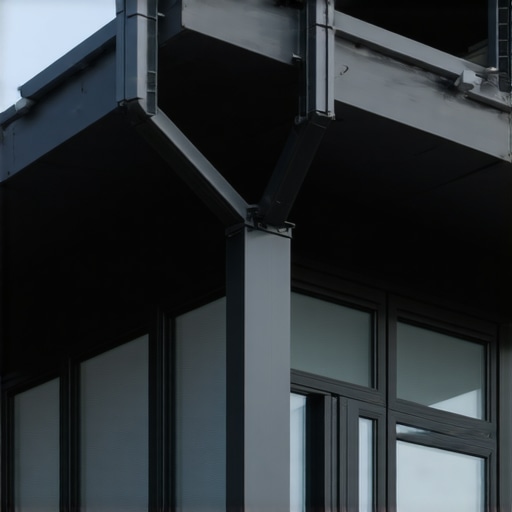
The Hard Truth About TPO Edges and Water Management
As we approach the 2026 building cycle, many commercial contractors are looking for ways to streamline costs without sacrificing structural integrity. One question that keeps landing on my desk involves whether TPO roof gutter flashing is strictly necessary or if the membrane overlap itself is sufficient. Let me be clear: water does not care about your budget. It only cares about the path of least resistance and the laws of physics. I have spent over twenty-five years on ladders and rooflines, and if there is one thing I have learned, it is that moisture is a patient predator. It will wait for the perfect moment of surface tension and capillary action to find a way behind your fascia and into your insulation. If you are skipping the flashing on a commercial flat roof gutters project, you are essentially inviting a lawsuit in five years. I walked onto a job site in a suburb of Chicago recently where a massive distribution center had a corner foundation that had settled nearly three inches. The owner was furious. When we cut into the wall, we found that a single disconnected section of flashing at the gutter transition had allowed thousands of gallons of water to track down the interior of the parapet wall for two seasons. That level of erosion is not a fluke; it is the inevitable result of poor engineering at the roof edge.
The Physics of Water Migration on Flat Surfaces
To understand why flashing is non-negotiable, we have to look at the hydro-zooming effect during a heavy downpour. On a TPO roof, water moves in sheets. Because the surface is relatively smooth, it gains significant velocity as it nears the perimeter. Without a dedicated flashing strip that is heat-welded to the membrane and mechanically fastened to the gutter system, water often undergoes what we call wicking. This occurs when the leading edge of the water sheet follows the curve of the membrane over the drip edge. Instead of falling cleanly into the gutter, the water clings to the underside of the fascia due to surface tension. Over time, this constant dampness rots the wood or corrodes the metal sub-structure. Proper gutter installation services will always insist on a heavy-duty flashing transition. This ensures that the water is physically forced to break its bond with the roof surface and drop into the trough. When we talk about valley gutter installation on complex commercial roofs, the risk is even higher. These valleys act as funnels, concentrating massive volumes of water into specific points. If the flashing at these convergence points is not integrated with the coping cap alignment, you are going to see water backing up under the membrane during the first freeze-thaw cycle.
“Downspouts shall be sized based on the rainfall intensity of the region and the roof surface area.” – International Plumbing Code, Section 1106
Climate-Specific Challenges: The North and Snow Loads
In northern climates, gutter winterization is not just a seasonal chore; it is a survival tactic for the building. For a 2026 commercial build, the design must account for the expansion and contraction of the TPO membrane versus the metal gutter. During a blizzard, snow accumulates at the roof edge, creating a heavy, icy dam. If you have not utilized heavy-duty hangers spaced every twelve inches, the weight of the ice will pull the gutter right off the fascia. I have seen sixty-foot runs of commercial gutter ripped away because the installer used standard five-inch residential hangers instead of the structural brackets required for commercial loads. The lack of proper flashing in these scenarios means that when the ice melts from the bottom up, the water is pushed directly into the building envelope. This is why a lifetime gutter guarantees promise often excludes damage caused by ice damming unless specific flashing and pitch requirements are met. We use a pitch of at least one-quarter inch per ten feet of run, but in snow-heavy regions, I often advocate for a steeper slope to ensure rapid drainage before the temperature drops at night.
The Critical Role of Coping and Downspouts
A major component of this system is the coping cap alignment. The coping protects the top of the parapet wall, but it must work in tandem with the gutter flashing. If the coping is tilted even a fraction of a degree toward the roof rather than away from it, you create a standing water situation that will eventually defeat the TPO seams. When we move to the vertical transition, the rectangular downspout install becomes the focal point. For commercial applications, I refuse to use the small 2×3 leaders you see on a Cape Cod house. You need the volume of a 3×4 or 4×5 rectangular downspout to handle the surge. These downspouts must be secured with heavy straps, not those flimsy aluminum ribbons. Furthermore, the connection at the bottom is where many contractors fail. A simple splash block is not enough for a commercial build. You need a direct French drain connection to move the water at least twenty feet away from the foundation. This keeps the soil stability intact and prevents the kind of foundation sinking I mentioned earlier.
“The roof drainage system shall be designed and installed to prevent water from entering the building and to protect the building from damage.” – SMACNA Architectural Sheet Metal Manual
The Anatomy of a High-Performance Commercial Gutter System
When engineering these systems, we consider every component from the end cap to the miter. A miter is the corner where two gutters meet, and in TPO applications, these are notorious for leaking if not flashed correctly. We use heavy-gauge aluminum or galvanized steel for the gutters themselves, ensuring they can handle the physical stress of thermal expansion. The hanger choice is also vital. I despise spikes and ferrules because they inevitably pull out as the wood fascia expands and contracts. Instead, we use internal screw-driven hangers that bite deep into the rafter tails or the structural steel. This provides the rigidity needed for two-story gutter services where the wind load is significantly higher. In 2026, we are also seeing an increase in the use of snow guards above the gutter line. These devices prevent the entire roof’s worth of snow from sliding off at once and crushing the gutter system. [IMAGE_PLACEHOLDER] It is about layers of protection. The flashing is the first layer, the gutter is the second, and the downspout is the third. If any one of these links in the chain fails, the entire water management strategy collapses. This is why I tell my clients that the gutter system is the most important part of the roof. You can have a perfect TPO field, but if the edges are soft, the building is at risk.
Maintenance and Long-Term Integrity
Finally, let’s talk about the myth of the maintenance-free system. Even with the best TPO roof gutter flashing and guards, organic sludge and debris will find a way in. In forested areas, pine needles can weave themselves into a mat that is nearly waterproof, causing the gutter to overflow even if it is technically clean. Regular inspections are mandatory. You need to check the elbow joints for clogs and ensure the splash block hasn’t been displaced by a lawnmower. For commercial properties, this should happen twice a year. We look for signs of sagging, which indicates that a hanger has failed or that the pitch has shifted due to building movement. We also check the sealants at the end caps. In the high-heat environments where TPO is often used, these sealants can bake and crack over time. Replacing a five-dollar tube of sealant now prevents a five-thousand-dollar fascia repair later. Water is a force of nature that never stops trying to get inside. Your only defense is a properly engineered, flashed, and maintained drainage system that respects the physics of the pour.