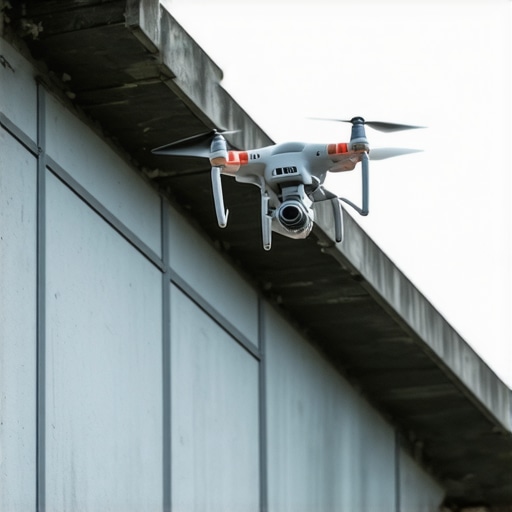
The High-Tech Gutter Audit: What Your Eyes Can’t See but a Drone Can
I have spent nearly three decades on a ladder, and if there is one thing I have learned, it is that water is a patient predator. It doesn’t just fall; it searches for the path of least resistance to rot your home. By 2026, the game has changed. We aren’t just looking for leaf clogs anymore; we are managing integrated home automation systems that link your rain barrel integration with real-time gutter flow sensors. But even with the most advanced tech, the physics of water remains the same. I remember a job back in 2024 on a sprawling modern estate. From the ground, the gutters looked pristine. But I flew a high-resolution drone over the roofline and found a terrifying reality. A single disconnected downspout leader, hidden behind an architectural column, had been dumping four thousand gallons of water per storm directly against the footing for three years. The foundation had a hairline crack that was sucking moisture into the crawlspace, creating a mold colony the size of a mattress. This is why a simple visual check from the driveway is a death sentence for your property value.
The Physics of Water Management: Why Capacity Matters
When we talk about storm-resistant gutters, we are talking about flow velocity and volume. Most builders slap on 5-inch sectional gutters with spikes and call it a day. In a heavy downpour, water doesn’t just drop into the trough; it gains momentum as it slides down the shingles. If the pitch of your gutter isn’t exactly one-quarter inch for every ten feet of run, that water pools. Standing water is the primary cause of miter seal failure and mosquito breeding grounds. Surface tension is another silent killer. During a heavy ‘gully washer,’ water can actually whip over the front edge of a standard gutter because it moves too fast for gravity to pull it down. This is why we move toward 6-inch or even 7-inch seamless aluminum systems for modern homes. We are looking for a system that can handle the rainfall intensity of our changing climate. As the experts say:
“Downspouts shall be sized based on the rainfall intensity of the region and the roof surface area.” – International Plumbing Code, Section 1106
If your downspout is too small, the gutter fills up like a bathtub. The weight of that water is immense. A gallon of water weighs about 8.3 pounds. A 40-foot run of 6-inch gutter filled with water can weigh over 300 pounds. If you used cheap hangers or spaced them every 36 inches instead of every 12 or 16 inches, that fascia board is going to twist and rot. [image_placeholder_1]
Hazard 1: The ‘Silt Trap’ Inside Your Micro-Mesh Gutter Guards
One of the biggest lies in the exterior industry is ‘maintenance-free’ gutters. Homeowners pay thousands for micro-mesh gutter guards thinking they will never have to think about their roof again. In 2026, our drone inspections are finding a new problem: the Silt Trap. While the mesh keeps out the big maple leaves, it allows fine particulates, shingle grit, and organic pollen to pass through. Over time, this creates a layer of ‘muck’ at the bottom of the gutter. Because the mesh is in the way, you can’t see it, and you can’t hose it out. This muck holds moisture against the bottom of the trough, leading to premature corrosion even in aluminum. Furthermore, in the spring, pollen can coat the surface of the mesh, creating a waterproof seal. The water just skates right over the top of the guard and hits your landscaping like a waterfall. This is where vacuum gutter extraction comes into play. You need a high-powered vacuum to pull that sludge through the mesh or you have to remove the guards entirely to clean the system. If you have a greenhouse gutter collection system or a rain barrel integration, this silt will eventually ruin your filters and pumps.
Hazard 2: Structural Fatigue in Pergola Gutter Additions
We are seeing a massive trend in 2026 for outdoor living spaces. Everyone wants a pergola gutter addition to keep their patio dry. The hazard here is structural load. Most pergolas are not designed to carry the weight of a water-filled gutter system during a flash storm. When we fly a drone over these structures, we often see the rafters beginning to bow. Water management on a pergola is tricky because you have limited space for a proper leader and elbow configuration. If the water isn’t directed away from the patio foundation, you are just moving the puddle from one spot to another. We often recommend integrated home automation sensors here that can alert you if the weight load exceeds safety limits or if a clog is detected in the small-diameter tubes typically used for these additions. You need to ensure that the end cap is sealed with high-grade solar-resistant caulk, or you will have a constant drip on your outdoor furniture.
Hazard 3: The Drainage Gap in Commercial Flat Roof Gutters
Commercial flat roof gutters are a different beast entirely. Drones are essential here because walking on a commercial roof can be dangerous and can damage the membrane. The hidden hazard we find is the ‘scupper failure.’ On a flat roof, water is directed toward scuppers that feed into large conductor boxes. If these are not flashed correctly, water seeps into the parapet wall. By the time you see a leak inside the building, the structural steel is already rusting. SMACNA provides the industry gold standard for these installs, and we follow it to the letter.
“The design of gutters and downspouts shall be such that they provide for the expansion and contraction of the metal without damage to the structure or the drainage system.” – SMACNA Architectural Sheet Metal Manual
Without proper expansion joints, a long run of gutter will literally rip its own fasteners out of the building as the temperature changes from day to night. This is especially true for heavy-duty downspout extension services where the pipe is buried underground. If the ground shifts and the pipe doesn’t have room to move, it will snap.
The Solution: Sensors, Maintenance, and Proper Engineering
To combat these hazards, we are now installing gutter flow sensors that connect to your smartphone. These sensors measure the depth and speed of the water in your troughs. If the speed drops but the depth increases, you have a clog forming. But tech won’t save a bad install. You still need the correct pitch. You still need to ensure your soffit vents aren’t being blocked by oversized gutters. And you absolutely must have a plan for where the water goes once it hits the ground. A splash block is rarely enough. We push for downspout extension services that carry the water at least ten feet away from the foundation, preferably into a dedicated dry well or a pop-up emitter. If you are serious about protecting your home in 2026, stop thinking about gutters as a ‘set and forget’ item. They are the most important part of your home’s exterior envelope. Keep them clean, keep them sloped, and use the technology available to catch problems before they become five-figure repair bills.