The Future of Foundation Defense: Why Your Eyes Aren’t Enough Anymore
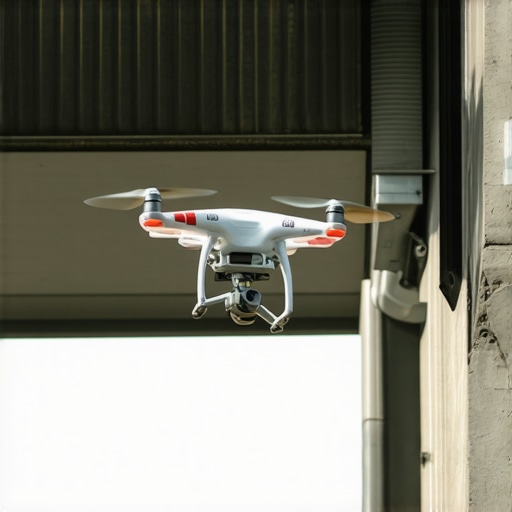
I have spent twenty-five years on a ladder, and if there is one thing I have learned, it is that water is a patient assassin. By the time you see a stain on your ceiling or a crack in your foundation, the crime was committed years ago. In 2026, we have finally stopped guessing. Drone technology has moved beyond simple cameras; we are now using high-resolution thermal imaging and LiDAR to spot failures that are invisible to the naked eye. Most homeowners think their gutters are fine as long as they aren’t sagging, but a drone inspection often reveals a different, more dangerous story. These machines can see the thermal signature of moisture trapped behind a fascia board or the micro-vibrations of a hanger that is about to give way under the weight of saturated organic sludge.
I remember a job last October in a high-end development. The homeowner was convinced their system was perfect because it was only three years old. I flew a drone over the roofline and found a thermal anomaly near the miter on the north corner. When I got up there with my tools, I discovered that a single disconnected leader had been dumping water into a hidden void for two seasons. The ground had shifted so much that the pitch of the entire 60-foot run had reversed. That is the reality of modern water management: if you aren’t engineering for the worst-case downpour, you are just waiting for a disaster. We don’t just ‘hang metal’ anymore; we manage flow velocity and hydrostatic pressure.
“Gutter systems shall be designed to allow for the thermal expansion and contraction of the material, especially at joints and transitions, to prevent seal failure.” – SMACNA Architectural Sheet Metal Manual
Hazard 1: The Failure of the EPDM Gutter Seals and Thermal Fatigue
One of the most frequent ‘hidden’ hazards we find in 2026 involves EPDM gutter seals. In the past, guys would just slap some caulk on a seam and call it a day. Today, high-performance systems use EPDM gaskets, but even these aren’t invincible. A drone equipped with a thermal sensor can detect the specific temperature drop that occurs when water sits in a seam. This usually indicates that the seal has been compromised by thermal fatigue. Metal expands and contracts every single day. If your half-round gutter installation didn’t account for this movement, those seals eventually stretch and tear. Once that happens, water doesn’t just drip; it clings to the underside of the gutter through surface tension and migrates toward the soffit. This is where pressure testing gutter seals becomes critical. We use the drone to monitor the system during a simulated ‘gully washer,’ looking for the slightest hint of moisture escaping where it shouldn’t. If those seals fail, your maintenance-free gutter systems aren’t worth the aluminum they are made of.
Hazard 2: The Critical Intersection of Attic Vent Installation and Gutter Apron Flashing
The second hazard is a classic case of one hand not knowing what the other is doing. We often see attic vent installation projects that completely ignore the existing drainage plane. A drone can fly right up to the drip edge and look ‘up’ into the gap. What we often find is that the gutter apron flashing was either cut or tucked incorrectly during a recent roof or vent upgrade. Without proper flashing, water doesn’t make the jump from the roof into the gutter. Instead, it performs a ‘hydro-u-turn’ and rolls back onto the top of the fascia. This is why you see paint peeling on the wood behind a perfectly good gutter. The drone catches the early signs of wood rot that a guy on the ground would never see until the gutter literally falls off the house. We also look at how round downspout services are integrated into the overall building envelope. If the leader is too close to a vent, you are inviting moisture-laden air into your attic, which creates a whole new world of mold problems. It is all one system, and you have to treat it that way.
“The size of leaders shall be based on the maximum projected roof area and the rainfall intensity for the specific geographic location.” – International Plumbing Code, Section 1106
Hazard 3: Structural Creep in Greenhouse Gutter Collection Systems
In 2026, we are seeing a massive surge in greenhouse gutter collection. People want to harvest every drop of rain. While the intent is great, the engineering is often terrible. These systems add massive weight to the eaves. A drone can detect ‘structural creep,’ where the hangers are slowly pulling away from the rafter tails. We use LiDAR to measure the pitch of the gutter to within a tenth of a degree. If the weight of the water in a collection-ready system causes the slope to flatten out, you get standing water. Standing water is heavy, it breeds mosquitoes, and it accelerates the breakdown of your EPDM gutter seals. Sometimes the solution is a downspout relocation to a more structural part of the frame, or upgrading to 7-inch industrial half-round gutter installation to handle the volume. If your brush gutter guards are full of silt because the water isn’t moving fast enough to flush them, you’ve turned your house into a swamp. We also check the splash block at the end of the line; if it isn’t moving water at least six feet from the foundation, you are just recycling your problems.
The Verdict: Engineering Beats Aesthetics Every Time
I see a lot of people buying brush gutter guards because they are cheap and easy to install. But in a heavy canopy area, those brushes just act as a trellis for vines and a trap for pine needles. A drone inspection in 2026 will show you exactly how those guards are failing. You’ll see the water ‘overshooting’ the gutter because the brush has become a solid mat of organic matter. True water management requires a maintenance-free gutter system that actually works with the physics of surface tension, not against it. Whether it is ensuring your end cap is properly crimped or verifying that your elbow isn’t clogged with tennis balls, the tech doesn’t lie. Don’t wait for the next blizzard or hurricane to find out your drainage system was a ‘contractor special.’ Get an inspection that actually looks at the physics of your home.
{“@context”:”https://schema.org”,”@type”:”HowTo”,”name”:”How to Identify Hidden Gutter Hazards via Drone”,”step”:[{“@type”:”HowToStep”,”text”:”Deploy a drone with 4K thermal imaging to scan the fascia and soffit for moisture anomalies.”},{“@type”:”HowToStep”,”text”:”Use LiDAR sensors to verify the pitch of the gutter runs, ensuring a minimum slope of 1/4 inch per 10 feet.”},{“@type”:”HowToStep”,”text”:”Conduct a pressure test on EPDM seals and miters using a high-volume water simulation to check for leaks.”},{“@type”:”HowToStep”,”text”:”Inspect gutter apron flashing alignment at the drip edge to ensure no water migration behind the metal.”}],”totalTime”:”PT60M”}