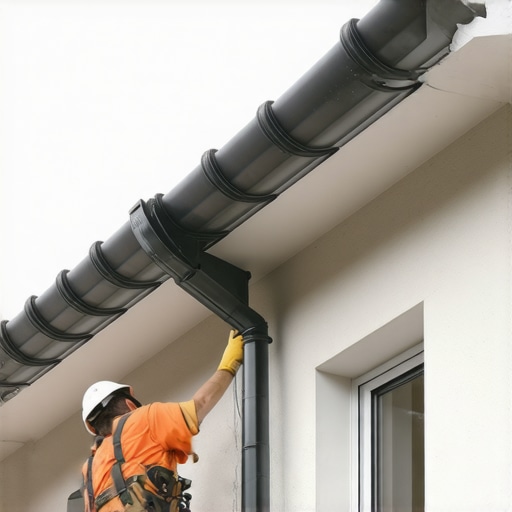
Unveiling the Complexities of Modern Gutter Systems: An Expert’s Perspective on Effective Drainage Solutions
In the realm of residential and commercial property management, the significance of an optimized gutter system cannot be overstated. As climate patterns evolve with increased precipitation variability, understanding the nuances of gutter installation and repair becomes paramount for ensuring long-term structural integrity. Recent advancements in drainage technology—such as seamless guttering and innovative gutter guards—highlight the importance of a comprehensive approach rooted in technical expertise. This article delves into advanced strategies for reliable drainage, reflecting the latest industry standards and expert insights.
Why Precision in Gutter Slope and Material Selection Matters for Drainage Efficiency
Achieving optimal water flow requires meticulous attention to the gutter’s slope, typically calibrated at about ¼ inch per 10 feet, to prevent pooling and overflow. Material choice, from high-grade aluminum to corrosion-resistant copper, influences durability and maintenance frequency. Experts recommend preferring seamless aluminum gutters for their structural integrity and minimal leakage points, a critical factor in high-precipitation zones. Proper installation aligned with these parameters minimizes the risk of water infiltration and foundation erosion.
Innovative Repair Techniques: Reinforcing Drainage Pathways for 2024 and Beyond
Field-tested repair methods now emphasize the importance of reinforcing connections, sealing joints with high-quality silicone, and integrating gutter guards to mitigate debris accumulation. For existing systems exhibiting sagging or corrosion, targeted replacement of compromised sections—using fast gutter repairs—can restore optimal flow. Additionally, integrating downspout extensions and splash blocks ensures water disperses effectively away from foundations, a crucial aspect highlighted in recent studies by the American Society of Civil Engineers.
Complex Question: How can professionals optimize gutter system design to adapt to climate change-induced rainfall patterns?
Adapting to shifting rainfall patterns involves designing dynamic gutter systems capable of handling increased volume and intensity. This includes incorporating oversized gutters, installing rainwater harvesting systems, and utilizing smart sensors for real-time monitoring. Such innovations demand interdisciplinary expertise, blending civil engineering principles with environmental science, to preemptively address potential drainage failures and safeguard property longevity.
Integrating Expertise for Future-Proof Drainage Solutions
To stay ahead in the evolving landscape of water management, professionals should explore comprehensive resources like expert gutter installation and drainage system solutions. Emphasizing proactive maintenance, leveraging high-quality materials, and applying advanced repair techniques collectively contribute to resilient drainage infrastructure. As the industry progresses towards sustainability and efficiency, continuous learning and adaptation remain vital.
For further insights or to share your professional experiences in gutter system optimization, visit our expert community and contribute to shaping the future of reliable drainage solutions.
Leveraging Technology: Smart Solutions for Modern Gutter Management
As the demand for smarter homes grows, integrating technology into gutter systems offers a promising avenue for enhancing drainage efficiency. Smart sensors, for example, can monitor water levels in real-time, providing homeowners with alerts when gutters are overwhelmed or clogged. This proactive approach minimizes water damage risks and reduces maintenance costs. Companies are now developing integrated systems that communicate with home automation platforms, enabling remote diagnostics and alerts via smartphones. Such innovations necessitate an interdisciplinary understanding, combining civil engineering expertise with IoT (Internet of Things) technology, to create resilient and adaptive drainage solutions.
What Are the Most Overlooked Factors Influencing Gutter System Longevity?
While material choice and installation precision are often emphasized, other subtle factors can significantly impact system durability. For instance, the surrounding landscape’s grading plays a crucial role in directing water toward or away from gutters. Improperly graded lawns or poorly positioned landscaping can cause water to pool or divert flow into vulnerable areas. Additionally, local environmental conditions—such as salt exposure in coastal regions or acid rain in industrial areas—can accelerate corrosion, even in high-quality materials. Regular inspections that include assessing these environmental and landscape factors are vital for extending gutter lifespan. For more detailed insights, consult industry-leading resources like expert gutter installation and drainage system solutions.
How can an integrated approach combining innovative materials, technology, and landscape planning revolutionize drainage management?
This question underscores the importance of holistic planning that considers all facets affecting drainage performance. Combining high-performance materials—such as corrosion-resistant alloys—with smart monitoring systems and landscape design strategies can create a highly resilient drainage infrastructure. For example, strategic installation of rain gardens and permeable pavements can complement gutter systems by absorbing excess runoff, reducing the load on gutters during heavy storms. Integrating these elements requires a nuanced understanding of civil engineering, environmental science, and landscape architecture, which collectively can preempt water-related damage more effectively than isolated solutions. To explore comprehensive strategies, visit trusted drainage solutions and gutter installation guides.
If you’re interested in expanding your knowledge or sharing your experiences, consider joining our community of professionals dedicated to advancing drainage technology and sustainable home protection. Your insights can help shape the future of resilient and intelligent gutter systems.
Harnessing Multi-Layered Drainage Solutions to Counteract Climate Variability
As climate patterns become increasingly unpredictable, the necessity for multi-layered drainage strategies grows more critical. Beyond oversized gutters and smart sensors, integrating underground drainage systems such as French drains and dry wells can significantly augment surface water management. These systems act as secondary pathways, intercepting excess runoff before it reaches critical zones, thereby reducing pressure on primary gutters and preventing basement flooding. Implementing such comprehensive drainage networks requires a nuanced understanding of subsurface hydrology, soil permeability, and local climate projections, which can be supported by advanced modeling software like SWMM (Storm Water Management Model) developed by the EPA (Environmental Protection Agency) EPA SWMM documentation.
What role can permeable pavement and green infrastructure play in enhancing gutter system resilience?
Permeable pavements and green infrastructure elements, such as rain gardens and vegetated swales, serve as natural buffers that absorb and slow runoff, decreasing the volume directed into gutters during storm events. This synergy between hardscape and landscape features not only alleviates burden on drainage systems but also promotes ecological benefits like groundwater recharge and urban heat island mitigation. When designed strategically, these features can be integrated into property landscapes to create a resilient, eco-friendly water management ecosystem. For detailed case studies on such integrations, consult resources from the American Society of Landscape Architects (ASLA) ASLA.
Emerging Technologies: IoT-Enabled Predictive Maintenance and Real-Time Data Analytics
Looking forward, the advent of IoT (Internet of Things) in gutter management offers unprecedented predictive capabilities. Sensors embedded within gutters and downspouts can monitor parameters such as water flow rate, debris accumulation, and structural integrity, transmitting data to cloud-based platforms. Machine learning algorithms analyze this data to forecast potential failures or clogging events, triggering maintenance alerts before issues escalate. This proactive approach minimizes costly repairs and mitigates water damage risks. Implementing these systems requires expertise in sensor technology, data analytics, and civil engineering, underscoring the importance of interdisciplinary collaboration.
How can data-driven maintenance strategies redefine the lifecycle management of gutter systems?
Data-driven strategies facilitate a shift from reactive to predictive maintenance, extending gutter lifespan and optimizing resource allocation. By continuously analyzing sensor data, professionals can prioritize repairs, plan preventative interventions, and adapt designs based on real-world performance metrics. This approach aligns with principles of smart infrastructure management and sustainable urban development. For further insights into the integration of IoT in water infrastructure, see the comprehensive report by McKinsey & Company on smart city solutions McKinsey Smart Cities.
Engaging with Expert Resources to Elevate Drainage Design and Maintenance
To develop and implement these advanced systems, professionals should leverage authoritative resources such as the American Society of Civil Engineers (ASCE) and specialized consultancy firms. Continuous education through certifications, workshops, and industry conferences ensures staying at the forefront of emerging technologies and best practices. The future of gutter systems hinges on a holistic approach that combines innovative materials, intelligent monitoring, and sustainable landscape integration—an endeavor best supported by expert knowledge and collaborative design efforts.
Harnessing Interdisciplinary Insights for Next-Generation Gutter Technologies
In the pursuit of resilient drainage systems, integrating interdisciplinary expertise—spanning civil engineering, environmental science, and material technology—is paramount. Cutting-edge materials such as nanocoatings and corrosion-inhibiting alloys are now being incorporated into gutter manufacturing, significantly extending lifespan and reducing maintenance needs. Moreover, advancing joint sealing techniques with chemically engineered sealants offers superior waterproofing, particularly in environments prone to salt exposure or industrial pollutants. These innovations, supported by research from the Journal of Materials Engineering, exemplify the transformative potential of material science in drainage infrastructure.
Can Computational Fluid Dynamics Revolutionize Gutter Installation and Optimization?
Absolutely. Computational Fluid Dynamics (CFD) modeling allows engineers to simulate water flow within complex gutter geometries, enabling precise optimization of slope, cross-sectional profile, and outlet placement. By analyzing flow patterns under varying rainfall intensities, CFD helps identify potential stagnation zones and overflow points before physical installation. This proactive approach enhances drainage efficiency and minimizes costly revisions. Industry leaders now leverage CFD tools to design highly customized gutter systems tailored to specific climate zones and architectural features, ensuring peak performance in extreme weather conditions.
External Expert Source: Elevating Gutter Design through Scientific Validation
For those seeking authoritative guidance, the ASTM International standards for gutter systems (e.g., ASTM D6486) provide rigorous testing protocols and material specifications that ensure durability and performance. Adhering to such standards guarantees compliance with safety and environmental regulations, fostering trust among clients and stakeholders. Consulting these standards during design and procurement phases promotes a scientific, validated approach to gutter engineering.
What Emerging Technologies Are Shaping the Future of Gutter Maintenance?
Emerging technologies such as drone inspection equipped with multispectral imaging and AI-powered predictive analytics are revolutionizing maintenance paradigms. Drones can rapidly survey extensive gutter networks, detecting corrosion, blockages, or structural deformations that are often missed during manual inspections. When combined with AI algorithms analyzing historical data, maintenance schedules become predictive rather than reactive, reducing downtime and repair costs significantly. These innovations exemplify how digital transformation is creating smarter, more responsive gutter management systems.
Ready to Lead in Sustainable Drainage Innovation?
To stay at the forefront of this evolving landscape, professionals should explore advanced training modules, attend industry conferences, and participate in pilot projects that test emerging technologies. Engaging with authoritative resources like the International Association of Plumbing and Mechanical Officials (IAPMO) and subscribing to leading journals such as the Journal of Environmental Management can deepen understanding. Embracing innovative materials, computational tools, and IoT-enabled monitoring systems will position you as a pioneer in climate-resilient drainage solutions. Dive into these resources and start transforming your approach today!
Expert Insights & Advanced Considerations
1. Embrace Multi-Layered Drainage Approaches
Integrating surface and subsurface drainage solutions, such as French drains and permeable pavements, enhances resilience against climate variability, ensuring long-term property protection.
2. Leverage Computational Fluid Dynamics (CFD)
Utilizing CFD modeling allows precise optimization of gutter slope, cross-sectional profile, and outlet placement, reducing overflow risks during extreme weather events.
3. Incorporate Smart Monitoring Technologies
Embedding IoT sensors within gutter systems facilitates real-time water flow analysis and predictive maintenance, minimizing downtime and repair costs.
4. Prioritize Material Innovation
Employ advanced materials like nanocoatings and corrosion-inhibiting alloys to extend gutter lifespan, especially in harsh environments such as coastal or industrial zones.
5. Design for Climate Adaptability
Oversized gutters, rainwater harvesting systems, and landscape modifications like rain gardens create adaptive infrastructure capable of handling increased rainfall intensity.
Curated Expert Resources
- American Society of Civil Engineers (ASCE): Offers comprehensive standards and guidelines for drainage system design and maintenance.
- EPA Storm Water Management Model (SWMM): An advanced tool for modeling complex drainage networks and predicting system performance under various climate scenarios.
- Journal of Materials Engineering: Publishes cutting-edge research on innovative materials used in gutter manufacturing and corrosion resistance.
- American Society of Landscape Architects (ASLA): Provides insights into integrating green infrastructure like rain gardens and permeable pavements for holistic water management.
- McKinsey & Company — Smart Cities Report: Analyzes IoT and data analytics applications in urban water infrastructure, guiding predictive maintenance strategies.
Final Expert Perspective
In the realm of gutter systems, embracing advanced, multi-disciplinary strategies is essential for future-proofing against climate change. Integrating innovative materials, computational modeling, and smart monitoring elevates drainage efficiency and durability, ensuring property resilience in unpredictable weather patterns. To stay at the forefront of these developments, professionals should actively engage with authoritative resources and contribute insights through professional communities. Your expertise and proactive approach will shape the next generation of reliable, adaptive drainage solutions—paving the way for smarter, more resilient infrastructure. Explore further at Fast Gutter Repairs & Drainage Solutions.