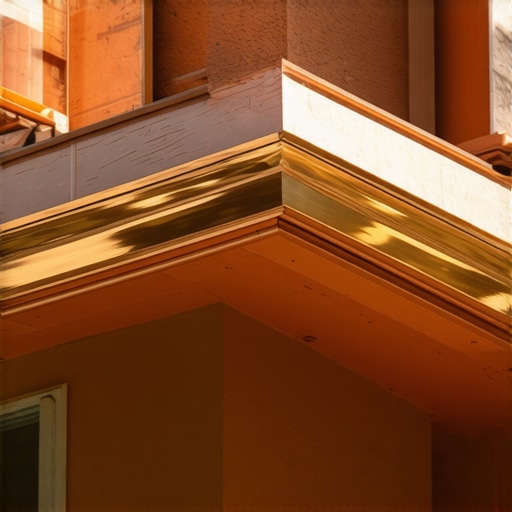
The Brutal Reality of Water and Your Home’s Perimeter
In twenty-five years of staring at fascia boards and crawling into wet crawlspaces, I’ve learned one immutable truth: water is a patient predator. It doesn’t just fall from the sky; it hunts for weaknesses in your building envelope. Most homeowners treat gutters like an afterthought, something to buy at a big-box store and slap up with a few thin spikes. But when we talk about Copper Gutter Installation in 2026, we aren’t talking about a decorative trim. We are talking about a multi-generational drainage engine designed to outlast the mortgage, the roof, and probably the homeowner. Is the premium price worth it? The answer isn’t in the aesthetics; it’s in the engineering of flow and the mitigation of rot.
I remember a project three years ago on a coastal bluff. The homeowner had gone through three sets of seamless aluminum in a decade. The high-salt environment and 80-mph wind gusts had literally shredded the thin-gauge metal. We stepped in with 20-ounce cold-rolled copper and high-wind gutter anchors spaced every 12 inches—not the standard 24 or 32. During a tropical storm six months later, while the neighbor’s gutters were wrapped around a pine tree, my client’s copper system didn’t even vibrate. That is the difference between ‘hanging metal’ and engineering a solution. [IMAGE_PLACEHOLDER]
The Physics of the Premium: Why Copper Stands Alone
Most people see the price tag of copper—often four to five times that of aluminum—and recoil. But let’s Hydro-Zoom into the metallurgy. Copper has a thermal expansion coefficient that requires professional respect. If you don’t account for the way a 50-foot run of copper expands in the summer sun and shrinks during a freeze, the system will tear its own End Caps off. We use internal expansion joints and heavy-duty brass Hangers to ensure the system breathes. Unlike aluminum, which relies on a thin baked-on paint, copper develops a patina. This verdigris layer is actually a sacrificial oxidation process that shields the underlying metal from acid rain and atmospheric pollutants. When you invest in copper, you are buying a self-healing material.
“Downspouts shall be sized based on the rainfall intensity of the region and the roof surface area.” – International Plumbing Code, Section 1106
In high-volume environments, we don’t just look at the material; we look at the Leader capacity. A standard 2×3-inch downspout is a joke in a modern downpour. For copper installs, we typically move to 4-inch round corrugated or smooth-bore collectors. This increases the flow velocity, ensuring that even during a ‘gully washer,’ the water doesn’t bridge the gap behind the Fascia and begin rotting the Soffit. If you see water dripping between the gutter and the board, your Drip Edge integration has failed, and no amount of expensive metal will save your wood from the fungus that follows.
Northern Challenges: Snow Melt and Ice Load
For those in snow-heavy climates, copper is a functional necessity. We often integrate snow melt gutter solutions directly into the copper trough. Because copper is an excellent thermal conductor, heat tape works more efficiently here than in any other material. We prevent ice dams from the inside out. Furthermore, we often encounter Lead paint gutter abatement issues on the historic homes that usually demand copper. You cannot simply rip off old systems on a pre-1978 home without specialized containment. It’s part of the premium service, ensuring the soil around your foundation isn’t contaminated while we modernize your Downspout relocation strategy.
The Technology of 2026: Sensors and Scoping
We are no longer guessing what’s happening inside your Miter joints or underground lines. Modern copper installations in 2026 frequently include gutter flow sensors. These low-voltage devices alert your smartphone when flow velocity drops, indicating a clog before the water overflows and causes foundation heave. Before we even hang the first Hanger, we perform camera scoping for gutters and underground leads. If your Downspout extension services are dumping into a collapsed clay pipe ten feet out, your $20,000 copper system is just a fancy way to drown your basement. We verify the exit path first. We also provide insurance claim assistance for those whose previous systems were destroyed by hail or wind, as copper is often a recognized upgrade for historic restoration credits.
“The design of gutters and downspouts shall provide for the management of water without causing erosion or damage to the building foundation.” – SMACNA Architectural Sheet Metal Manual
The Maintenance Myth: The 1/4 Inch Rule
People think copper is ‘set and forget.’ It’s not. It requires a specialist who understands Pitch. A gutter must drop at least 1/4 inch for every 10 feet of run. I’ve seen countless ‘pro’ installs where the gutter looked level to the eye—which means it was a stagnant mosquito pond. Stagnant water in copper can still lead to ‘pitting’ if acidic organic debris like oak tassels are left to rot in the bottom. This is where hanger replacement services come in for older systems that have sagged under ice weight, losing their critical Slope. If your water isn’t moving at a clip of at least 2 feet per second during a rain, your system is failing the physics test.
The Verdict: Is It Worth It?
If you plan to live in your home for less than ten years, copper is an aesthetic choice, not a financial one. However, if you are looking at a legacy property, the ROI is found in the lack of Fascia repairs and the avoidance of foundation stabilization. When you consider the cost of Downspout relocation, the integration of Drip Edge, and the sheer longevity of the metal, copper becomes the most cost-effective solution over a 50-year horizon. Stop thinking about gutters as a decoration and start thinking about them as the primary shield for your home’s most expensive component: the foundation. Keep your feet dry and your Soffits rot-free.