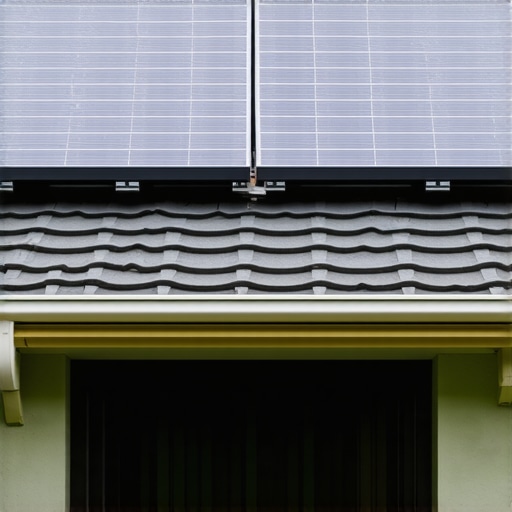
The Solar Runoff Crisis: Why Your Current Gutters are Failing
I’ve spent 25 years on a ladder, and I’ve seen water do things that would make an engineer weep. Most homeowners think a gutter is just a trophy piece of tin hanging off the house. It isn’t. It’s a hydraulic management system. Lately, I’ve been getting calls from folks with brand-new solar arrays wondering why their basements are suddenly damp. I went out to a job last October where the homeowner had just spent forty grand on high-efficiency panels. The first big rain came, and because those panels are basically giant sheets of glass, the water gained so much velocity it shot straight over their 5-inch gutters like a ski jump. The water wasn’t just missing the gutter; it was eroding a trench two inches deep into their expensive landscaping and soaking the foundation. This is the reality of solar runoff—the increased speed and concentrated volume of water that modern roofs now have to contend with.
The Physics of the ‘Water Slide’ Effect
When you have a standard shingle roof, the granules provide friction. They slow the water down. But when you introduce a metal roof gutter transition or a glass solar surface, that friction disappears. Water moves at a higher flow velocity. If your pitch/slope isn’t dialed in to a hair’s breadth of 1/4 inch per 10 feet, or if you’re still using outdated spikes and ferrules, your system is going to collapse under the weight and speed of 2026-era storm patterns. We are seeing higher rainfall intensity than ever before, and the old ways of ‘just hanging a pipe’ don’t cut it anymore. You need to understand the scupper installation process and how it handles the head pressure of a sudden downpour.
“Downspouts shall be sized based on the rainfall intensity of the region and the roof surface area.” – International Plumbing Code, Section 1106
Tactic 1: Advanced Flashing and Thermal Transitions
The first line of defense is the TPO roof gutter flashing. On modern flat roofs or low-slope solar setups, the transition point where the roof meets the fascia is where most systems fail. If the flashing isn’t tucked properly under the membrane and over the gutter’s back edge, water will use surface tension to ‘wick’ backward. It finds the soffit, rots the wood, and invites mold to live in your attic. In 2026, we’re moving toward heavy-gauge aluminum transitions that can handle the thermal expansion. Metal expands and contracts; if you’ve used cheap plastic components, they’ll crack at the end cap within two seasons. A proper end cap replacement using high-grade solar-resistant sealant is mandatory, not optional.
Tactic 2: High-Velocity Leaf Guard Systems and Debris Management
Everyone wants ‘maintenance-free’ gutters. Let me tell you: that’s a lie sold by salesmen in shiny suits. However, you can significantly reduce the headache. The leaf guard systems of 2026 have to be tougher. I recently pulled a literal bird’s nest and two desiccated squirrels out of a system that didn’t have proper gutter animal removal guards. Solar panels create a warm, protected gap that’s basically a luxury hotel for rodents and birds. Their debris falls into the gutter and creates a dam. If you’re using helmet-style guards, you have to ensure they are designed for high-flow capacity. The ‘nose’ of the helmet relies on surface tension to pull water into the gutter while shedding leaves. But if the water is moving too fast—like it does off a solar panel—it bypasses the opening entirely. This is why I often recommend a hybrid micro-mesh system over traditional helmets for solar-heavy homes.
“Gutter systems must be designed to withstand the expected snow and ice loads for the specific geographic location, ensuring hangers are spaced to prevent sagging and overflow.” – SMACNA Architectural Sheet Metal Manual
Tactic 3: Structural Integrity with Hidden Hanger Systems
If your gutters are still held up by those long nails (spikes) and tubes (ferrules), you’re living in the dark ages. As water volume increases due to solar runoff, the weight of the gutter grows exponentially. A gallon of water weighs about 8.3 pounds. During a heavy ‘gully washer,’ a 40-foot run of gutter can weigh as much as a small motorcycle. Spikes eventually pull out of the fascia because of the constant weight and vibration of the water. We now use hidden hanger systems that screw directly into the rafter tails. These hangers provide a clean look from the ground, but more importantly, they offer the structural rigidity needed to maintain the pitch/slope. If the gutter sags even half an inch, you get standing water, which leads to mosquitoes and rust. Proper downspout installation at the lowest point of that slope is critical to evacuate that weight as fast as possible.
The Discharge Revolution: Moving Water Away
Getting the water into the gutter is only half the battle. You have to get it away from the house. A standard 2×3 leader (downspout) is like trying to drain a bathtub through a soda straw. For 2026, we are pushing 3×4 oversized downspouts. This allows for better rain barrel integration, which is becoming a requirement in many drought-prone areas. If you’re collecting water, you need to make sure the overflow from those barrels is piped at least 10 feet away from the foundation using a pop-up emitter or a French drain. I’ve seen too many ‘DIY’ downspout installation jobs where the homeowner just puts a splash block at the bottom. That’s just delivering the enemy to your front door. You’re literally pouring water into your own basement. Professional drainage means engineering the exit as carefully as the entrance.
Why Every Miter and Elbow Matters
Every time water hits a corner—a miter—it slows down. Turbulence is the enemy of flow. In 2026, we are using ‘strip miters’ which have fewer seams than the old box miters. Fewer seams means fewer places for leaks to start. If you see a leak at an elbow, it’s usually because the leader is clogged further down, causing water to back up and freeze. In northern climates, this leads to ice dams that can rip the hidden hanger systems right out of the wood. You have to think of your gutters as a circulatory system. If there’s a clot in the arm, the heart (your foundation) is going to feel the pressure. Don’t cheap out on the small parts. High-quality end cap replacement and reinforced miter joints are the difference between a dry home and a $20,000 foundation repair bill.
This article really hits home for me! I’ve seen a lot of older gutter systems struggle with the kind of water velocity that modern solar panels can create. The point about upgrading to hidden hanger systems is particularly crucial because as you mentioned, the weight of the water can cause long-term structural issues. I recently replaced my old spikes with screw-in hangers, and I can definitely say the difference in stability and appearance is noticeable. One thing I’ve been pondering, though, is the cost-benefit ratio of installing oversized downspouts everywhere. Has anyone found an economic way to balance the initial investment with the long-term protection? Also, I’m curious about the micro-mesh systems—are they really maintenance-free or do they still require some regular cleaning? Would love to hear how others have tackled these upgrades without breaking the bank or turning it into a full renovation.