The Myth of Maintenance-Free: A Reality Check from the Ladders
I have spent over two and a half decades on ladders, staring into the muddy, stagnant truth of residential water management. Homeowners often view their gutters as an afterthought—a bit of trim that catches rain. But as a specialist, I see a complex hydraulic system. When that system fails, it doesn’t just get your feet wet; it destroys the structural integrity of your home. I remember a call-out to a property in a heavily wooded suburb where the owner had just spent a small fortune on a ‘maintenance-free’ micro-mesh system. Two years later, I found a literal ecosystem of oak tassels and shingle grit that had bonded into a thick, organic grout. The water wasn’t going into the gutter; it was sheet-flowing over the top, saturating the fascia board and rotting the rafter tails from the inside out. This is the reality of poor engineering meeting high-volume debris.
“Downspouts shall be sized based on the rainfall intensity of the region and the roof surface area.” – International Plumbing Code, Section 1106
The Physics of the Flow: Why Water Overwhelms Your Home
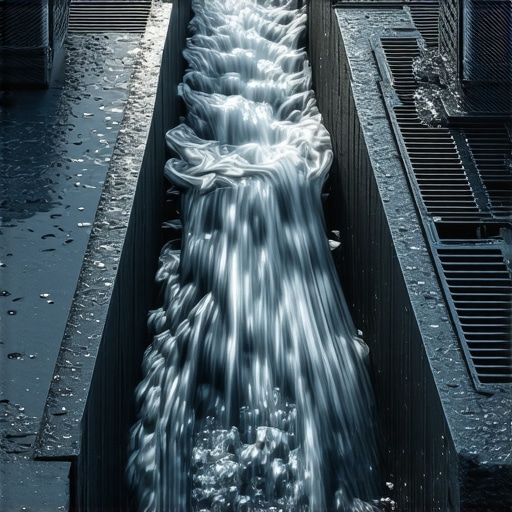
To understand effective water management, you have to understand surface tension and velocity. During a standard downpour, a 2,000-square-foot roof can shed over 1,200 gallons of water per hour. If your seamless gutter installation is off by even an eighth of an inch in its pitch, you create standing water. Standing water is heavy, weighing roughly 8.3 pounds per gallon. This weight puts immense stress on your hangers. We don’t use the old spikes and ferrules anymore—they pull out as the wood expands and contracts. We use heavy-duty hidden hangers screwed directly into the fascia every 12 inches to ensure the system doesn’t sag under hydraulic load.
Gutter Screen Installation: Matching Technology to Your Trees
There is no such thing as a one-size-fits-all gutter screen installation. If you live under white pines, a perforated metal screen is useless; the needles will stitch themselves into the holes. If you have broad-leaf maples, a solid-surface ‘helmet’ system might work via the Coanda effect—where water wraps around a curved edge—but in a heavy ‘gully washer,’ the velocity is often too high, and the water simply shoots over the edge. This is why we analyze the debris type before recommending a solution. Sometimes, bamboo gutter alternatives are discussed for aesthetic reasons, but for high-volume drainage, they rarely meet the structural requirements of modern composite shingle services where runoff speed is significant.
The Anatomy of a High-Performance Drainage System
Every component must work in unison. A gutter leak repair often starts at the miter—the corner where two runs meet. If the sealant has cured and cracked, water will seep behind the soffit. We also look at end cap replacement to ensure the run is watertight. But the most critical part is where the water leaves the house. A standard 2×3 inch leader (downspout) is often insufficient for modern roof pitches. We frequently upgrade to 3×4 inch leaders to handle the volume. If that water isn’t moved away from the foundation, you’re just wasting time. This is where flexible downspout extensions or underground French drains come into play. Without them, you risk hydrostatic pressure building up against your basement walls.
“Gutter systems must be designed to withstand the maximum potential snow load and ice accumulation common to the local climate.” – SMACNA Residential Sheet Metal Guidelines
Advanced Monitoring and Long-Term Maintenance
For the tech-savvy homeowner, gutter flow sensors are now a viable option. These devices can alert you when the flow velocity drops, indicating a clog before the water starts backing up into your starter strip services. Speaking of starter strips, if your shingles don’t have the correct overhang, water will wick back toward the house via capillary action, rotting the roof deck. When we provide a gutter cost estimation, we aren’t just looking at the linear footage of aluminum. We are calculating the roof square footage, the pitch of the roof, the type of debris, and the best way to move that water 20 feet away from your foundation. It is a game of inches and angles, and getting it wrong is a recipe for a flooded basement and a cracked foundation. Keep your splash blocks clear, check your elbows for clogs, and never assume a guard means you never have to look up again.