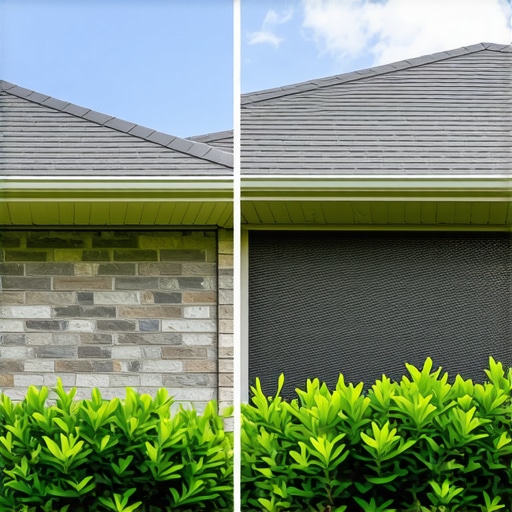
The Myth of the ‘Never Clean’ Gutter System
I’ve spent over 25 years on ladders, and if there is one thing I’ve learned, it’s that water is a patient, destructive force. Most homeowners view gutters as a ‘set it and forget it’ feature. They see a commercial for a magic guard and think their days of climbing a 24-foot extension ladder are over. I am here to tell you that maintenance-free gutters do not exist. There is only a reduction in frequency. Whether you are looking at snap-in gutter screens or high-end micro-mesh, you are still fighting a war against gravity and organic debris.
The Narrative: The Oak Tassel ‘Linear Planter’
Let me tell you about a job I had last spring. A homeowner had spent thousands on those foam ‘bottle brush’ inserts. He called me because his basement was damp and his fascia boards were literally weeping. I got up there and found that the brushes had trapped every single oak tassel and maple helicopter for three seasons. It wasn’t a gutter anymore; it was a 40-foot-long linear planter. The weight of the wet compost was so heavy it caused a massive sagging gutter fix requirement—the hangers had actually pulled out of the wood. This is why the ‘cheap’ or ‘passive’ solution often ends up costing the most in gutter repair services later on.
“Downspouts shall be sized based on the rainfall intensity of the region and the roof surface area.” – International Plumbing Code, Section 1106
The Physics of Flow: Why Snap-In Screens Often Fail
In 2026, we are seeing a resurgence of plastic and thin-gauge metal snap-in screens. They are tempting because they are cheap and easy to install. However, they rely on large holes to let water in. Here is the ‘Hydro-Zoom’ reality: during a heavy downpour, water doesn’t just fall straight down. It gains flow velocity as it slides down your roof shingles. When it hits a snap-in screen, the water often ‘skips’ over the holes due to surface tension, especially if the screen is slightly convex. This results in water overshooting the gutter entirely, landing right next to your foundation—exactly what we are trying to avoid with downspout extension services.
Micro-Mesh: The Gold Standard with a Pollen Problem
Micro-mesh is a different beast. These systems use a stainless steel cloth that is so fine it can filter out sand. This prevents almost all organic matter from entering the trough. However, they aren’t perfect. In heavily forested areas, especially those with heavy pine or oak canopy, a biological film of pollen and ‘oak dust’ can create a waterproof crust over the mesh. This is known as the ‘teabag effect.’ Water can’t get through the sludge, so it sheets over the top. While micro-mesh is superior for preventing clogs in your leader (downspout), you still need gutter maintenance plans to occasionally brush off the surface.
Critical Components: Beyond the Screen
Installing a guard on a failing system is like putting a fresh coat of paint on a rotted fence. Before you even think about 2026-grade micro-mesh, you need to ensure your pitch (or slope) is correct. A standard run needs 1/4 inch of drop for every 10 feet toward the elbow. If the water sits, it creates a breeding ground for mosquitoes and causes seamless aluminum to corrode over decades. If your roof lacks a gutter apron installation, water will inevitably wick behind the fascia and rot the soffit. If we find old, dangerous materials during a tear-off, we have to implement asbestos gutter handling protocols, which is why professional gutter repair services are non-negotiable for older homes.
“Gutters and downspouts shall be copper, aluminum, or galvanized steel… and must be supported by hangers spaced not more than 48 inches apart.” – SMACNA Residential Sheet Metal Guidelines
The Engineering Solution: On-Site Gutter Rolling
For a truly engineered system, we utilize on-site gutter rolling. This allows us to create a single, continuous run of metal that fits your home’s specific dimensions perfectly. We don’t use spikes and ferrules anymore; they pull out as the wood expands and contracts. We use heavy-duty internal hangers with 1-inch screws. If the layout of your home is causing water to pool in a low spot of the yard, we might suggest downspout relocation or even downspout extension services to move that volume at least 10 feet from the foundation. For modern flat-roof structures, we often integrate membrane roof gutters that require specialized heat-welding techniques to ensure a watertight seal at every miter.
Final Verdict: Choosing Your Shield
When we remove your old, failing system, we prioritize eco-friendly gutter disposal, recycling the aluminum to keep it out of landfills. If you live under a heavy canopy of broad-leaf trees, a high-quality micro-mesh is your best bet, provided you are willing to spray it down once a year. If you have minimal tree cover and just want to keep the occasional stray leaf out of the end cap, a heavy-duty snap-in metal screen may suffice. But remember: water is the #1 enemy of your home. It wants to get inside. Your gutters are the first line of defense. Don’t skimp on the engineering.
This post really hits home on the importance of understanding that no gutter system is completely maintenance-free—it’s about choosing the right level of maintenance and proper installation. I’ve seen many homeowners opt for the cheapest snap-in screens only to find that during heavy rains, they overshoot the gutters altogether, leading to water damage around the foundation. I particularly agree with the point about micro-mesh being effective but not foolproof, especially in heavily wooded areas where pollen and oak dust can create that ‘teabag effect.’ In my experience, ensuring a proper slope and regular brushing of the mesh surface helps maintain its efficiency. It makes me wonder how many homeowners underestimate the significance of proper pitch and support before investing in guards. Has anyone here experimented with different gutter pitches or reinforcement methods to prevent these issues? It seems like a small detail but can significantly impact the longevity of the system.