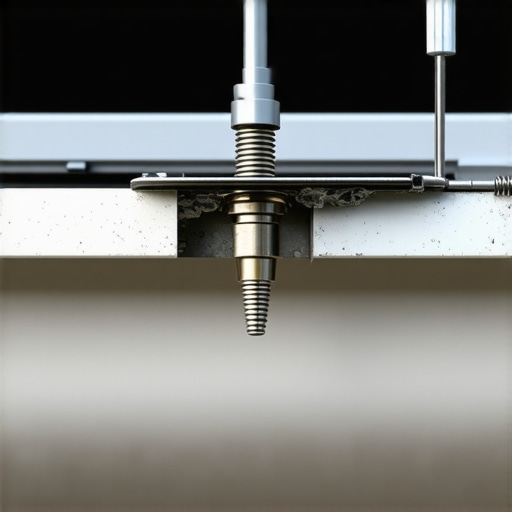
The Sound of Structural Failure
If you have ever been woken up at 3:00 AM by a rhythmic thwack-drip against your bedroom window, you aren’t just hearing rain; you are hearing the sound of your home’s primary defense system surrendering. As a specialist who has spent over two decades on a ladder, I have seen more ‘gutter pull-away’ than I care to recount. The culprit is almost always the same: the archaic spike and ferrule. In the industry, we call them ‘nails with a dream,’ but that dream turns into a nightmare the moment the freeze-thaw cycle begins. I remember a specific job in the suburbs of Chicago during the freak ice event of ’21. I walked up to a beautiful brick Tudor where a forty-foot run of seamless aluminum was literally hovering two inches off the fascia, held on by a single, stubborn corner miter. The homeowner was baffled, but the math was simple. They had heavy ice dams, and those 7-inch spikes had zero ‘bite’ left in the water-saturated wood. This is why, as we head into 2026, we are finally seeing a industry-wide move toward structural engineering over simple ‘hanging.’
“Gutter systems must be designed to accommodate the thermal expansion and contraction of the metal without putting undue stress on the fastening system.” – SMACNA Architectural Sheet Metal Manual
The Physics of the Pull-Away: Why Spikes Fail
To understand the fix, you have to understand the physics of the failure. A spike and ferrule system is essentially a long nail driven through a metal tube. The spike passes through the front of the gutter, through the ferrule (which acts as a spacer), through the back of the gutter, and into the fascia board. The problem is the lever effect. When a gutter fills with slush or wet leaves, the weight pulls downward on the front lip. Because the spike has no threads, it relies entirely on the friction of the wood grain. Every time the temperature drops, the metal gutter contracts; every time it warms up, it expands. This constant ‘pumping’ action slowly backs the spike out of the hole. Once it moves a quarter-inch, moisture enters the wood through the spike hole, causing the wood fibers to rot and soften. Now, that spike has the holding power of a toothpick in a marshmallow. This is where professional gutter replacement services become a necessity rather than an option. You cannot simply hammer the spike back in; you are just putting a band-aid on a terminal wound.
The 2026 Solution: Internal Screw Hangers and Coping Cap Alignment
The modern standard has shifted to heavy-duty internal hangers with 3-inch, coarse-thread screws. Unlike spikes, these screws ‘bite’ into the rafter tails behind the fascia, creating a structural bond that can withstand hundreds of pounds of vertical load. But fastening is only half the battle. We also have to look at coping cap alignment on modern homes. If your coping caps aren’t properly sloped toward the roof-side drainage, water will track back under the shingles and rot the top of the fascia board where your hangers need to grip. For homes with flat roofs or parapets, we are increasingly seeing roof scupper drains used in tandem with traditional gutters to manage high-velocity runoff. During a ‘gully washer’ in the South or a heavy spring thaw in the North, a scupper acts as a relief valve, preventing the main gutter run from becoming an 800-pound anchor that wants to tear itself off the house.
“Downspouts shall be sized based on the rainfall intensity of the region and the roof surface area.” – International Plumbing Code, Section 1106
Hydro-Zooming into Winterization and Weight Management
In northern climates, gutter winterization is the difference between a dry basement and a flooded mess. When water freezes, it expands by approximately 9%, but it’s the weight that kills. A single foot of ice in a standard 5-inch gutter can weigh over 5 pounds. On a 50-foot run, that is an extra 250 pounds of dead weight pulling on your hangers. This is why I often recommend foam gutter inserts for specific applications where leaf debris is low but ice buildup is high. The foam occupies the space where standing water would normally freeze solid, though it requires meticulous maintenance to prevent organic sludge buildup. Furthermore, for 2026, integrated home automation is entering the gutter world. We are now installing moisture and temperature sensors inside the outlet pipe connection. These sensors can trigger heat tapes or alert your smartphone when the flow rate drops, indicating a clog or a freezing event before the weight reaches critical mass. It turns your drainage from a passive system into an active, managed asset.
The Drainage Hierarchy: Beyond the Fascia
Stopping the pull-away is just step one. Once the water is safely in the trough, you need a clear path for its exit. This means checking every elbow and miter for leaks and ensuring your rainwater harvesting gutters are actually diverting water to the storage tanks without backing up. I have seen many DIY setups where the outlet pipe connection was too small for the volume of the roof, leading to ‘fountain effects’ that wash out the foundation. Speaking of foundations, don’t forget bird spike gutter protection. While it sounds like a luxury, nesting birds love the warmth of a gutter corner. Their nests act as perfect dams, causing water to pool and sit against the fascia, which—you guessed it—leads to the rot that causes spikes to pull away. Finally, if your entire system is failing, don’t let the price tag scare you into another ‘cheap’ fix. Many contractors now offer financing for gutter installs, allowing you to upgrade to a 6-inch seamless system with structural hangers that will last thirty years instead of five. Remember, water is a patient predator; it only needs one weak spike to start destroying your home.