The Night the Fascia Screamed: A Lesson in Winter Physics
I remember a call from a frantic homeowner during the deep freeze of 2021. They reported a sound like a gunshot echoing through their master bedroom at 3:00 AM. When I arrived at dawn, the reality was worse than a prowler. A sixty-foot run of heavy-gauge aluminum gutter was hanging at a forty-five-degree angle, swinging in the wind. The sound they heard was the structural failure of sixteen-penny nails being ripped out of the wood. The culprit? An ice dam so massive it had turned a simple drainage channel into a four-hundred-pound solid glass bar. This happened because the water had nowhere to go, and the thermal transition between the warm roof and the frozen gutter caused a catastrophic failure. In my twenty-five years as a drainage specialist, I have seen hundreds of foundations ruined by this exact scenario. If you think your gutters are just for rain, you are missing half the story. They are your home’s primary defense against structural rot and foundation displacement.
The Thermal War: Understanding Ice Dam Formation
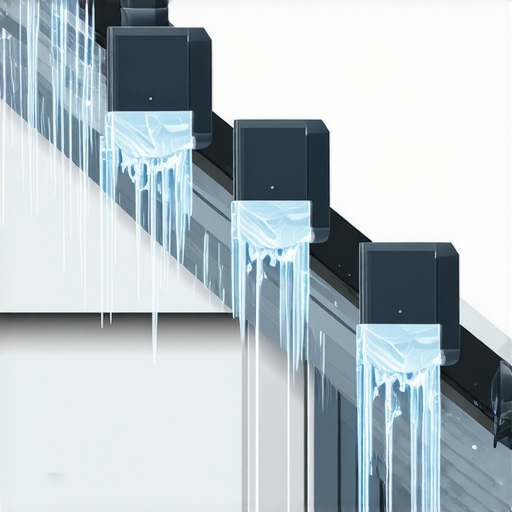
Ice dams are not just a weather problem; they are a thermodynamics problem. When heat escapes your attic and warms the roof deck, it melts the bottom layer of snow. That liquid water flows down to the eaves, which are not over the heated living space. The moment that water hits the cold edge, it refreezes. This creates a ridge of ice that traps subsequent meltwater. This trapped water then seeks the path of least resistance, which is usually up under your shingles or behind the fascia board. This is where gutter winterization becomes more than a chore; it becomes a necessity for survival. Without a clear path through the leader and out the elbow, that water will dismantle your home piece by piece.
“Downspouts shall be sized based on the rainfall intensity of the region and the roof surface area.” – International Plumbing Code, Section 1106
When we look at the physics of flow during a freeze-thaw cycle, the pitch of your system is critical. A standard slope of 1/4 inch per 10 feet is designed for liquid water, but when slush begins to form, surface tension increases and flow velocity drops. This is why gutter de-icing services have shifted from simple manual clearing to sophisticated technical installs involving smart heating cables.
The Top 3 App-Controlled Gutter Heaters for 2026
As we head into the 2026 winter season, the technology has moved far beyond the cheap heat tape you find at a big-box store. We are now seeing the integration of IoT (Internet of Things) into water management. Here are the three systems currently dominating the high-end market.
1. The ArcticLink Pro-Series
This system uses a self-regulating polymer core that adjusts its heat output based on the ambient temperature. The real power, however, is in its cloud-based controller. You can monitor the wattage draw on every hanger and miter from your smartphone. If the system detects a spike in resistance, it alerts you to a potential blockage before the ice has a chance to form. This is essential for flood prevention gutters because it ensures the path to the splash block remains open even in sub-zero temperatures.
2. ThermoGuard SmartCable Ultra
The Ultra series focuses on high-flow areas like the end cap and the entrance to the leader. It features a unique app interface that allows you to set “Pre-Heat” schedules based on local weather forecasts. If the app sees a blizzard coming, it ramps up the temperature of the cables early, preventing the initial layer of ice from ever bonding to the aluminum. When paired with micro-mesh gutter guards, this creates a heated filtration system that keeps debris out and water moving.
3. HydroVolt Integrated Ribbon
This is the most discreet option on the market. Instead of round cables, it uses a flat ribbon that sits flush against the bottom of the gutter. This maximizes heat transfer to the metal, effectively turning the entire gutter into a heated trough. It is particularly effective for those who use greenhouse gutter collection systems, as it keeps the harvested water in a liquid state longer, allowing it to move through flexible downspout extensions to your storage tanks even in late autumn.
Integration with Advanced Gutter Guards
Many homeowners believe that installing micro-mesh gutter guards means they no longer need to worry about ice. This is a dangerous myth. In fact, fine mesh can actually provide more surface area for ice to cling to if it isn’t properly heated. The goal is to create a synergetic system where the guard keeps the organic sludge out and the heater keeps the liquid moving. When I perform a gutter maintenance plan, I check for the accumulation of pollen and fine silt on the mesh. If that silt freezes, it creates an impermeable barrier that causes water to overshoot the gutter entirely, leading to erosion at the foundation line.
“Gutters and downspouts shall be maintained in good repair and free from obstructions.” – International Property Maintenance Code, Section 304.7
The Reality of Installation: Beyond the Basics
Installing these systems is not a DIY weekend project. On older homes, we often run into the issue of lead paint gutter abatement. Scraping or drilling into old fascia boards can release hazardous dust. A professional team knows how to handle these materials while ensuring the hanger spacing is tight enough to support the weight of the cables and potential snow load. We often recommend financing for gutter installs when a home requires a full system overhaul, including 6-inch oversized channels and high-flow leaders. It is a significant upfront investment, but it is far cheaper than a $30,000 foundation piering job caused by five years of poor drainage.
Maintenance and Long-Term Strategy
Even the smartest app-controlled heater requires a solid gutter maintenance plan. You cannot simply “set it and forget it.” Every spring and fall, the soffit should be inspected for signs of water intrusion, and every elbow should be flushed to ensure no debris has bypassed the guards. If you are seeing moisture in your basement, check your flexible downspout extensions. If they are buried or crushed, no amount of heating technology will save your foundation. Water must be moved at least ten feet away from the home to be considered managed. In conclusion, as we face more volatile winter patterns in 2026, the transition from passive drainage to active, smart-managed water systems is the only way to truly protect your largest investment.