Why Most Gutter Contractors Fail to Show Up for Neighborhood Searches
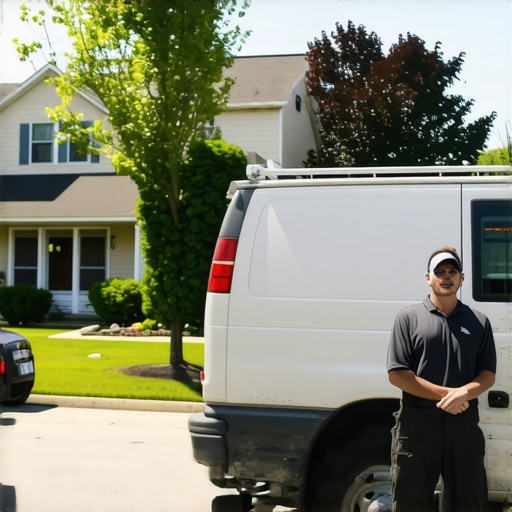
Imagine one of your gutter trucks is parked in a suburban driveway. Your crew is busy installing 6-inch seamless gutters and downspout extensions for a homeowner who just dealt with a basement flood. Across the street, the neighbor notices the work and pulls out their phone to search for “gutter repair near me.”
Despite your truck being less than fifty feet away, your business is nowhere to be found in the results. Instead, a competitor from three towns over occupies the top spot in the Map Pack. This is the “Visibility Gap,” and it is costing gutter contractors thousands of dollars in high-intent leads every single month.
Currently, 97% of consumers use the internet to find local businesses, and 46% of all Google searches have local intent. If you aren’t appearing in those neighborhood searches, you are essentially invisible to the local market. Dominating local search requires more than just doing good work; it requires a technical strategy to bridge the gap between your physical presence and your digital footprint.
The “Proximity Myth”: Why Being There Isn’t Enough
Many contractors believe that simply being physically close to a searcher is the primary factor for ranking on Google Maps. While proximity is a major pillar of the local algorithm, it is only one-third of the equation. Google relies on three specific pillars: Proximity, Relevance, and Prominence.
Proximity is the distance between the searcher and your business location. Relevance is how well your business profile matches what the user is searching for. Prominence is how well-known or authoritative your business is according to the web’s data points.
Google Business Profile (GBP) now drives over 60% of local discovery clicks for home services. If you haven’t invested in google business profile optimization, the algorithm doesn’t “trust” that you are the best fit for that specific neighborhood. This lack of trust is often the reason Why Your Gutter Business Map Pin Keeps Disappearing and How to Pin It Down.
In 2026, the algorithm has become even more sophisticated. It looks for signals that confirm your crew is actually active in the areas you claim to serve. If your digital signals are weak, Google will default to a competitor with a more “prominent” profile, even if they are further away.
The 2026 Google Business Profile Audit: Where the Leaks Are
The foundation of your local SEO strategy is your Google Business Profile. However, most gutter contractors set it up once and never look at it again. This “set it and forget it” mentality leads to technical leaks that drain your rankings.
First, consider your primary category. Many contractors choose “Gutter Cleaning Service” when they should be targeting “Gutter Contractor.” While cleaning is a high-volume search, the “Contractor” category often carries more weight for high-ticket installation and repair jobs. You must align your primary category with the service that drives your highest ROI.
Second, let’s talk about Service Areas. A common mistake is listing 20 different counties to try and “cast a wide net.” In 2026, Google views this as a red flag for Service Area Businesses (SABs). Listing too many areas without having the corresponding local content or proximity signals can lead to profile suspensions.
Google is increasingly strict about outdated information and mismatched data. If your office hours on your website don’t match your GBP, or if your phone number varies across the web, your “trust score” drops. You should use professional local seo tools to audit your profile for these discrepancies regularly.
Identifying these issues early is the first step toward recovery. For a deeper look at common pitfalls, check out 5 Local SEO Errors That Keep Your Gutter Service Off the Map. Avoiding these technical traps is essential for maintaining a healthy, high-ranking profile.
The Importance of Service Menu Optimization
Don’t just list “Gutter Work” in your services. The 2026 algorithm crawls your service menu to understand your specific expertise. You should break these down into detailed offerings: K-style gutter installation, fascia board repair, leaf guard systems, and seamless gutter fabrication.
Each service should have a detailed description that includes local keywords. This helps Google connect your profile to very specific long-tail searches. When a homeowner searches for “clogged downspout repair in [City Name],” a detailed service menu helps you win that click.
Hyperlocal Content: Proving Your Presence to the Algorithm
To rank in multiple neighborhoods, you need to prove to Google that you are actually there. This is where “City Pages” and “Service Area Pages” become your most powerful assets. A generic “Services” page is no longer enough to rank in a competitive 3-Pack.
Each major city or neighborhood you serve should have its own dedicated page on your website. These pages shouldn’t just be “copy-paste” versions of each other. They need to feature hyperlocal content: photos of jobs in that specific town, mentions of local landmarks, and even local weather patterns that affect gutter health (like heavy snow loads or high oak tree density).
One of the most effective technical strategies is the “Map Embed Trick.” By embedding a custom Google Map on a city-specific page that shows your service area or recent job locations, you provide a direct data link to the algorithm. This is explained in detail in The Map Embed Trick That Proves to Homeowners Your Gutter Crew is Nearby.
When you combine these local signals, you create a “City Page Blueprint.” This blueprint ensures that your website acts as a local authority for every area your trucks visit. To learn how to structure these pages for maximum impact, see The City Page Blueprint That Puts Your Gutter Trucks in Every Local Search.
Using Geo-Tagged Images
Every time your crew finishes a job, they should take a high-quality photo. Before uploading these to your GBP or website, ensure they contain EXIF data or “geo-tags.” This metadata tells Google exactly where the photo was taken.
When Google sees a steady stream of photos being uploaded from a specific neighborhood, it reinforces your proximity and relevance for that area. This is a “silent” ranking signal that most of your competitors are completely ignoring.
The Review Engine: Beyond the 5-Star Rating
Reviews have always been important, but in 2026, the way Google interprets them has changed. It’s no longer just about the total number of stars. Google’s AI now analyzes the “velocity” of reviews and the specific keywords used within the text of the review.
If a customer writes, “The crew did a great job on our seamless gutters and fixed our rotting fascia,” Google associates your business with those specific keywords. This makes you more likely to show up when someone else searches for “fascia repair” or “seamless gutters.”
As I often tell my clients, “It’s not just about the stars; it’s about the story the customer tells Google’s AI about your service.” You need a consistent system to generate these detailed reviews without being overbearing. High review velocity – getting a steady stream of reviews rather than a burst followed by silence – is a massive ranking signal for google maps lead generation.
Many contractors struggle with the “ask.” However, there are ways to automate this process and encourage customers to mention specific services. For practical advice, read How to Get 5-Star Google Reviews From Happy Gutter Clients Without Being Pushy.
Responding to Reviews as a Ranking Signal
Responding to every review – both positive and negative – is a non-negotiable part of local SEO. Your responses should also include relevant keywords. If someone praises your leaf guard installation, your response should be: “Thanks, Sarah! We’re glad you’re happy with your new leaf guard system in [City Name].”
This adds another layer of keyword relevance and local signal to your profile. It also shows potential customers that you are an engaged and professional business owner, which increases your conversion rate once they find you.
Technical Citations and NAP Consistency
Citations are any mention of your business name, address, and phone number (NAP) across the web. This includes directories like Yelp, Angi, and Yellow Pages, but also local chamber of commerce sites and niche gutter industry blogs.
Inconsistency is the silent killer of Map Pack rankings. If your address is listed as “123 Main St.” on Google but “123 Main Street, Suite 4” on Yelp, Google gets “confused.” When the search engine sees conflicting data, it loses confidence in your location, and your rankings will drop.
Google updates its algorithm roughly 4,500 times every year. Despite all these changes, citation consistency remains a top-5 factor for the Map Pack. You must ensure your NAP data is identical across every platform. This is a tedious but necessary task. Learn more about fixing these issues in Why Inconsistent Business Citations Stop Your Gutter Trucks from Being Found.
The Role of Niche Citations
While general directories are important, niche-specific citations carry more weight. Getting listed on sites dedicated to roofing, home improvement, and gutter services tells Google that you are a specialized expert. These “industry-relevant” links help build the Prominence pillar of your local SEO strategy.
Utilizing Local SEO Software for Scaling
For a gutter contractor managing multiple crews and dozens of jobs a week, manual SEO tracking is impossible. You cannot manually check your rankings in every neighborhood every day. This is where technology must take over the heavy lifting.
To truly dominate, you need to use a google maps rank tracker. These tools provide a “grid view” of your rankings. Instead of showing you one ranking for your city, they show you how you rank at the street level. You might be #1 in the neighborhood where your office is located, but #15 just two miles away.
This data allows you to see exactly where your “dead zones” are. Once you identify a neighborhood where you are underperforming, you can deploy targeted hyperlocal content and review requests to that specific area. For more advanced strategies, check out 7 Tactics to Rank Your Gutter Service Higher on Local Search.
The ROI of Automated Tracking
By using local seo software, you stop guessing and start operating based on data. You can see which photos are getting the most views, which keywords are driving the most calls, and where your competitors are gaining ground. In the competitive gutter industry, this data is the difference between a full schedule and an empty one.
Conclusion & The Path to Map Pack Dominance
Visibility in the Map Pack is earned, not given. The “Visibility Gap” between your physical trucks and your digital profile is the biggest obstacle to growth for modern gutter contractors. By focusing on the three pillars of Proximity, Relevance, and Prominence, you can ensure that when a neighbor searches for help, your business is the first one they see.
The roadmap is clear: optimize your Google Business Profile, create hyperlocal city pages, build a review engine that focuses on keywords, and maintain absolute citation consistency. If this sounds like a full-time job, that’s because it is. Many successful contractors choose to hire a google maps ranking service to handle the technical heavy lifting, allowing them to focus on what they do best: protecting homes with high-quality gutter systems.
Don’t let your competitors own the neighborhoods you are already working in. Audit your local presence today and start pinning your business to the top of the map.