The Hidden Danger of the Aesthetic Drain
I walked around a property in the Pacific Northwest last spring where the owner had spent forty thousand dollars on professional landscaping. The mulch was fresh, the hostas were thriving, and the curb appeal was high. However, the northwest corner of the foundation had shifted enough to jam the basement door shut. The culprit was a single flexible downspout extension buried just two inches under that expensive mulch. It had collapsed under the weight of a lawnmower, turned into a subterranean dam, and dumped five hundred gallons of water directly into the footer every time it rained for two years. This is why I tell people that hiding a drain is a matter of hydraulic engineering, not just gardening. If you are going to hide your drainage, you have to do it with the understanding that water is a patient, destructive force. As a specialist with over two decades in the field, I have seen every shortcut imaginable. Most people think they can just throw a plastic sleeve over a leader and cover it with wood chips. They forget about slope, they forget about hydrostatic pressure, and they certainly forget about sediment. When we talk about gutter installation services, the job does not end at the end cap. It ends when that water is ten feet away from the masonry.
“Storm drainage systems shall be provided with a slope of not less than 1 percent in the direction of flow.” – International Plumbing Code, Section 1106.1
The Physics of the Flexible Extension
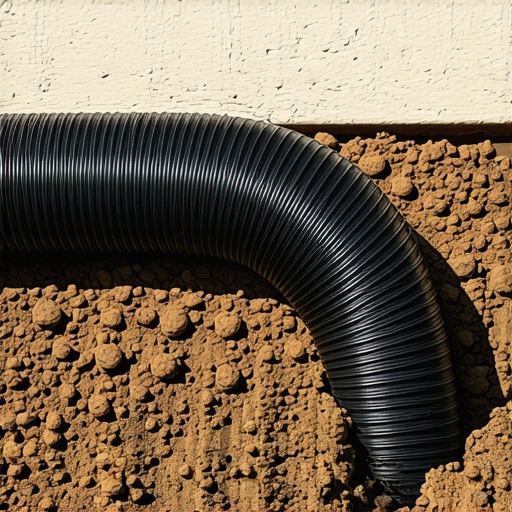
The standard flexible extension is a corrugated pipe. From a fluid dynamics perspective, corrugation is a nightmare. Each of those little ridges creates turbulence. When water hits those ridges, the flow velocity drops. As the velocity drops, any particulates—granules from your asphalt shingles, pollen, or decomposed organic matter—settle into the troughs of the pipe. Over time, this creates a sludge that further restricts flow. This is particularly dangerous if you have a patio cover gutters system where the pitch might already be minimal. If you are burying these pipes under mulch, you are effectively creating a hidden trap for debris. To do this right, you need to understand the pitch. I demand at least a quarter-inch of drop for every foot of horizontal run. If you don’t have that slope, you are just building a long, skinny mosquito pond under your flower beds. In my years of gutter cleaning services, I have pulled more rotted