The Catastrophic Failure of the Hidden Pipe
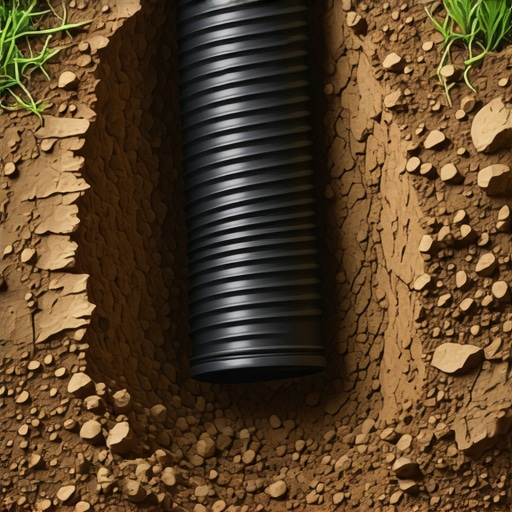
I recently stood in a backyard in a northern suburb where the grass felt more like a sponge than a lawn. The homeowner was baffled. They had invested in a high-end gutter system, but their basement was weeping like a broken heart. I started digging. Two feet down, I found the culprit: a black, flexible corrugated downspout extension that had been crushed into a flat plastic pancake by the sheer weight of the saturated clay soil and the inevitable expansion of a deep frost cycle. This wasn’t just a minor clog; it was a total systemic failure. When you bury these thin-walled flexible pipes too deep, you are not just hiding a drain; you are burying a ticking time bomb for your foundation. As a specialist with over two decades in the trenches, I can tell you that the physics of soil pressure and hydraulic flow do not care about how easy a product is to install at a big-box store.
The Physics of the Crush: Why Depth Kills Flexible Piping
In colder climates, the earth is not static. It breathes, expands, and contracts. When you perform a rectangular downspout install, you are often moving a significant volume of water. That water needs a clear, rigid path. Flexible piping relies on a series of ridges to maintain its shape, but those same ridges are its greatest weakness. As soil moisture increases, the lateral pressure against the pipe grows exponentially. If that pipe is buried below the frost line or even just under heavy topsoil, the structural integrity of the plastic fails. Once the pipe deforms, the pitch is lost. Without a consistent slope of at least 1/4 inch per 10 feet, water begins to pool. This standing water then freezes, expanding with enough force to split the seams of the pipe. This is why professional drainage engineers insist on rigid PVC for anything buried more than a few inches. When we look at expansion joint gutters, we understand that materials need room to move; buried flexible pipe has nowhere to go but inward.
“Subsurface drainage systems shall be piped to an approved area of disposal and shall be constructed of materials capable of withstanding the imposed earth loads without collapse.” – International Plumbing Code, Section 1101.7
The Sediment Trap: Hydro-Zooming into Corrugation
Let’s look at the fluid dynamics inside that buried pipe. In a smooth-wall rigid pipe, water moves in a laminar flow, carrying shingle grit and small debris along with it. In a flexible corrugated extension, the flow becomes turbulent. Every ridge acts as a miniature speed bump, causing the water to lose velocity. As the velocity drops, the carrying capacity of the water decreases. Shingle grit, which is essentially heavy stone dust, settles into the valleys of the corrugations. Over time, this creates a layer of organic sludge. If you have a gutter maintenance plan, you might be cleaning your fascia-mounted troughs, but you can’t see the sludge building up three feet underground. Eventually, this sludge hardens, and your 4-inch pipe effectively becomes a 1-inch pipe. This is where gutter cleaning stops being a surface job and starts requiring heavy-duty jetting or, more likely, a total excavation.
Proper Hanger Spacing and Fascia Integrity
The transition from the house to the ground is where most systems fail. If the hanger spacing on your gutters is too wide, the weight of the water during a downpour causes the gutter to sag, which changes the pitch of the entire system. This puts undue stress on the leader (the downspout) and the connection point to the buried extension. I have seen soffit boards rotted through because a buried extension backed up, causing water to bridge the gap behind the end cap. When we talk about lifetime gutter guarantees, we are talking about a system where every miter is sealed and every elbow is secured with stainless steel zip screws, not just friction-fit. Pressure testing gutter seals is a step most contractors skip, but it is the only way to ensure that the water actually makes it into the ground instead of leaking into your foundation walls.
The Role of Gutter Guards and Debris Management
Many homeowners believe that a gutter screen installation solves all their problems. While a good guard prevents large leaves from entering the system, it does nothing for the fine particulates that cause buried pipe sedimentation. In fact, some screens can actually increase the concentration of small grit by filtering out the larger organic matter that might have helped ‘sweep’ the pipe clear. This is why coping cap alignment and gravel stop integration are so important on complex rooflines; they manage the flow and velocity of the water before it even reaches the gutter. If you are going to bury a line, it must be serviceable. A buried flexible pipe is, by definition, unserviceable. If you must use them, they should be treated as temporary splash blocks, not permanent structural drainage.
“The collector shall be sized to handle the calculated runoff of the tributary area, with a safety factor for localized debris accumulation.” – SMACNA Architectural Sheet Metal Manual
Environmental Impact and Eco-Friendly Disposal
When these flexible systems fail, they are usually ripped out and thrown into a landfill. Part of a modern approach involves eco-friendly gutter disposal, which means using recyclable materials like aluminum and rigid PVC that can be repurposed. A failed plastic extension is a waste of resources and a hazard to your property’s value. By choosing a rigid rectangular downspout install that connects to a proper French drain or a pop-up emitter, you are building a system that will last fifty years instead of five. The initial cost might be higher, but the cost of foundation repair after a buried pipe failure can easily reach five figures. Do it right, or don’t do it at all. Keep your drainage visible, keep it rigid, and never underestimate the weight of the earth.”,