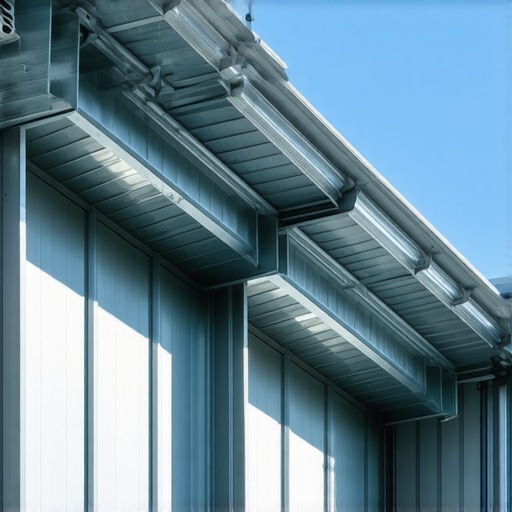
I have spent nearly three decades climbing ladders and inspecting the wreckage of what most people call a roof drainage system. Most of the time, I am not looking at a system at all; I am looking at a series of expensive mistakes. One particular job in the winter of 2012 stands out. It was a massive pole barn used for equipment storage. The owner had saved a few thousand dollars by opting for standard .032 aluminum gutters instead of industrial steel. During a particularly nasty cycle of freezing rain followed by heavy snow, that entire 120-foot run of aluminum did not just sag; it literally shredded. The ice load was so immense that the hangers remained bolted to the fascia, but the aluminum itself tore like wet paper, dropping five hundred pounds of ice directly onto a line of expensive machinery below. This is the reality of water management: it is not about aesthetics, it is about the physics of weight and the relentless nature of gravity.
The Physics of Industrial Water Management
When we talk about commercial gutter installation, we are dealing with surface area calculations that would make a suburban homeowner dizzy. A massive roof collects an incredible volume of water during a standard storm. Hydro-zooming into the mechanics of a downpour, you have to understand flow velocity. As water moves down a steep pitch, it gains kinetic energy. When that water hits the gutter, it needs to be contained and redirected immediately. Industrial steel gutters, specifically those made from 24-gauge or 26-gauge galvanized steel, provide the structural rigidity to handle this impact without flexing. Unlike aluminum, which has a high coefficient of thermal expansion, steel stays relatively stable. This stability is critical for maintaining the proper pitch, which should be at least one-quarter inch per ten feet of run. If the material flexes or sags, you get standing water. Standing water leads to sediment buildup, which leads to rust and, eventually, a total system failure.
“Gutter and downspout systems shall be designed and installed to resist the loads to which they may be subjected, including ice and snow loads in applicable climates.” – International Plumbing Code, Section 1106.1
Why Gauge Matters in Weather-Ready Gutter Materials
The term weather-ready gutter materials is not just a marketing phrase; it refers to the tensile strength and the coating of the metal. Most residential gutters are made from thin-gauge aluminum because it is easy to form on a truck. However, for a shed gutter systems or a large barn gutter repair, you need the heft of steel. Industrial steel is often hot-dipped in a zinc coating or a combination of aluminum and zinc known as Galvalume. This creates a sacrificial layer that protects the core metal from oxidation. When I perform a spring gutter startup, the first thing I check is the integrity of the coating. If you see white rust, the zinc is doing its job, but it means the environment is aggressive. Steel can handle the weight of a ladder leaned against it, and more importantly, it can handle the torque applied by heavy-duty hangers spaced every twelve inches. In high-snow regions, that spacing is non-negotiable. If you space your hangers every thirty-two inches like some cheap contractors do, you are just waiting for a disaster.
The Critical Role of Proper Drainage and Hanger Systems
The gutter itself is only half the battle. The way it is attached to the structure determines its lifespan. When dealing with tile roof gutter support, the weight of the tiles themselves often requires custom brackets that tie directly into the rafters rather than just the fascia board. This is where coping cap alignment becomes vital. If the coping cap is not perfectly aligned with the gutter lip, water can travel behind the system through capillary action, rotting the soffit and the fascia over time. This is the hidden killer of buildings. You won’t see the damage until the wood is soft enough to stick a screwdriver through. By using industrial steel, we can use high-torque fasteners that stay seated in the wood. We avoid the old spikes and ferrules that pull out after three seasons of thermal expansion and contraction. We use heavy-duty box hangers that wrap around the gutter, providing a structural skeleton for the entire run.
“The thickness and type of metal used for gutters shall be sufficient to withstand the expected snow and ice loads as well as the wind pressures for the specific geographic location.” – SMACNA Architectural Sheet Metal Manual, 7th Edition
The Science of Sealing and Pressure Testing
One of the most overlooked aspects of a commercial system is the seal at the miters and end caps. On large-scale projects, we are often pressure testing gutter seals by simulating a heavy flow to ensure there are no weep points. A leak at a corner might seem minor, but if that water drips onto a foundation for five years, it can lead to hydrostatic pressure that cracks your basement walls or shifts your slab. During a barn gutter repair, I often find that the original installer used cheap silicone that dried out and cracked. We use high-grade tri-polymer sealants that remain flexible. This is also important for rain barrel integration. If your collection system relies on a single leader, that leader must be sized correctly. A standard 2×3 downspout is useless on an industrial building. You need 3×4 or even 4×5 corrugated steel leaders to move the volume of water required to prevent the gutter from overtopping.
The Long-Term Value of Steel
Choosing industrial steel is an investment in the building’s longevity. While the initial cost is higher than aluminum or vinyl, the lifecycle cost is significantly lower. You aren’t replacing it after one bad hail storm or a heavy winter. When you perform your spring gutter startup, you will find that a steel system has held its pitch and its alignment. There is no sagging, no warped sections, and no loose hangers. You are looking for a system that can handle the sheer volume of a modern storm. Water is a destructive force, and the only thing standing between your foundation and a catastrophic repair bill is a few hundred feet of metal. Make sure that metal is strong enough to do the job. Whether it is a commercial gutter installation or a complex shed gutter systems, the principles of drainage remain the same: capture the water, control its velocity, and move it away from the structure as fast as possible. Anything less is just a gamble with your property.