The 3 AM Groan: Why Your Sagging Gutters Are a Foundation Time Bomb
Every homeowner in the North knows that sound. It is a low, metallic groan that happens in the dead of winter when the temperature fluctuates between thirty-two and thirty-three degrees. You lie there in bed, hearing the rhythmic drip-drip-thud against the siding. That thud is the sound of five gallons of icy slush overflowing a sagging gutter and slamming into your foundation. If you are still relying on the archaic spike and ferrule system to hold your water management together, you are essentially asking a finishing nail to hold up a semi-truck. I have spent over twenty-five years staring at fascia boards, and I can tell you exactly why that sagging gutter fix is the only thing standing between you and a ten-thousand-dollar foundation repair bill.
The Anatomy of a Failure: A Case Study in Neglect
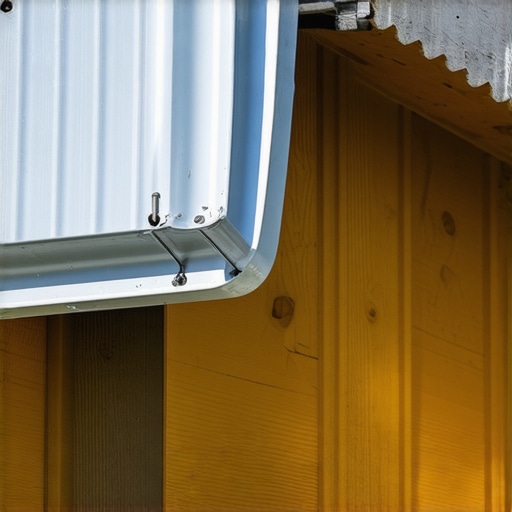
I recall a job three winters ago in a suburb just outside of Buffalo. The homeowner called me because their ‘garage gutter installation’ was literally hanging at a forty-five-degree angle. As I walked the perimeter, I saw it: a fifty-foot run of aluminum held up by those cursed seven-inch spikes. One corner of the garage foundation had already settled by an inch because that single sagging section had been dumping concentrated water into the soil for three seasons. The spikes hadn’t just pulled out; they had acted like straws, inviting water to travel deep into the fascia board, rotting it from the inside out. This is the ‘Spike and Ferrule’ legacy. It is a system designed for speed, not for the physics of heavy snow and ice. When that ice builds up, it creates a lever effect. The weight pulls the top of the spike out, the gutter tilts forward, and suddenly, the water is no longer flowing toward the leader; it is cascading over the back of the metal, saturating your soffit and rotted wood.
“Downspouts shall be sized based on the rainfall intensity of the region and the roof surface area.” – International Plumbing Code, Section 1106
The Physics of the Sag: Why Spikes Always Lose
To understand why you need a permanent sagging gutter fix, you have to look at the physics of water velocity and weight. In a heavy Northern snowstorm, a standard five-inch gutter can easily hold several hundred pounds of frozen slush. A spike and ferrule setup relies on friction alone. As the wood of your fascia expands and contracts with the seasons, that friction disappears. Once a spike moves even an eighth of an inch, the seal is broken. Now, let us ‘Hydro-Zoom’ into the micro-level. When rain hits your roof, it gathers speed as it descends the pitch. As it hits the gutter, it creates a turbulent flow. If the gutter is sagging, that water pools. Standing water is heavy, but more importantly, it promotes the growth of organic sludge. This sludge traps more water, increasing the weight until the structural integrity of the spike is bypassed entirely. This is why we transition to fascia gutter mounting using heavy-duty internal hangers and EPDM gutter seals to ensure every joint remains watertight even under extreme thermal expansion.
The Professional Fix: Moving Beyond the Spike
When I am called in for insurance claim assistance after a storm, the first thing I do is check the hanger spacing. If I see spikes, I know the ‘fix’ is a total replacement. We use a gutter machine forming process on-site to create a single, continuous run of aluminum. This eliminates the seams where leaks usually start. But the real magic is in the hidden hanger. Unlike the spike, which goes through the front of the gutter, a hidden hanger clips into the front lip and screws directly into the rafter tails through the fascia. This creates a structural bond that can handle the weight of a grown man, let alone a bit of snow. We space these every twelve inches in snow-heavy climates. Anything less is just negligence. We also integrate EPDM gutter seals at the end caps and miters because these synthetic rubber seals stay flexible at forty below zero, unlike the cheap caulking you find at a big-box store.
“Gutters and downspouts shall be maintained in good repair and free from obstructions.” – International Property Maintenance Code, Section 304.7
Beyond the Metal: The Total Drainage Ecosystem
Fixing the sag is only half the battle. You have to manage the exit. If you have a sagging gutter, chances are your downspouts are also failing. We often install flexible downspout extensions or, better yet, hard-piped underground lines to move water at least ten feet away from the foundation. I have seen integrated home automation systems now that can alert a homeowner when a gutter is overflowing, but a well-pitched gutter shouldn’t need a sensor; it should just work. Furthermore, a sagging gutter creates a gap between the metal and the fascia, which is a literal ‘Welcome’ sign for pests. Gutter animal removal is a common secondary service I provide because squirrels and birds love the sheltered space created by a pulled-away gutter. By securing the mount, you close that gap and protect your attic from unwanted guests. Regular gutter cleaning is the final piece of the puzzle. Even the best-pitched system will sag if it is full of twenty pounds of wet maple seeds and rotted oak leaves. You have to keep the channel clear so the water can maintain its velocity and reach the leader without backing up.
Conclusion: The Cost of Doing It Twice
You can go to the hardware store and buy a pack of spikes for ten dollars to try and hammer that sag back into place. You will be doing it again next year. Or, you can do it the right way: pull the spikes, inspect the fascia for rot, and install structural hangers with a proper pitch of one-quarter inch for every ten feet of run. Water is a patient enemy. It will find the weakest point in your home and exploit it until your basement smells like a swamp and your foundation starts to crack. Don’t let a simple sagging gutter be the reason your home loses its value. Fix the pitch, secure the mounting, and ensure your drainage system is engineered for the climate you actually live in.