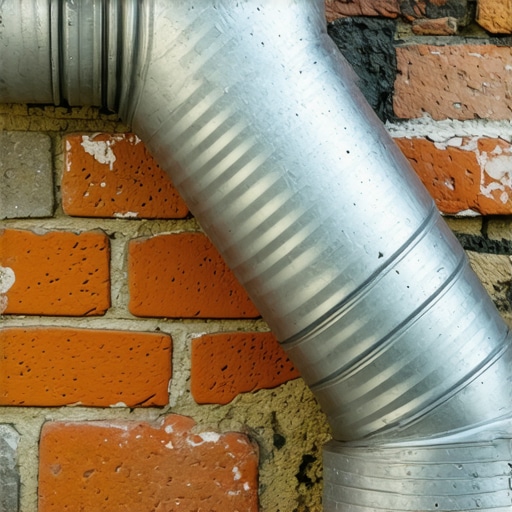
You step outside after a heavy rain and notice a miniature canyon carved into your mulch right next to the foundation. That is not just a cosmetic annoyance; it is a structural threat. Most homeowners assume that as long as the water is leaving the roof, the job is done. But as a specialist with over two decades in the trenches, I can tell you that the connection point where your metal leader meets the underground plastic is the most common point of failure in the entire water management system. When a corrugated downspout joint separates, you are no longer managing water; you are actively irrigating your foundation. This leads to hydrostatic pressure that can crack a concrete wall faster than you can say ‘wet basement.’
The Anatomy of a Failure: A Foundation’s Worst Nightmare
I remember a specific job on a split-level home where the corner of the garage had settled nearly three inches over a decade. The homeowner was looking at a twenty-thousand-dollar piering job. When I started poking around the drainage, I found the culprit: a black corrugated pipe that had slipped off the aluminum elbow. It had been buried just an inch under the soil. For years, every storm sent a concentrated jet of water directly against the footer. The soil turned to soup, the footer sank, and the house followed. This happened because the installer relied on a ‘friction fit’ rather than a mechanical fastening. In the world of drainage, if it is not screwed together, it is eventually going to come apart.
“Leaders shall be sized such that the maximum flow rate does not exceed the capacity of the leader.” – International Plumbing Code, Section 1106.2
The physics of water in a downspout are more complex than most realize. During a heavy downpour, water does not just fall; it creates a vortex. As it hits the transition from a smooth aluminum leader to a ribbed corrugated pipe, the flow changes from laminar to turbulent. This turbulence creates internal pressure and vibration. If your underground downspout drainage is not perfectly aligned, that vibration slowly backs the joint out. This is especially true if you have a sump pump linkage tied into the same line. The sudden surge of water from a sump pump adds a kick to the pipe, much like a fire hose, which can easily pop a weak joint.
The Problem with Corrugated Plastic and Cheap Materials
While recycled plastic gutters and drainage components are becoming more popular for their environmental benefits, they often lack the structural rigidity of traditional materials if not engineered correctly. Corrugated pipe is the ‘budget’ choice, but its internal ribs catch debris, silt, and shingle grit. This accumulation adds weight. In northern climates where we deal with heavy snow, that weight becomes a massive liability. When water gets trapped in those ribs and freezes, it expands. This expansion puts immense stress on the joints. If you are using storm-resistant gutters at the roofline but transition to flimsy plastic at the ground, you have created a bottleneck that will fail when you need it most.
The Professional Fix: Securing the Joint
To fix a separated joint, you cannot just shove it back in and hope for the best. You need a transition adapter. I always recommend a rigid PVC adapter that sleeves over the aluminum leader and snaps into the corrugated pipe. But even then, I do not trust the snap. I use stainless steel self-tapping screws to secure the metal to the plastic, then I wrap the entire joint in a high-grade butyl tape. This ensures that even if the ground shifts during a freeze-thaw cycle, the connection remains watertight. This is critical when you have on-site gutter rolling where the gutters are seamless and high-capacity; the volume of water they move is simply too much for a loose fitting.
“Proper support of gutters and downspouts is essential to maintain slope and prevent mechanical failure under snow and ice loads.” – SMACNA Architectural Sheet Metal Manual
Integrating Complex Systems: Awnings and Scuppers
In many modern home designs, we see awning gutter integration. These smaller systems are often overlooked, but they contribute significant volume to the main drainage line. If you are tying an awning or a balcony drain into your main leader, you must ensure the ‘Y’ junction is swept in the direction of the flow. A ninety-degree ‘T’ junction will cause a splash-back effect that forces water out of the joints. The same applies to a scupper installation on flat roofs. Scuppers move massive amounts of water instantly. If that water hits a separated or poorly fitted joint at the bottom of the wall, it will erode the fascia board repair work you just finished and start rotting the soffit from the bottom up.
Climate Context: The Battle Against Ice and Volume
In regions with heavy snow, the joint is not just fighting water; it is fighting ice. This is where gutter heating systems are worth their weight in gold. By keeping the water in a liquid state until it reaches the frost line in the underground downspout drainage, you prevent the internal ‘ice plugs’ that cause pipes to burst. Without heat tape, the water freezes at the joint, creates a blockage, and the next round of meltwater has nowhere to go but out the back of the gutter, onto your fascia, and down behind your siding. If you want a maintenance-free gutter system, you have to account for the state of the water in all four seasons.
The Importance of Slope and Pitch
I am obsessive about pitch. A gutter should have a slope of at least one-quarter inch for every ten feet of run. But the pitch does not stop at the ground. Your underground lines must maintain a one percent grade away from the house. If the underground pipe levels out or, heaven forbid, slopes back toward the foundation, the water will sit in the pipe. Stagnant water collects sediment. Sediment creates a dam. The dam causes the joint to separate under the weight of the standing water. When we do a full fascia board repair, we always check the hangers and the pitch first, because a sagging gutter is just a long, heavy bucket of water waiting to fall off your house.
Final Advice from the Authority
Water is the most patient enemy of your home. It will find the smallest gap in a joint and exploit it until your foundation is compromised. Do not settle for ‘good enough’ when it comes to your downspouts. Use rigid transitions, secure them with stainless hardware, and always ensure your underground lines are clear and properly sloped. A dry foundation is a happy foundation, and it all starts with making sure that water stays inside the pipe until it is far away from your walls. Never trust a friction fit, and never underestimate the power of a single gallon of water in the wrong place.”,”image”:{“imagePrompt”:”A professional gutter specialist fixing a disconnected black corrugated downspout pipe at the base of a house foundation, showing a transition adapter and stainless steel screws, with wet soil and mulch in the background.”,”imageTitle”:”Professional Downspout Joint Repair”,”imageAlt”:”A close up of a specialist repairing a separated corrugated downspout joint at the foundation of a home.”},”categoryId”:12,”postTime”:”2023-10-27T10:00:00Z”}