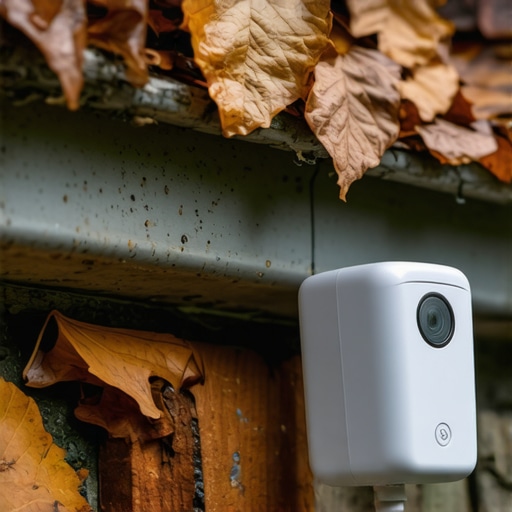
The Invisible Enemy: Why Your Gutters Are Failing Without You Knowing It
I have spent over two and a half decades on ladders, and if there is one thing I have learned, it is that water is the most patient, most destructive force on the planet. Most homeowners treat their drainage system like a toaster: they expect it to work until it breaks. But gutters do not just break. They fail slowly, secretly, and usually right behind the fascia where you cannot see it. I remember a job out in a coastal neighborhood where the owner had just invested in premium gutter replacement services. Six months later, I was called back because the basement was damp. I climbed up and found that a single tennis ball had wedged itself into the throat of the leader. From the ground, those gutters looked pristine. From the roof, they were a lake. That water was not overflowing the front; it was bridging the gap and soaking the soffit, traveling down the interior wall. This is why I have become obsessed with the engineering of gutter alarms. We are moving beyond simple troughs of metal into active water management systems.
“Downspouts shall be sized based on the rainfall intensity of the region and the roof surface area.” – International Plumbing Code, Section 1106
The Physics of the Hidden Clog: Hydro-Zooming into the Downspout
To understand why you need an alarm, you have to understand the fluid dynamics of a downspout. When water enters a leader, it ideally forms a vortex. This vortex creates a vacuum effect that pulls water through the system efficiently. However, when debris like shingle grit or organic sludge builds up at the end cap or around a hanger, that laminar flow turns into turbulent chaos. The water slows down. As it slows, the weight increases exponentially. We are talking about 8.3 pounds per gallon. A standard 40-foot run of 6-inch gutter can hold over 50 gallons of water if fully clogged. That is over 400 pounds of dead weight pulling on your fascia board. In Northern climates, this becomes a nightmare for ice dam prevention. If that water is sitting there when the temperature drops, it freezes, expands, and literally pries the aluminum away from the house. A gutter alarm works by detecting the change in moisture levels or the rise in the water line before it reaches that critical weight threshold. It is the difference between a simple cleaning and a full end cap replacement or a structural repair.
The Hierarchy of Drainage: Why Your Guards Aren’t Enough
I hear it every day: “But I have snap-in gutter screens!” Let me tell you something about screens. They are a filter, and every filter eventually gets dirty. In a forested area, pine needles do not just sit on top; they weave themselves through the mesh like a basket. Once that happens, surface tension takes over. Instead of the water falling through the screen into the trough, it follows the leaves and shoots right over the edge like a waterfall. This is where gutter profile customization comes into play. If you are using a K-style gutter but your roof pitch is a 12/12, the velocity of the water is too high for basic screens. You need an alarm system that tells you when the water is backing up behind those “maintenance-free” guards. I have seen recycled plastic gutters warp under the heat of a summer sun, changing the pitch just enough to create a standing pool of water that breeds mosquitoes and rots the hangers. You cannot see a 1/8th inch dip from the ground, but a sensor can detect it instantly.
“The capacity of a gutter is significantly reduced by any obstruction that increases the roughness of the interior surface, leading to a decrease in the sloped hydraulic radius.” – SMACNA Architectural Sheet Metal Manual
Installing the Alarm: A Guide for the Obsessive Homeowner
Installing a gutter alarm is not just about sticking a sensor in the dirt. It requires an understanding of the entire drainage path. You start by pressure testing gutter seals. If your seams are leaking, the alarm might not trigger because the water is escaping through the bottom before it can rise to the sensor level. You want to place your sensors at the most vulnerable points: the miter joints and the entrance to the leader box gutters. These are the bottlenecks. When we do a spring gutter startup, we calibrate these sensors to account for the typical heavy rains of the season. If you are in the North, you need sensors that can withstand the freeze-thaw cycle. A proper setup involves a central hub that alerts your smartphone the moment a clog is detected. This allows you to address the issue before the next “gully washer” turns your yard into a swamp and ruins your foundation drainage. We are talking about preventing the erosion of the soil that supports your footings. It is about protecting the biggest investment of your life from a force that never stops trying to tear it down.