The Science of Integration: Routing Awning Drainage for Foundation Protection
I walked around a house in the suburbs of Atlanta where the corner of the foundation had sunk nearly three inches into the red clay. The culprit was not a massive flood or a natural disaster. It was a simple, elegant patio awning that had been installed three years prior. The installer had let the water simply sheet off the front of the awning, landing exactly six inches from the foundation wall. Over those three years, that concentrated stream of water turned the soil into a slurry, compromising the load-bearing capacity of the earth. This is the reality of water management: if you do not control the flow, the flow will control your home. Routing awning drainage into your main gutter system is not just an aesthetic choice; it is a structural necessity that requires precision engineering and a deep understanding of fluid dynamics.
The Physics of the Water Cannon
When rain hits a standard roof, it is distributed across a massive surface area. However, an awning acts as a secondary collection plane that often concentrates its entire volume into a single line of discharge. During what we call a gully washer in the South, the volume of water moving off a metal or fabric awning can exceed the capacity of standard drainage systems. The kinetic energy of this falling water is significant. If you simply let it drop, it bypasses the surface tension of the ground and begins immediate erosion. To manage this, we must look at gutter sizing calculations to ensure the receiving system can handle the surge. A standard five-inch gutter might handle the main roof, but once you add the square footage of a large awning, you might find that the water velocity causes a total system failure where the awning meets the trough. We have to consider the hydraulic head pressure that builds up during peak intensity. If the flow is not routed through a proper leader, it will bridge the gap behind the fascia and begin rotting the wood from the inside out.
“Downspouts shall be sized based on the rainfall intensity of the region and the roof surface area.” – International Plumbing Code, Section 1106
The Blueprint for Integration: The Water Management Audit
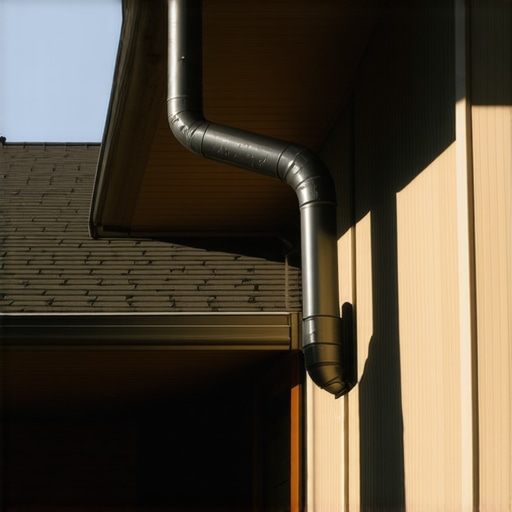
Before you pick up a drill, you must perform a system audit. This begins with the pitch. A gutter that looks level is a gutter that is failing. You need at least a quarter-inch of slope for every ten feet of run toward the downspout. When integrating awning drainage, the most common method is using a secondary leader that ties directly into the main system. This is where we see the most gutter leak repair needs. If the miter is not cut precisely and sealed with a high-grade tripolymer, the junction will fail under the weight of the water. We also see many homeowners opting for recycled plastic gutters because of the lower price point, but you must be careful with thermal expansion. Plastic moves significantly more than aluminum or copper. In the heat of a Texas summer, a plastic gutter can expand and buckle, pulling your hidden hanger systems right out of the wood. For awnings, I always recommend a metal-to-metal connection to ensure the elbow and the main trough maintain their structural integrity throughout the seasons.
Flashing and the TPO Barrier
If your awning is a low-slope or flat structure, you are likely dealing with TPO roof gutter flashing. TPO is a fantastic material, but it requires specific heat-welding or specialized adhesives to bond with the metal of a gutter system. If this transition is not seamless, water will find its way under the flashing via capillary action. This is the silent killer of soffit boards. You won’t see the leak from the ground, but the water is slowly saturating the wood until one day the entire gutter line pulls away because the fasteners have nothing left to grip. We use hidden hanger systems specifically to avoid the old spikes and ferrules that always pull out. These hangers clip into the front lip of the gutter and screw directly into the rafter tails, providing the leverage needed to support the extra weight of integrated awning runoff.
“For effective drainage, the pitch of the gutter should be maintained at a minimum of 1/16 inch per foot to ensure the flow of debris and water.” – SMACNA Architectural Sheet Metal Manual
Managing the Debris and the Elements
Integrated systems often become a collection point for organic sludge. Because awnings are usually lower than the main roofline, they catch the runoff that is already carrying granules, pine needles, and dust. This is why self-cleaning gutter tech is often discussed, though in my 25 years, I have never seen a truly self-cleaning system. Solid hood guards are a better bet for homes under heavy tree canopy. These guards use surface tension to pull water into the gutter while the leaves shoot off the edge. However, if you have fine debris like pine needles, you might need a micro-mesh. Without these, you will eventually find yourself needing gutter animal removal services because the damp, protected area of a clogged awning junction is a prime real estate spot for squirrels and birds. In colder climates, this junction is also where ice dams begin. This is why we install gutter heating systems (heat tape) at the point where the awning leader meets the main run. This prevents the water from freezing and backing up under the shingles, which can cause thousands of dollars in interior damage during a single winter storm.
Aesthetics and Final Considerations
While we focus on the engineering, we cannot ignore the look of the home. Current bold color gutter trends have made it easier to blend the awning drainage into the overall design. We are seeing a move toward matte black and deep bronze finishes that turn the drainage system into an architectural accent rather than an eyesore. But remember: a pretty gutter that leaks is still a failure. Always ensure your end cap is crimped and sealed, and that your splash block at the bottom of the downspout is directing water at least five feet away from the foundation. Water is the primary enemy of your home’s longevity. By properly routing your awning drainage, you are not just checking a box on a DIY list; you are building a defense system that will protect your investment for decades to come.