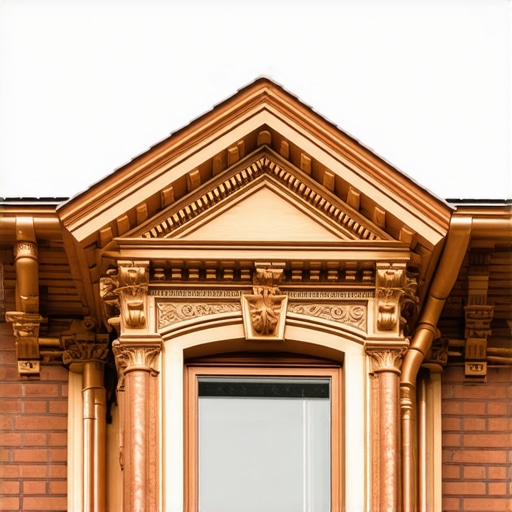
The Engineering of Heritage: Why Copper Gutters Are More Than Aesthetic
I have spent nearly three decades on ladders, squinting at the rooflines of everything from mid-century bungalows to 19th-century Victorians. When a homeowner asks if copper gutters are worth the staggering price tag, they usually focus on the curb appeal. But as an engineer of water management, I look at the foundation. I remember a Greek Revival in the historic district of Philadelphia where the owner had opted for cheap sectional aluminum a decade prior. I walked the perimeter and found the lime mortar in the foundation was literally turning to sand. A single poorly pitched gutter had allowed a waterfall to scour the earth, saturating the soil until the hydrostatic pressure pushed a bow into the basement wall. The cost to save that foundation was five times the price of a proper copper system. Water does not care about your budget; it only cares about the path of least resistance and its inevitable journey to the center of the earth.
The Physics of Longevity and Thermal Expansion
Copper is a unique beast in the world of exterior drainage. Unlike aluminum, which relies on sealants that eventually dry out, crack, and leak at every miter and end cap, a copper system is a unified, soldered entity. When we perform gutter installation services for historic properties, we are creating a permanent plumbing fixture on the exterior of the home. The secret lies in the molecular bond of the solder. However, copper has a high coefficient of thermal expansion. On a long 60-foot run, the metal can move significantly between a sub-zero winter morning and a blistering July afternoon. If an amateur installs it without expansion joints, the metal will buckle and the soldered joints will eventually tear. This is why we obsess over the details of gutter sizing calculations and structural movement.
“Downspouts shall be sized based on the rainfall intensity of the region and the roof surface area.” – International Plumbing Code, Section 1106
When dealing with the heavy slate or clay tiles often found on historic homes, the volume of water shedding off the roof is immense. These materials are non-porous and high-velocity. During a standard downpour, the sheer weight of the water requires a robust gutter apron installation to ensure that the water enters the trough rather than wicking back toward the fascia board. Without a gutter apron, capillary action draws water behind the gutter, rotting the very wood that supports the system. For historic homes, replacing a custom-milled crown molding fascia is an expensive nightmare that could have been avoided with a simple strip of metal and a proper drip edge.
The Infrastructure of Water: Sizing and Support
Most modern homes use a 5-inch K-style gutter, but for a historic estate, this is often insufficient. We frequently move to 6-inch or even 7-inch half-round copper gutters. Why? Because of the pitch of the roof. A steep-pitched historic roof accelerates water flow to the point where it can shoot right over a standard gutter. We use gutter sizing calculations that factor in the square footage of the roof and the historical peak rainfall intensity of the local climate. If you are in the North, you also have to contend with the weight of snow and ice. A standard hanger spaced every 32 inches will fail under the weight of a New England ice dam. For these installs, we place heavy-duty brass hangers every 12 to 16 inches, often utilizing tile roof gutter support systems that tie directly into the rafters rather than just the fascia.
Modern Integration: Guards, Sensors, and Maintenance
Even a copper system is only as good as its ability to flow. The myth of the “maintenance-free” home is a dangerous one. While we now have access to self-cleaning gutter tech and automated cleaning systems, they must be chosen carefully to avoid clashing with the historic aesthetic. For homes surrounded by old-growth oaks or maples, micro-mesh gutter guards are the only viable solution to prevent organic sludge from forming a dam. This sludge holds moisture against the metal, and while copper is highly resistant to corrosion, the constant presence of wet debris can lead to premature pitting. For those who want the ultimate in protection, we are now seeing the integration of gutter flow sensors. These small devices can alert a homeowner via a smartphone app if the water velocity in a leader (downspout) has dropped, indicating a blockage is forming before the system overflows.
“The design of gutters and downspouts shall be such that the system can accommodate the thermal expansion and contraction of the materials used.” – SMACNA Architectural Sheet Metal Manual
Maintenance on a copper system is different than aluminum. You don’t just grab a leaf blower gutter cleaning tool and blast away. You have to be careful not to dent the softer metal or break the soldered miters. The patina process itself is a protective layer of copper carbonate, and while many people love the green look, it takes years to develop evenly. If you have oils from your hands or acidic bird droppings sitting in the trough, the patina will be splotchy and uneven. It is an investment in both function and time.
The Critical Role of the Shingle Roof Gutter Starter
Whether your historic home has been updated with a modern asphalt shingle or retains its original slate, the transition point at the eave is the most common failure point. A shingle roof gutter starter provides the necessary support for the first course of roofing and ensures that the water is directed into the center of the copper trough. When this is missing, water often