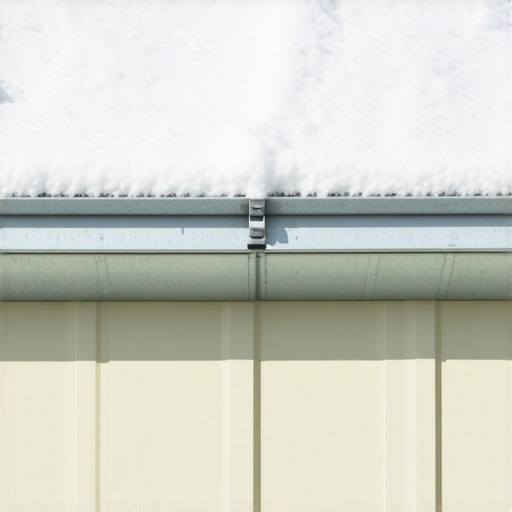
The Cold, Heavy Truth About Winter Roof Drainage
As a veteran gutter specialist with over 25 years in the trenches, I have watched countless winter storms turn beautiful homes into structural nightmares. Homeowners often worry about their heating bills or shoveling their driveways, but they completely ignore the silent disaster brewing right on their roofline. Snow is not just fluffy and white; it is incredibly heavy. When that snow begins to melt, slide, and refreeze, it exerts thousands of pounds of sheer force on your exterior drainage system. This is where cheap, standard vinyl or thin-gauge aluminum gutter systems fail catastrophically.
If you live in an area prone to severe winters, choosing the wrong material for your gutters is an expensive mistake. Over the decades, I have seen every imaginable failure. Through it all, one material stands head and shoulders above the rest when it comes to battling winter: hot-dipped galvanized steel. Let us look at why this rugged material is the ultimate defense against snow and ice, and how proper installation practices keep your home dry and structurally sound when the freeze sets in.
The Ice Dam Explosion: A Real-World Warning
During the brutal winter of 2015, I was called out to a historic property in a mountain valley. The owner had recently spent thousands of dollars on a standard thin-gauge aluminum gutter system. Walking up to the home, I saw a devastating sight: a 50-foot run of gutter was hanging completely vertically, ripped right off the house. It had taken a significant portion of the wood fascia board along with it, exposing the raw rafter tails to incoming snow.
Why did this happen? The installer had used standard aluminum spikes and ferrules, spacing them every three feet. As snow piled up on the roof, it slid down, melted, and pooled in the gutter. It refroze into a solid block of ice weighing over 400 pounds. The soft aluminum warped under the weight, the spikes pulled cleanly out of the water-logged fascia, and gravity did the rest. Had the homeowner installed heavy-duty galvanized steel with proper fascia gutter mounting and tight hanger spacing, that system would have easily held the load. It was a painful, expensive lesson in structural engineering.
The Physics of Snow and Ice on Your Roofline
To understand why galvanized steel is superior, we must understand the physical forces at play during a winter freeze. When snow sits on your roof, heat escaping from your attic melts the bottom layer. This liquid water runs down the slope until it reaches the cold overhang, where it refreezes. This process is the birth of an ice dam.
As ice builds up, it creeps back up the roof shingles and fills the gutter trough. A cubic foot of solid ice weighs about 57 pounds. When you multiply that across a 60-foot run of gutter, you are asking your fascia board to support hundreds, sometimes thousands, of pounds of dead weight. Under this pressure, aluminum bends and deforms permanently. Vinyl simply cracks and shatters in sub-freezer temperatures. Galvanized steel, however, possesses the high tensile strength required to resist bending under extreme structural loads. It holds its shape, protecting your eaves from buckling.
“Gutters and downspouts shall be securely fastened to the structure to support the weight of water, ice, and snow that can accumulate within them.” – International Building Code, Chapter 15
The Anatomy of a Snow-Resistant Gutter System
Simply choosing galvanized steel is not enough; the entire system must be engineered to work together. A truly storm-resistant gutters setup requires a meticulous combination of components, installation techniques, and integration with your roof’s edge.
1. Fascia Gutter Mounting and Heavy-Duty Hangers
Never let an installer use spikes and ferrules. They pull loose over time as wood expands and contracts. Instead, we use heavy-duty internal brackets screwed directly through the gutter apron aluminum and into the structural fascia boards. For heavy snow zones, we space these hangers every 12 to 18 inches, rather than the standard 36 inches. This tight spacing distributes the weight load evenly, preventing sagging.
2. Drip Edge Integration and Gutter Apron Aluminum
One of the most critical elements of a winter-proof system is proper drip edge integration. Without a solid gutter apron aluminum flashing tucked under the shingles and hanging over the back of the gutter, water will inevitably find its way behind the trough. When this water freezes, it rots the wood fascia and causes the ice to expand behind the metal, pushing the gutter away from the house. A perfect seal ensures that all meltwater is directed into the center of the channel.
3. High-Capacity Outlets and Leader Tubes
The downspout, or leader, is the throat of your drainage system. If meltwater cannot escape fast enough, it backs up and freezes solid. For heavy winter climates, we utilize oversized 3×4-inch leaders and wide miter joints to maximize flow velocity and prevent ice bridges from forming inside the vertical drops.
Custom Applications: Church Steeple Gutters and Box Gutters
On complex architectural structures, such as historic homes or municipal buildings, standard residential solutions will not suffice. For instance, church steeple gutters require specialized engineering to handle the massive, high-velocity water runoff shed by steep, towering spires. These systems often require deep box gutter installation directly into the roof framing, where galvanized steel or heavy copper is the only acceptable structural choice to prevent interior wall leaks.
Furthermore, these high-stakes installations require robust hurricane-rated installations to handle not just snow loads, but the high winds that often accompany winter blizzards. When we engineer these systems, every fastener, bracket, and seam is calculated to withstand wind uplift forces alongside deadweight loads.
“The design of gutter systems for structures with steep slopes and large catchment areas must account for high-velocity kinetic energy of sliding snow masses.” – SMACNA Architectural Sheet Metal Manual
The Truth About Maintenance-Free Gutter Systems in Winter
Many homeowners ask me about maintenance-free gutter systems during our consultations. They want to know if installing leaf guards will solve their winter ice problems. The honest answer is: it depends entirely on the design. While solid-hood helmets or micro-mesh guards are great for keeping out leaves during autumn gutter cleaning, they can sometimes make ice dams worse in the winter.
A solid metal hood relies on surface tension to direct water into the gutter. When that hood is covered in cold snow, water flowing down the roof simply runs right over the top of the guard, creating giant icicles along the front edge of your home. If you choose to install guards, they must be paired with heat cables inside the trough and along the roof edge to keep the pathway clear for flowing water.
Handling Insurance Claim Assistance After a Collapse
If your gutters have already collapsed under the weight of a heavy snowstorm, you are likely facing significant repair costs. Many homeowners do not realize that storm damage to gutters is often covered by homeowners insurance policies. However, getting a claim approved requires documentation.
When we assist homeowners with insurance claim assistance, we provide detailed structural assessments. We document how the weight of the ice caused the failure, photograph the damaged fascia boards, and explain why a more robust replacement system is required to prevent future structural failure. Having a professional, engineered report is key to ensuring your insurance carrier covers the true cost of a proper rebuild.
Why Galvanized Steel Wins the Longevity Battle
While galvanized steel is heavier and more challenging to install than lightweight aluminum, its long-term benefits are unmatched. The zinc coating on galvanized steel protects the raw iron from rusting, even when subjected to constant moisture from melting snow. While aluminum can easily tear at the seams when ice expands, galvanized steel remains rigid, holding its joints together through decades of freeze-and-thaw cycles. It is an investment in your home’s foundation, basement, and structural integrity that pays dividends every single winter.