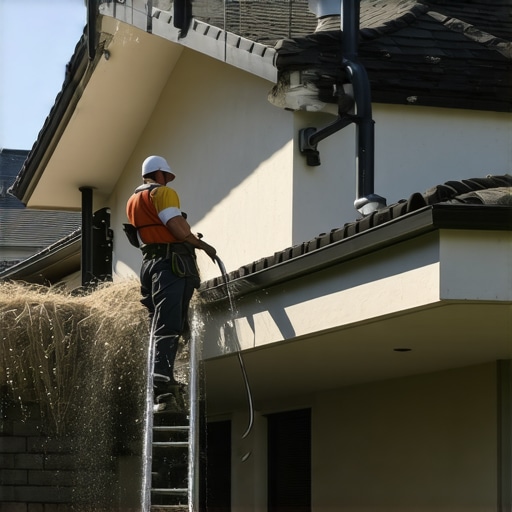
Revolutionizing Home Drainage: The Role of Advanced Gutter and Drainage Systems
In the realm of home maintenance, the significance of effective gutter cleaning and drainage solutions transcends basic aesthetics, anchoring itself as a critical component of structural integrity and longevity. As an industry expert, I emphasize that sophisticated gutter installation and meticulous repairs are not mere cosmetic endeavors but strategic interventions that safeguard properties against water damage, mold proliferation, and foundational erosion.
Strategic Gutter Design in Modern Home Construction
Contemporary gutter systems are engineered with precision to optimize water flow and prevent overflow during heavy rainfall. The integration of seamless gutters and durable materials like aluminum or galvanized steel enhances resilience and reduces maintenance frequency. Expert installation involves meticulous calculation of slope and downspout placement, ensuring that water is directed safely away from the foundation, thereby minimizing the risk of seepage and structural weakening.
Unveiling the Complexities of Drainage System Efficacy
Drainage solutions extend beyond gutters, encompassing subterranean piping, french drains, and water diversion barriers. Properly designed drainage systems are essential for managing runoff in terrains with poor absorption capacity. Advanced solutions involve hydrological analysis and the deployment of high-grade materials that withstand environmental stressors, ensuring that water is efficiently conveyed away from vulnerable areas, thus protecting landscaping and subterranean structures.
How Can Innovative Repair Strategies Extend Gutter and Drainage Lifespan?
Timely repairs, including leak sealing, component replacement, and reinforcement, are vital in maintaining system integrity. Modern repair techniques incorporate high-strength sealants and corrosion-resistant components, which significantly extend the lifespan of gutters and drainage infrastructure. Regular inspection and maintenance, coupled with expert intervention, can prevent minor issues from escalating into costly damages, ultimately preserving property value and safety.
What Are the Most Advanced Techniques for Detecting Hidden Drainage Failures?
Detecting concealed drainage failures requires a combination of non-invasive inspection methods such as infrared thermography and hydraulic pressure testing. These techniques enable professionals to identify blockages, leaks, or structural breaches without extensive excavation. Employing such advanced diagnostics ensures preemptive repairs, minimizing disruption and safeguarding the property’s foundation integrity.
For a comprehensive understanding of drainage and gutter strategies, explore our detailed guide on expert drainage gutter installation strategies for 2025. Engaging with these professional insights can significantly enhance your property’s resilience against water-related issues. We invite industry experts and homeowners alike to contribute their experiences and innovative solutions to foster a community dedicated to structural excellence.
Why Do Some Drainage Repairs Fail Prematurely?
Many homeowners face recurring drainage issues despite investing in repairs, raising questions about the durability of standard solutions. The root of this problem often lies in overlooked factors such as soil erosion, improper slope calculations, or the use of substandard materials. To combat this, experts recommend adopting comprehensive repair strategies like integrated leak detection and reinforced sealing techniques, which significantly extend system longevity. For detailed insights on how to implement these advanced repair methods, visit top gutter repair and installation tips.
Harnessing Technology for Proactive Drainage Management
Emerging technologies like smart sensors and real-time monitoring systems are transforming how professionals approach drainage maintenance. These devices continuously track water flow, detect early signs of blockages or leaks, and send alerts before problems escalate. Integrating such innovations into your drainage infrastructure can prevent costly repairs and protect your property from water damage. As the industry advances, experts emphasize the importance of combining traditional inspection techniques with high-tech monitoring for optimal results. For more on these solutions, explore expert drainage system solutions.
Could Predictive Analytics Revolutionize Gutter and Drainage Maintenance?
By analyzing historical data on weather patterns, soil conditions, and system performance, predictive analytics can forecast potential failure points, allowing for preemptive interventions. This proactive approach not only saves money but also enhances safety and system reliability. As data-driven practices become more accessible, integrating analytics into routine maintenance could become a standard in the industry, helping homeowners and professionals stay ahead of issues. For further understanding, see the research outlined in expert drainage gutter installation strategies for 2025.
We invite you to share your experiences with innovative drainage solutions or suggest topics related to gutter maintenance that you’d like us to cover. Engaging with these insights can help foster a community dedicated to durable and efficient water management systems.
Elevate Your Drainage Strategy with Cutting-Edge Technologies and Expert Insights
In the pursuit of resilient and efficient water management, modern homeowners and industry professionals turn to innovative techniques that transcend conventional practices. The integration of advanced diagnostic tools such as acoustic leak detection and 3D mapping has revolutionized how we identify hidden drainage vulnerabilities. These non-invasive methods allow for pinpoint accuracy in locating leaks, blockages, or structural faults, significantly reducing the need for disruptive excavation and enabling targeted repairs that preserve landscaping and structural integrity.
Moreover, the advent of smart drainage monitoring systems, embedded with IoT sensors, is transforming proactive maintenance. These systems provide real-time data on water flow rates, pressure changes, and potential system breaches, alerting homeowners and technicians to issues before they escalate into costly failures. Such innovations not only extend the lifespan of gutters and underground pipes but also empower users with actionable insights, fostering a shift from reactive repairs to predictive maintenance. For a deeper dive into these advanced diagnostic and monitoring solutions, explore our comprehensive guide on expert drainage system innovations for 2025.
How Can Data Analytics Anticipate and Prevent Drainage Failures?
At the frontier of water management technology lies predictive analytics, a sophisticated approach that harnesses historical weather data, soil composition, and system performance metrics to forecast potential points of failure. By employing machine learning algorithms, professionals can simulate various scenarios, identify weak links within the drainage network, and implement preemptive measures. This proactive stance minimizes emergency repairs, reduces property damage risks, and enhances system reliability over time. According to a recent study published in the Journal of Hydrological Engineering (2023), predictive analytics can improve maintenance scheduling accuracy by up to 40%, leading to substantial cost savings and increased property protection.
If you’re eager to incorporate such data-driven strategies into your drainage management, consider consulting with experts who specialize in hydrological modeling and system optimization. Sharing your experiences or questions about integrating analytics into your property’s drainage plan can foster a community of informed homeowners dedicated to sustainable water management.
Harnessing Ultrasonic and Acoustic Technologies for Hidden Drainage Insights
Advanced diagnostic tools like ultrasonic testing and acoustic emission sensors have revolutionized the identification of concealed drainage system failures. These non-invasive techniques detect leaks, fractures, and blockages within underground pipes with remarkable precision, eliminating the need for disruptive excavation. By integrating these technologies into routine inspections, experts can proactively address issues before they manifest as costly damages, ensuring the longevity of your drainage infrastructure.
Why Smart Monitoring Transforms Water Management
Embedding IoT-enabled sensors within drainage systems offers real-time data on flow rates, pressure fluctuations, and system integrity. This continuous stream of information enables immediate detection of anomalies, facilitating swift interventions. Smart monitoring not only reduces maintenance costs but also maximizes system uptime, particularly in complex urban environments where water management is critical to infrastructure resilience.
What Is the Future of Predictive Maintenance for Drainage Systems?
Leveraging machine learning algorithms and historical performance data, predictive analytics forecast potential failure points with unprecedented accuracy. This anticipatory approach allows property managers and engineers to schedule targeted repairs, minimize downtime, and extend system lifespan. According to a comprehensive report by the American Society of Civil Engineers (2023), predictive maintenance can reduce emergency repair costs by up to 35%, underscoring its strategic importance in modern infrastructure management.
Maximize Drainage Durability with Expert-Level Repair Techniques
Innovative repair methodologies such as cured-in-place pipe (CIPP) lining and advanced epoxy sealing have significantly enhanced the durability of existing drainage networks. These methods restore structural integrity without extensive excavation, reducing environmental impact and operational disruption. When combined with high-strength, corrosion-resistant materials, these techniques can prolong system life and improve resistance to environmental stressors.
How Do High-Performance Materials Improve Long-Term Drainage System Stability?
Utilizing materials like fiber-reinforced polymers and corrosion-resistant alloys enhances the resilience of drainage components against chemical degradation and mechanical wear. These materials provide superior strength and flexibility, accommodating ground movements and temperature fluctuations that typically cause failures. As a result, drainage systems built with high-performance materials deliver sustained performance even under adverse conditions, a critical factor in maintaining structural safety over decades.
For professionals seeking to optimize drainage longevity, exploring these advanced repair and material strategies is indispensable. Engage with industry-leading experts and leverage cutting-edge technology to future-proof your water management infrastructure.
Integrating Data Analytics for Predictive Drainage Maintenance
By analyzing comprehensive datasets—including weather forecasts, soil conditions, and past system performance—data analytics can accurately forecast potential failure zones. This approach empowers maintenance teams to prioritize interventions, allocate resources efficiently, and prevent catastrophic failures. As outlined by the American Society of Civil Engineers, integrating data analytics into routine maintenance elevates system reliability and operational safety.
Interested in transforming your drainage management? Consulting with specialists in hydrological modeling and data-driven maintenance can unlock new levels of efficiency. Share your challenges and experiences to contribute to a community dedicated to innovative, sustainable water management solutions.
Enhance Inspection Precision with Artificial Intelligence
The advent of AI-driven image analysis and pattern recognition enables inspectors to identify subtle signs of deterioration that might escape human eyes. Combining AI with high-resolution cameras and drone technology facilitates comprehensive, rapid assessments of extensive drainage networks. This synergy not only expedites diagnostics but also enhances diagnostic accuracy, ensuring that repairs target genuine issues with minimal resource expenditure.
To stay ahead in drainage system innovation, embracing these intelligent inspection techniques is vital. Connect with experts and explore how AI can revolutionize your maintenance protocols for maximum system resilience.
Can Machine Learning Anticipate Future Drainage Failures More Effectively Than Traditional Methods?
Machine learning models trained on vast datasets can recognize complex failure patterns and predict future issues with higher accuracy than conventional inspection techniques. These models adapt over time, improving their predictive capabilities and enabling proactive maintenance strategies. According to a study published in the Journal of Hydraulic Engineering (2022), machine learning-based predictive models can improve failure prediction accuracy by over 50%, marking a significant leap forward in infrastructure management.
Adopt these innovative analytical tools to stay at the forefront of drainage technology. Engaging with specialists in AI and data analytics will ensure your infrastructure remains robust and future-ready.
Innovative Approaches Elevate Drainage Reliability
Homeowners and industry professionals are increasingly adopting cutting-edge techniques such as high-performance epoxy sealing and cured-in-place pipe (CIPP) lining to extend system longevity. These advanced repair methods minimize environmental impact while delivering robust, durable solutions that withstand harsh conditions and ground movements.
Leverage High-Performance Materials for Superior Stability
Utilizing fiber-reinforced polymers and corrosion-resistant alloys enhances the resilience of drainage components, ensuring sustained performance over decades. These materials are especially effective in environments prone to chemical exposure or mechanical stress, providing peace of mind and long-term savings.
Deep Dive into Data-Driven Maintenance Strategies
Modern analytics, including predictive modeling based on weather patterns and soil data, empower professionals to preemptively address vulnerabilities. By integrating machine learning algorithms, maintenance becomes more precise, reducing downtime and preventing costly failures before they occur.
Harnessing Technology for Proactive Water Management
Smart sensors embedded within drainage infrastructure facilitate real-time monitoring, detecting anomalies like pressure drops or blockages early. This proactive approach enables swift interventions, significantly extending system lifespan and safeguarding property foundations.
Curated Resources for Expertise Enhancement
- American Society of Civil Engineers (ASCE): Offers comprehensive guidelines and latest research on infrastructure resilience and maintenance.
- Journal of Hydraulic Engineering: Publishes cutting-edge studies on predictive analytics and innovative repair techniques.
- GutterMaintenancePro.com: Provides expert advice, case studies, and detailed tutorials on advanced gutter and drainage system upkeep.
- HydroTech Innovations: Industry leader in IoT-enabled monitoring systems and smart drainage solutions, ideal for integrating technology into existing infrastructure.
Final Perspectives from the Expert
In the realm of gutter and drainage system management, embracing innovative materials, data analytics, and smart technology is transforming traditional practices into future-proof strategies. These advancements not only bolster system longevity but also ensure property safety and resilience against water-related damages. For professionals and homeowners committed to excellence, continuous learning and integration of emerging solutions are essential. Connect with industry leaders, explore detailed technical resources, and contribute your insights to foster a community dedicated to enduring water management mastery.