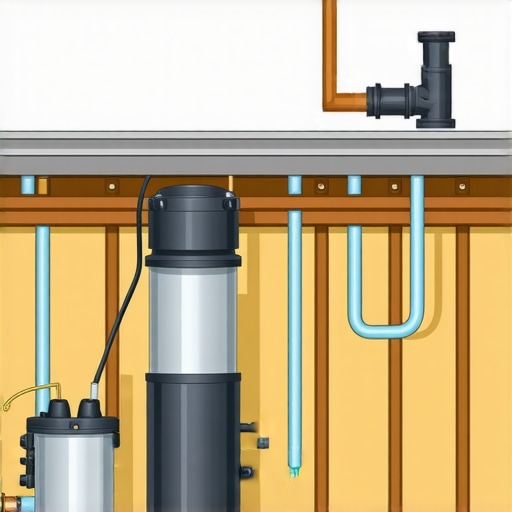
The Olfactory Warning: Why Your Crawlspace Smells Like a 19th-Century Dungeon
If you have ever opened your crawlspace hatch and been greeted by that thick, metallic scent of damp earth and rotting timber, you aren’t just smelling ‘old house.’ You are smelling the slow-motion destruction of your home foundation. As a drainage specialist with over a quarter-century in the field, I can tell you that a sump pump is a vital piece of equipment, but if it is working every five minutes, you have failed at your primary task: water management. Water is a relentless, eroding force. It is the only element that can turn a solid oak beam into mush and a concrete footer into a sinking stone. Most homeowners think a dry crawlspace starts with a bigger pump. They are wrong. It starts thirty feet above the ground on the roofline. When water sheds off your shingles, it gains kinetic energy. In a standard two-inch-per-hour downpour, a 2,000-square-foot roof is shedding roughly 1,250 gallons of water. If your gutter system is not engineered to capture and move that volume, that water is going straight into the soil surrounding your foundation, creating a hydrostatic pressure cooker that no sump pump can outrun for long.
The Covington Failure: A Narrative of Foundation Collapse
I remember a project in Covington where the homeowner called me because their crawlspace was perpetually flooded. They had installed three high-end sump pumps, but the water kept coming. I walked the perimeter and found a classic case of hidden neglect. This was an older home with a built-in gutter system, those beautiful, concealed troughs integrated into the roofline. Because the homeowner couldn’t see them, they didn’t realize the solder joints had cracked decades ago. For ten years, every drop of rain was funneling directly behind the fascia board and down the interior of the wall cavity. By the time I arrived, the north-east corner of the foundation had settled nearly three inches. The French drain connection was a joke; it was just a corrugated pipe ending six inches from the basement wall. We had to excavate the entire corner, jack the house up, and install a commercial-grade box gutter installation just to stop the bleeding. It wasn’t the pump that failed; it was the entire water management strategy.
“Downspouts shall be sized based on the rainfall intensity of the region and the roof surface area.” – International Plumbing Code, Section 1106
Fix 1: The French Drain Connection and Sump Pump Synergy
The biggest mistake in residential drainage is separating the exterior system from the interior protection. A French drain connection should be your second line of defense, not your first. The goal is to move water from the leader (your downspout) at least ten feet away from the foundation before it ever touches the soil. Most people use cheap, thin-walled corrugated pipe that collapses under the weight of a lawnmower. I use Schedule 40 PVC. You need a smooth-bore interior to prevent the buildup of organic sludge. When we link a French drain to the discharge line of a sump pump, we create a unified path for water to exit the property. If your leader just dumps onto a splash block, you are essentially just recirculating the same water. The water goes out the downspout, soaks into the ground, enters the crawlspace, and gets pumped back out by the sump pump, only to soak back in again. It is a carousel of moisture that eventually leads to foundation rot.
Fix 2: Built-in Gutter Systems and the Box Gutter Menace
Built-in gutter systems are the bane of my existence. Architects love them because they don’t break the clean lines of the roof, but they are a ticking time bomb for crawlspace health. Unlike a standard seamless aluminum gutter that hangs outside the home, a box gutter installation sits inside the structural framing. When a miter leaks or an end cap fails, the water doesn’t fall to the ground; it goes into your soffit and down your foundation. To keep a crawlspace dry in 2026, you must ensure these systems are lined with EPDM or high-grade stainless steel. Furthermore, the gutter apron flashing must be installed with surgical precision. If the flashing is not tucked correctly behind the gutter, surface tension will pull water back against the fascia. This is known as ‘wicking,’ and it is how a simple rainstorm turns into a foundation-cracking event. The water doesn’t just fall; it clings to surfaces, following the path of least resistance right into your crawlspace vents.
“Built-in gutters require a minimum of 1-inch clearance from all wood components to prevent rot via capillary action.” – SMACNA Architectural Sheet Metal Manual
Fix 3: High-Volume Management with Roof Scupper Drains
In regions with heavy seasonal storms, 5-inch gutters are essentially useless. When you have a massive roof surface, you need to think like a commercial contractor. This means looking at commercial flat roof gutters and roof scupper drains. A scupper is an opening in the parapet wall or a high-capacity outlet that allows massive volumes of water to exit the roof quickly. If your gutters are overflowing during a ‘gully washer,’ that water is overshooting the trough and landing right at the base of your house. We call this ‘overshoot,’ and it is the primary cause of crawlspace saturation. By upgrading to 6-inch or 7-inch gutters and using 3×4-inch leaders, you reduce the flow velocity inside the trough, preventing the water from ‘bridging’ over the edge. We also look at attic vent installation to ensure that heat isn’t building up and contributing to ice dams, which can tear hangers right out of the wood during winter, leading to massive drainage failures come spring.
Fix 4: Micro-Mesh Gutter Guards and Self-Cleaning Tech
You have likely heard the marketing fluff about ‘never cleaning your gutters again.’ As a pro, I tell you: that is a lie. However, the right micro-mesh gutter guards can significantly reduce the organic sludge that clogs your French drain connection. Pine needles and maple seeds are the enemies of a dry crawlspace. They weave themselves into mats that block the leader. When the leader is blocked, the gutter fills with water. A standard ten-foot section of gutter filled with water weighs about 60 pounds. That weight pulls on the hangers, ruins the pitch, and causes water to pool. Modern self-cleaning gutter tech uses vibration or specialized coatings to shed debris, but nothing beats a high-quality stainless steel mesh that keeps the fine grit out of your sump pump pit. If your pump is sucking up shingle grit and organic silt, the impeller will burn out in half the time, leaving your crawlspace vulnerable during the next big storm.
The Physics of the Gutter Apron: Your Last Line of Defense
The gutter apron flashing is perhaps the most underrated component of the drainage hierarchy. Without it, water will use surface tension to crawl behind the gutter trough. Once it is behind the trough, it rots the fascia and drips directly onto the footer. This moisture then migrates through the porous concrete of your foundation through capillary action. This is why you see white, chalky powder (efflorescence) on your crawlspace walls. It is the salt left behind after the water evaporates. If you see that powder, your gutter apron has failed. You need to ensure the flashing is long enough to bridge the gap and that the pitch of the gutter is precisely 1/4 inch per every 10 feet toward the downspout. Anything less and you have standing water, which is a breeding ground for mosquitoes and a rust-accelerant for steel hangers.
Final Thoughts: A Dry Foundation is a Total System Effort
Achieving a dry crawlspace for 2026 isn’t about one single fix. It is about the linkage between your attic vent installation, your greenhouse gutter collection for sustainability, and your heavy-duty commercial flat roof gutters. You must treat your home like a hydraulic machine. Every component, from the miter to the splash block, must be calibrated to move water away. If you ignore the ‘trade cant’ of proper slope and hanger spacing, you are just waiting for the next foundation bill. Keep your leaders clear, ensure your French drain connection is solid, and never trust a spike-and-ferrule install. Use heavy-duty hidden hangers every 12 inches, and your foundation will thank you for the next fifty years.